브레멘 대학교(디지털 미디어 석사 과정)의 클레멘스 호르네만(Clemens Hornemann)이 제작한 프로메테우스 바운드(Prometheus Bound)는 설치 작품이자 연구 프로젝트입니다. 새롭고 청정한 에너지원이라는 약속과, 살아있는 생명체를 다루는 현실 사이의 간극을 탐구하는 작업입니다. 작가는 조류(藻類)를 직접 배양하고, 광합성 과정에서 방출되는 전기를 수집하는 고된 실험을 이어갑니다. 그 과정에서 에너지원으로서의 실현 가능성을 넘어, 다른 종을 도구로 삼는 행위가 수반하는 통제와 돌봄, 그리고 윤리적 질문들이 자연스럽게 떠오릅니다.
지금으로부터 약 24억~25억 년 전, 시아노박테리아는 인류 역사상 최초의 프로메테우스적 행위를 감행했습니다. 빛을 이용해 물을 분해하는 능력을 획득하고, 산소를 방출하며 지구의 역사를 영원히 바꿔놓은 것입니다. 우리의 존재를 가능하게 한 그 불꽃을 피워 올린 장본인이 바로 그들입니다. 그런데 이제 우리는 프로메테우스가 바위에 묶였듯 조류를 결박하고, 그로부터 똑같은 에너지를 뽑아내려 합니다. 우리는 과연 자연으로부터 불을 훔쳐낸 신화 속 프로메테우스가 되려는 걸까요? 아니면 메리 셸리의 소설 『프랑켄슈타인; 혹은 현대의 프로메테우스』 속 인물처럼, 인간의 한계를 넘어서려다 스스로의 부족함에 맞닥뜨리는 처지에 불과한 걸까요? 프랑켄슈타인이 그랬듯, 우리도 더 많은 에너지를, 더 많은 불을 갈망하며 끊임없이 새로운 기술에 기대어 근본적인 문제를 해결하려 합니다.
클레멘스 호르네만(Clemens Hornemann)
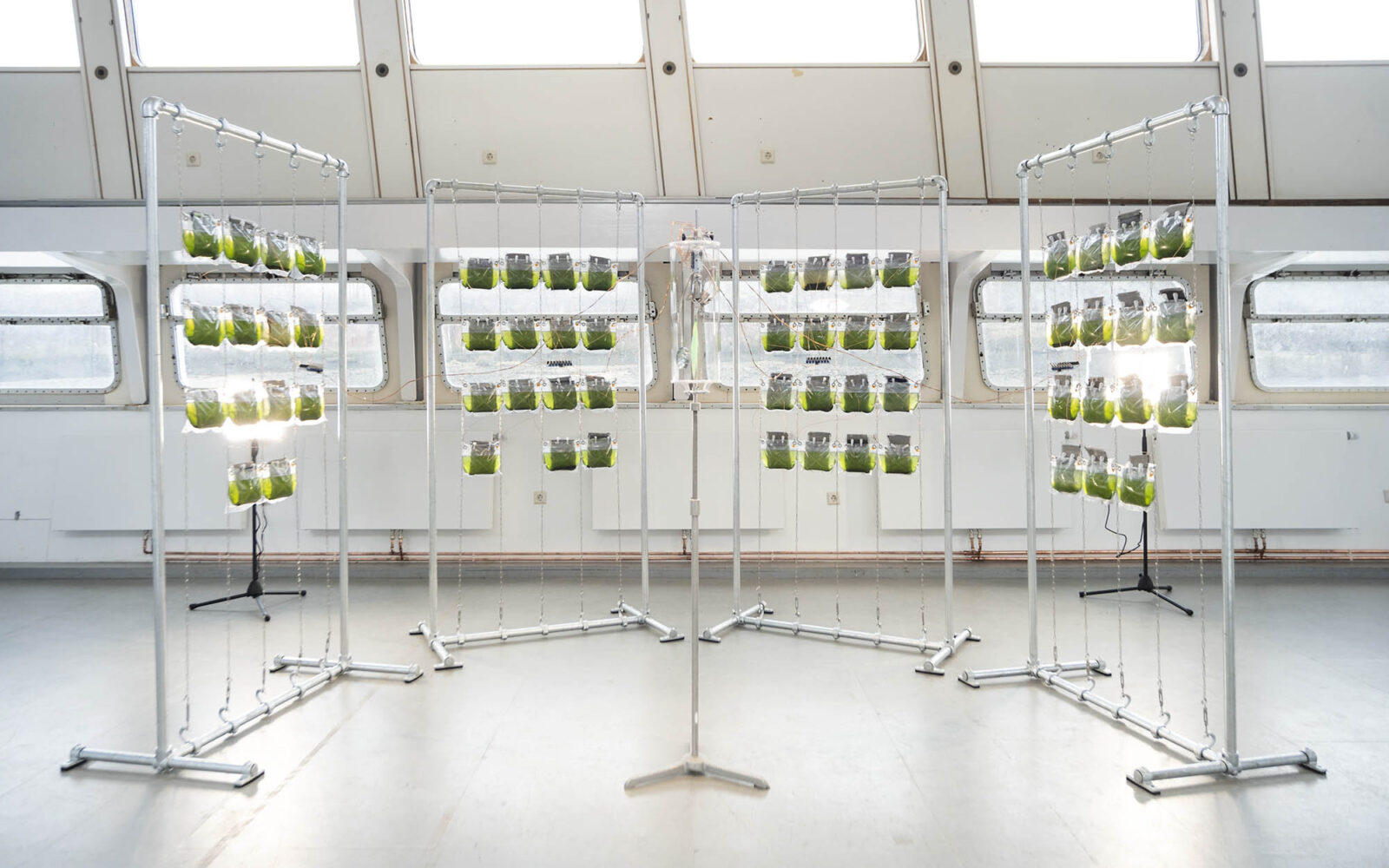
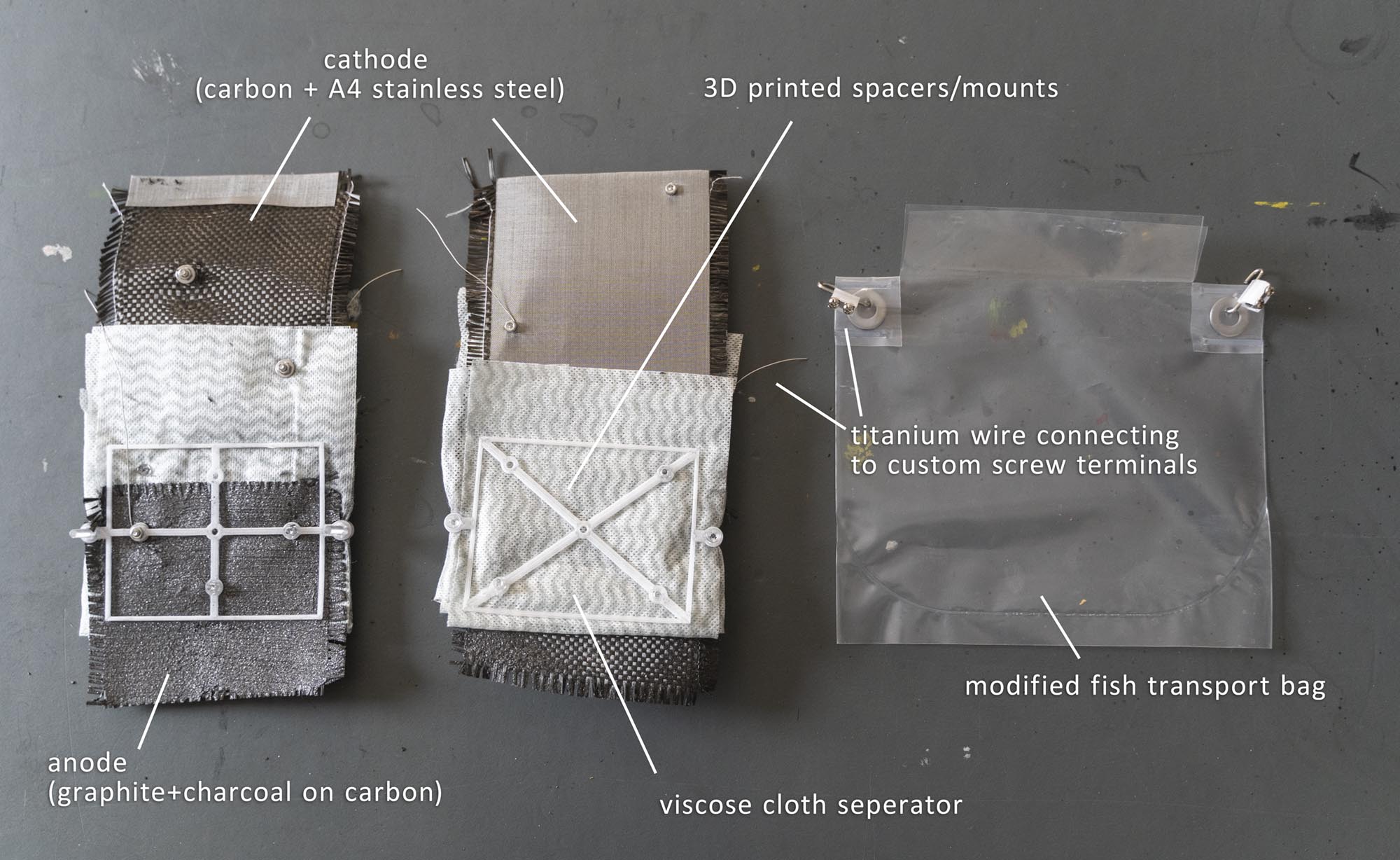
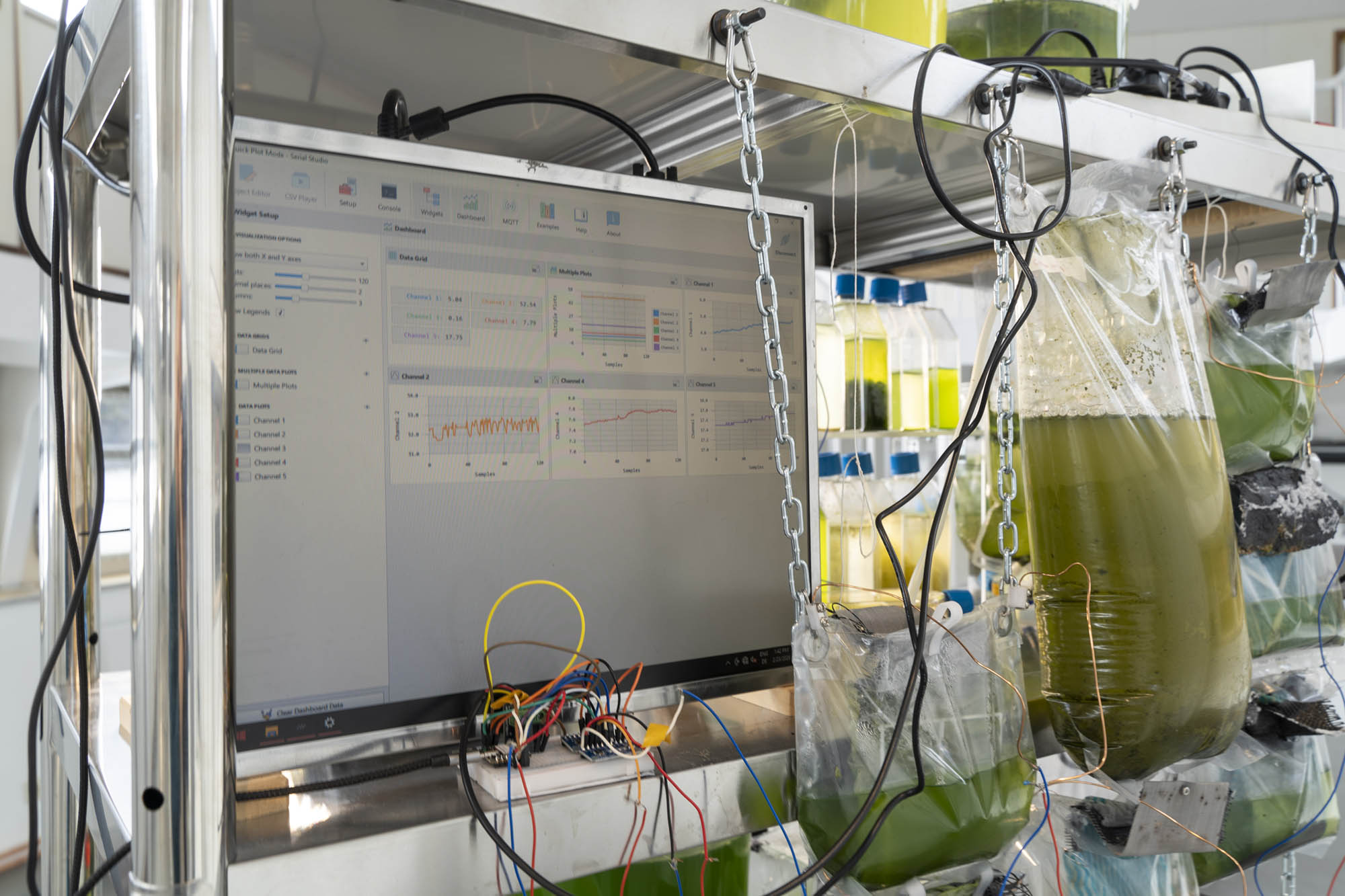
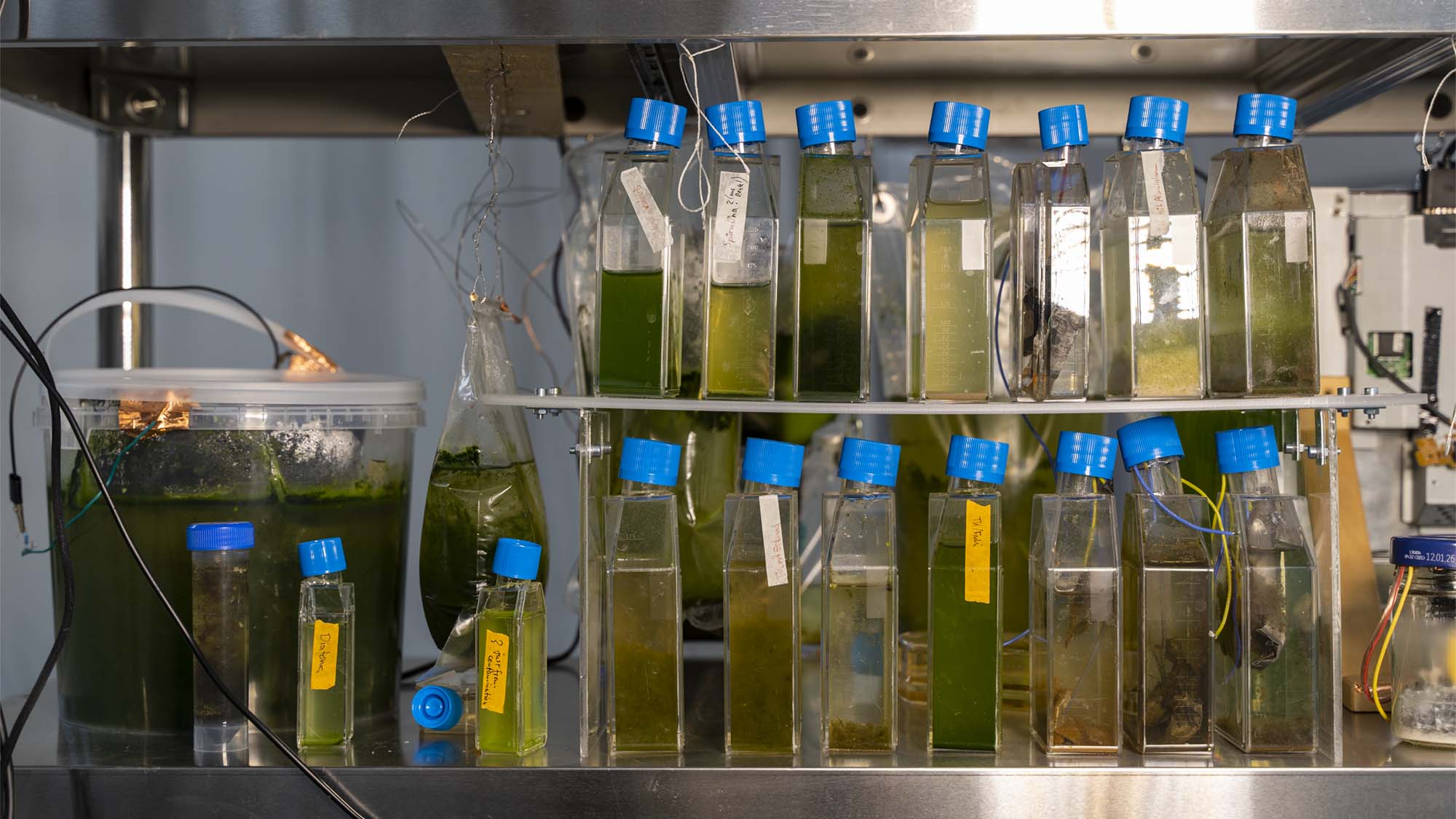
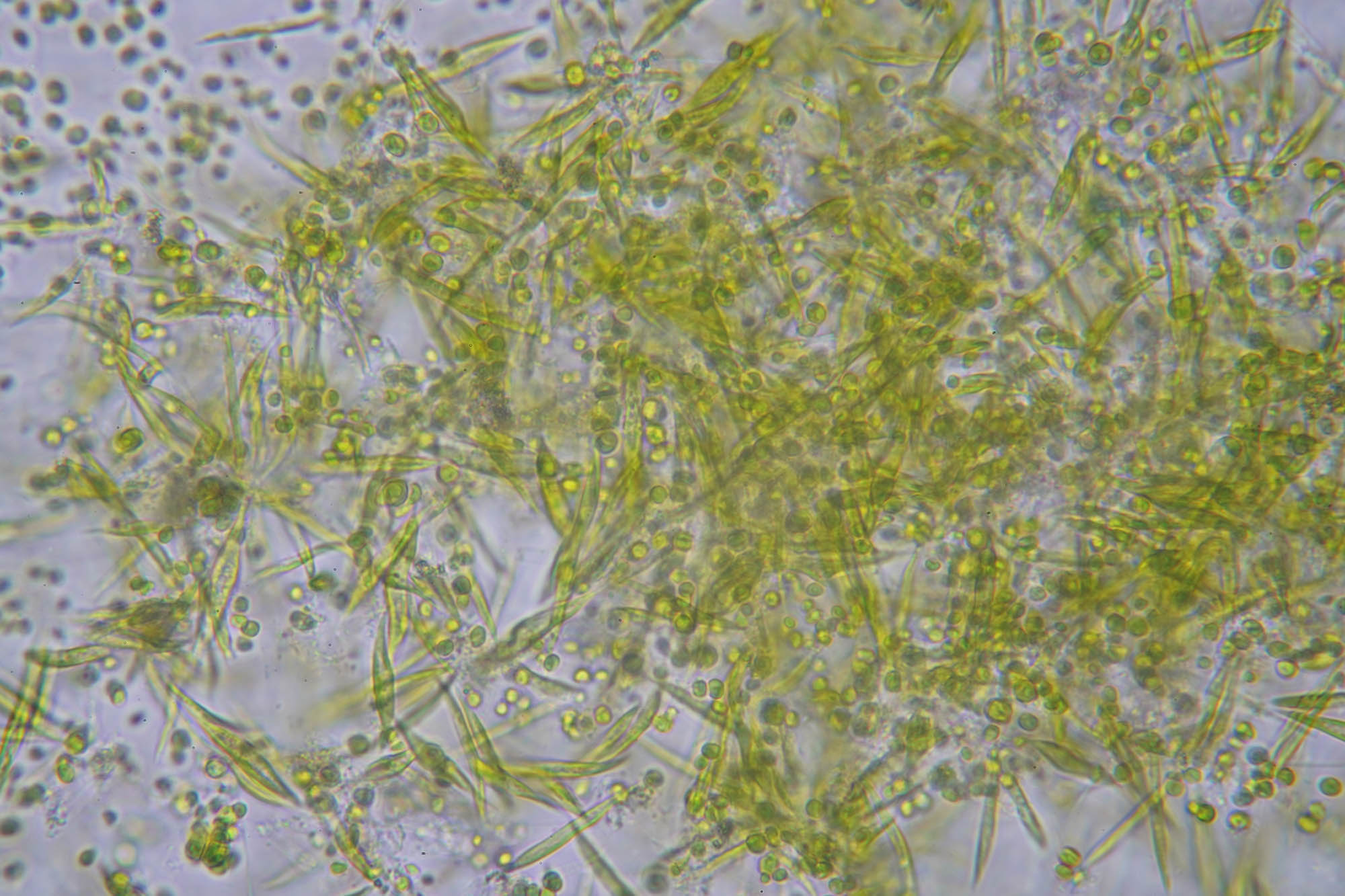
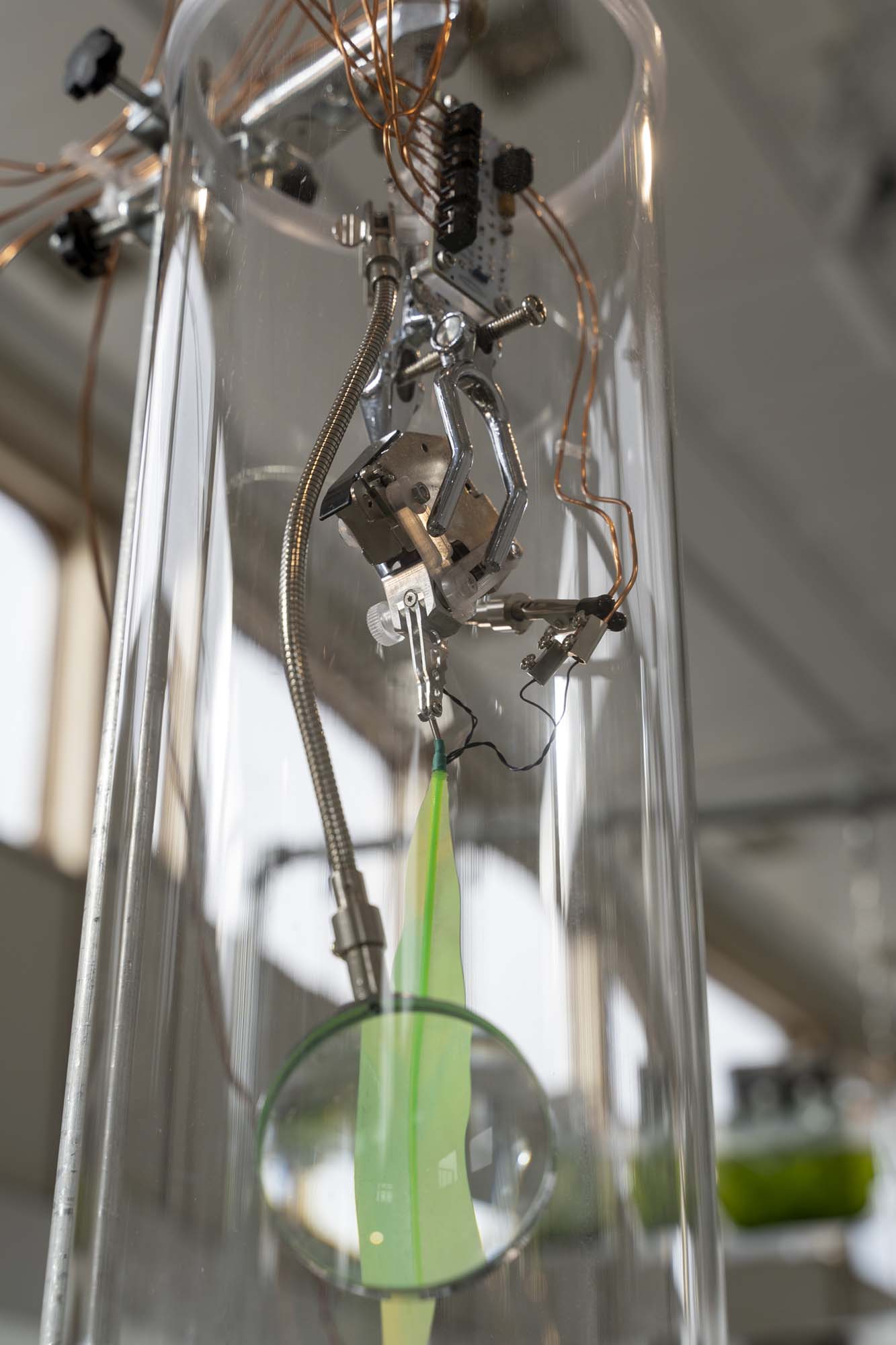
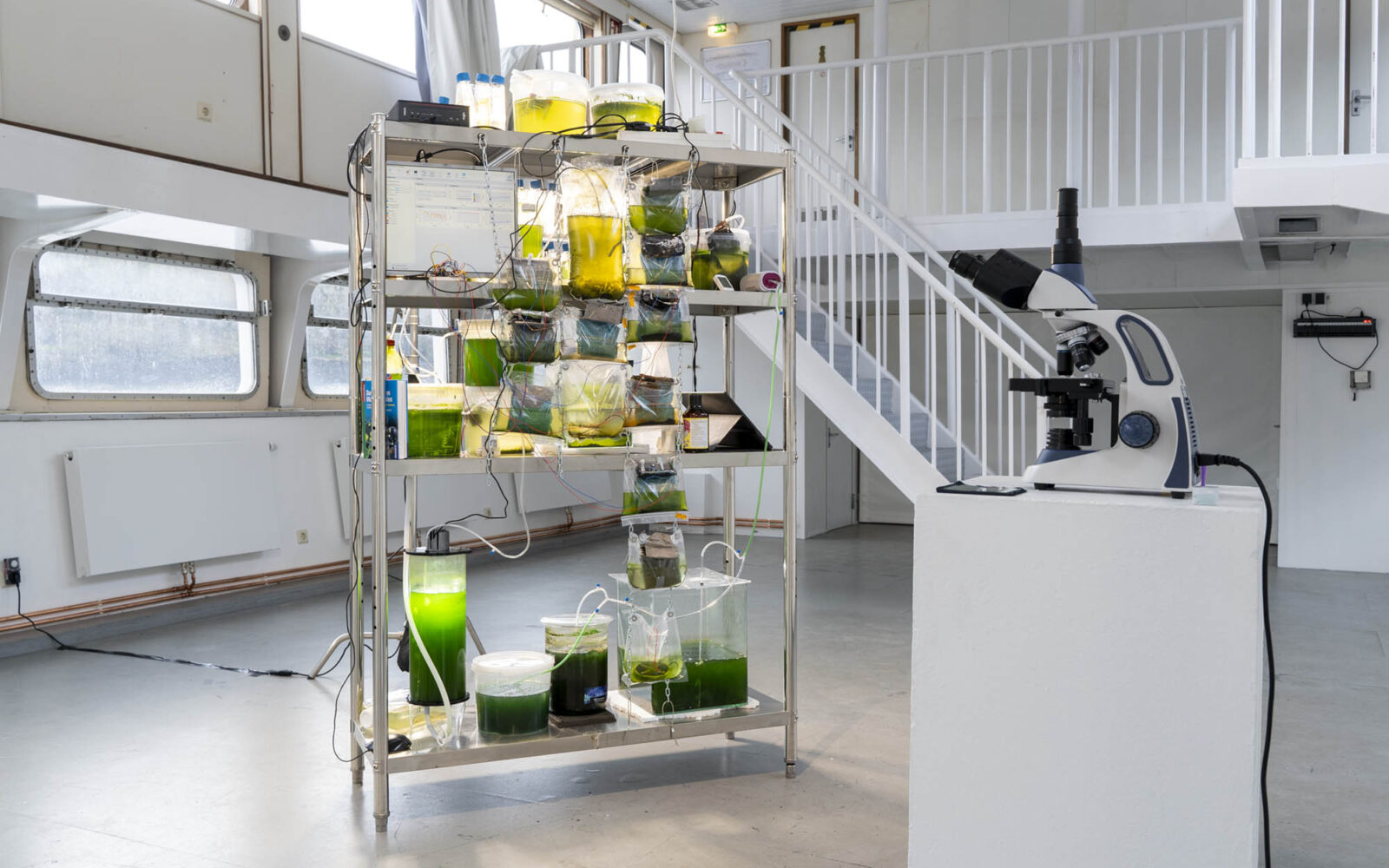
설치 작품의 한 파트에서는 현지에서 채집한 규조류, 녹조류, 남세균을 담은 60개의 바이오광전지 셀이 전기를 만들어냅니다. 생성되는 전력은 극히 미미한 수준이지만, 그것으로 인공 대형조류를 움직여 생명을 불어넣기에는 충분합니다. 두 번째 파트에서는 1년간의 예술적 연구 과정이 실험에 사용된 선반 형태로 펼쳐집니다. 조류 배양, 바이오광전지 테스트, 실시간 데이터 기록, 미생물 현미경 영상까지 — 그 모든 흔적이 고스란히 담겨 있습니다. 클레멘스(Clemens)에게 이 DIY 과정은 예상보다 훨씬 험난했습니다. 펌프, 조명, 영양 공급 같은 외부 에너지 없이 조류를 키우는 건 거의 불가능에 가까웠고, 완전히 통제되지 않은 환경 탓에 천적이나 원치 않는 미생물들이 시스템에 침입하기 일쑤였습니다. 멸균 처리도, 생태계 균형도 유지하기 어려웠습니다. 에너지 수확량은 최소 수준에 그쳤고, 전시 공간에서 살아있는 조류를 따뜻하게 유지하고 조명을 밝히는 데 들어간 에너지가 조류에서 추출한 전력을 아이러니하게도 훨씬 웃돌았습니다. 클레멘스의 셀은 50µA에서 0.08V, 최적 조건에서는 200µA에서 최대 0.2V를 생산했습니다. 설치 작품 안에서 셀들은 직렬과 병렬을 혼합한 배선으로 연결되어 LTC3108 에너지 하베스팅 칩이 탑재된 커스텀 PCB에 연결되었습니다. 드물게 이상적인 조건이 갖춰졌을 때, 이 시스템은 아주 작은 100µF 커패시터에 에너지를 조금씩 축적했고, 완전히 충전된 커패시터는 소형 액추에이터로 방전되어 인공 조류를 움직였습니다.
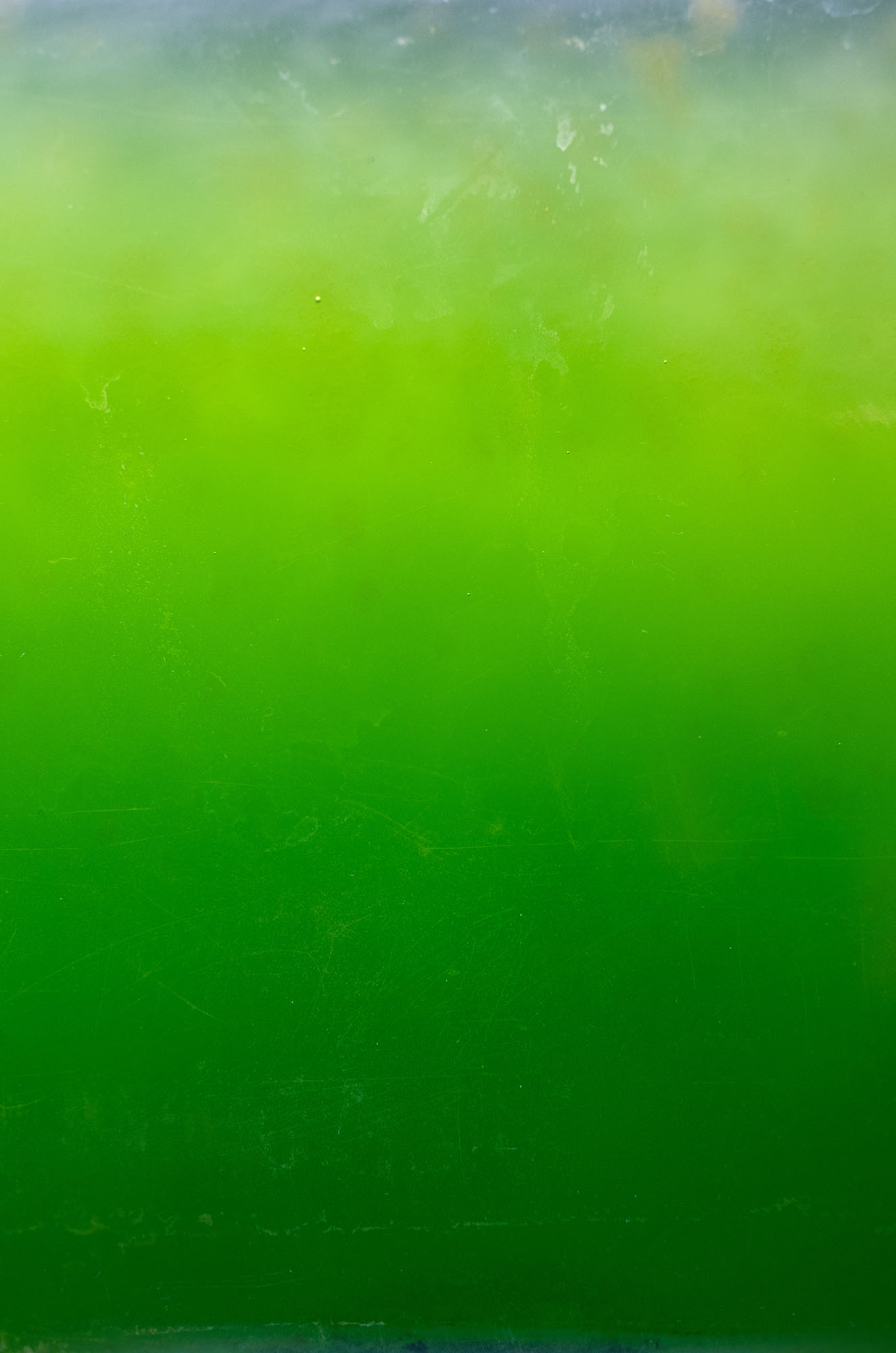
1. 전시 포스터 배경으로 활용된 DIY 조류 반응기 클로즈업. 2. 생물광전지 셀 디자인 3. 연구 선반의 데이터 로깅 클로즈업 4. 연구 선반에 배양 중인 다양한 샘플 클로즈업 5. 현미경으로 관찰한 규조류와 녹조류. 6. 설치 작품 디테일
논문의 텍스트 파트에서 저는 이러한 과제들과 소위 '친환경 기술', 특히 바이오광전지(biophotovoltaics)에 대한 이상화를 면밀히 추적하고 기록했습니다. 1장은 완벽하게 푸른 조류를 배양하려는 시도에서 시작해, 점차 '초록색'이라는 색깔이 문화적으로 짊어진 무게를 탐구하는 방향으로 나아갑니다. 유해 조류 대발생이 만들어내는 독성 어린 아름다움부터, 쇼핑센터의 플라스틱 모스 벽과 조류로 외관을 꾸민 건물에 이르기까지—우리가 자연과 지속가능성을 떠올릴 때 반사적으로 초록색에 기대면서 그 안에 새겨 넣는 욕망과 맹점이 무엇인지를 분석합니다. 이 긴장은 전시 자체에도 고스란히 반영되어 있습니다.
작업을 이어가면서 클레멘스는 자신이 흔한 함정에 빠져들고 있음을 깨달았습니다. 개별 셀의 효율을 높이는 데 점점 더 많은 시간과 자원을 쏟아붓는 동안, 정작 프로젝트 전체를 떠받치는 근본적인 구조적 가정을 의심하는 일은 뒷전으로 밀려났습니다. 작은 개선에 집착하느라 더 큰 질문을 놓쳐버린 것입니다. 그가 결국 던지는 것은 에너지를 바라보는 시각 자체에 대한 물음입니다. 끝없이 커지는 수요를 채울 새로운 에너지원이나 해결책을 찾는 것이 아니라, 그 수요의 규모 자체가 진짜 문제임을 인식해야 한다는 것입니다.
어떤 에너지 이득이든 새로운 성장에 즉시 소비되는 한, 아무것도 충분하지 않을 것입니다. 나아갈 길은 더 친환경적인 해결책이 아니라, 폴리컬처(polyculture)와 재발견, 공명, 시스템적 사고로의 전환입니다. 그리고 각자의 환경 세계인 움벨텐(Umwelten, around-worlds)에서 함께하는 세계인 미트벨텐(Mitwelten, with-worlds)으로 나아가는 것입니다.
Created by Clemens Hornemann at the University of Bremen (Digital Media, Master Theses), Prometheus Bound is an installation and a research project exploring the distance between the promise of a new and clean energy source and the messy reality of working with living organisms. Through the DIY cultivation of algae and the laborious attempt to harvest electricity released during photosynthesis, the questions emerge not only about viability but also control, care, and the ethics of instrumentalizing other species. 2.4 to 2.5 billion years ago, cyanobacteria committed the original Promethean act – igniting the fateful torch – by developing the ability to split water using light, unleashing oxygen and forever altering our planet and making our existence possible. Now we chain the algae as Prometheus was chained to his rock, trying to extract that same energy from them. Are we thereby trying to be the next mythological Prometheus – harnessing and breeding algae strains to steal fire from nature – or are we merely in the position of Mary Shelley’s Prometheus from Frankenstein; or, The Modern Prometheus? Like Frankenstein, who reached beyond human limits, trying to overcome his own insufficiency, we turn to ever new technologies in search of a technological fix for our fundamental problem: we need more energy, more fire. Clemens Hornemann In one part of the installation, 60 biophotovoltaic cells containing local diatoms, green algae, and cyanobacteria are harnessed to generate electricity – barely enough to move an artificial macroalga, bringing it “to life.” In the second part, the preceding year of artistic research is presented in the form of the shelf used throughout the experiments: growing algae, testing biophotovoltaic cells, logging live data, and video footage of microscopic organisms. For Clemens, this DIY process proved far more difficult than anticipated. Cultivating algae without external energy inputs like pumps, lights, and nutrition was barely feasible; an only partially controlled environment meant predators and other unwanted organisms entered the system without sterile control or a balanced ecosystem to keep things in check. The energy yields were minimal – and in the exhibition setting, the energy required to heat, illuminate, and sustain the living algae ironically far exceeded the power extracted from them. Clemens's cells produced between 0.08V at 50µA (0.000004W) and up to 0.2V at 200µA under best conditions. In the isntallation, the cells were connected through a combination of series and parallel wiring to a custom PCB featuring an LTC3108 harvesting chip. In rare, ideal condtions, this setup slowly accumulated the trickle of energy into a tiny 100µF capacitor, which, once fully charged, discharged into a small actuator to move the artificial alga. 1. Close-up of a DIY algae reactor, used later as the background for the exhibition poster. 2. The design of biophotovoltaic cells 3. Close up of the data-logging in the research shelf 4. Close up of different cultures in the research shelf 5. Diatoms and Green algae under the microscope. 6. Installationd detail In the accompanying written part of my thesis, I trace and document in detail these challenges and the idealization of supposedly green technologies, in particular biophotovoltaics. The first chapter follows my attempts to cultivate perfectly green algae, before expanding outward to interrogate the cultural weight of the color green: from the toxic beauty of harmful algal blooms to plastic moss walls in shopping centers and algae houses, analyzing what desires and blind spots we encode into the color when we reach for it as a shorthand for nature and sustainability. This tension is also reflected in the exhibition itself. During his endeavors, Clemens observed a personal descent into a common systemic trap: he became increasingly consumed by the granular task of optimizing individual cells, pouring vast effort and resources into their mechanical success. Ultimately, he notes that this focus on marginal gains often came at the expense of questioning the fundamental structural assumptions that underpinned the entire project. What emerged instead is a call to question our perspective on energy: not to find yet another source or fix to feed an ever-growing demand, but to recognize that the real problem lies in the scale of that demand itself. As long as any energy gain is immediately consumed by new growth, nothing will be enough. The path forward is not a greener fix, but a shift toward polycultures, re-discoveries, resonance, systemic thinking, and a move from Umwelten (around-worlds) towards shared Mitwelten (with-worlds). Clemens Hornemann Project Page | Clemens Hornemann Project was supported by Prof. Dr. Andrea Sick and Prof. Ralf Baecker See also the work of Gilberto Esparza, particularly Plantas Autofotosintéticas . ↑ Observing a manifold world of organisms.