지구의 생명체는 늘 중력과 함께 진화해왔습니다. 하지만 우리는 중력이 생명 시스템을 얼마나 깊이 형성하는지 좀처럼 의식하지 못합니다. 중력이 없는 공간을 상상해보기 전까지는요. 균류는 중력굴성을 통해 중력을 감지하며, 자실체의 성장 방향을 조절합니다. 그 메커니즘은 아직 대부분 밝혀지지 않았습니다.
노르 스텐페르트 크루세(Noor Stenfert Kroese)
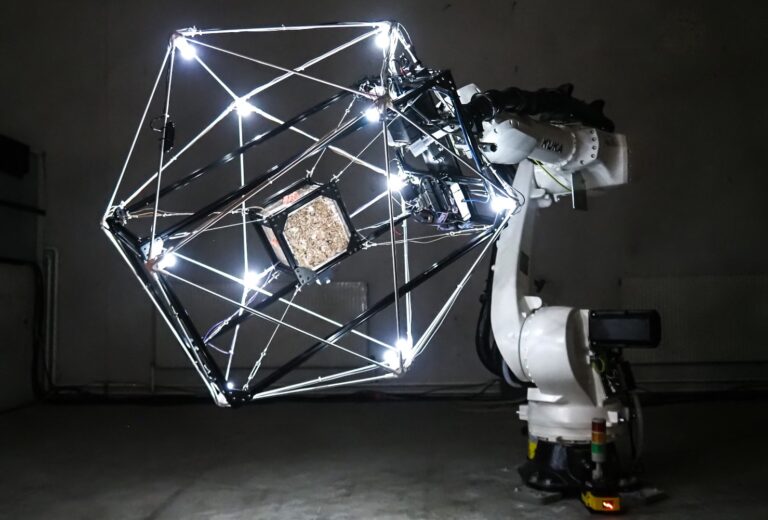
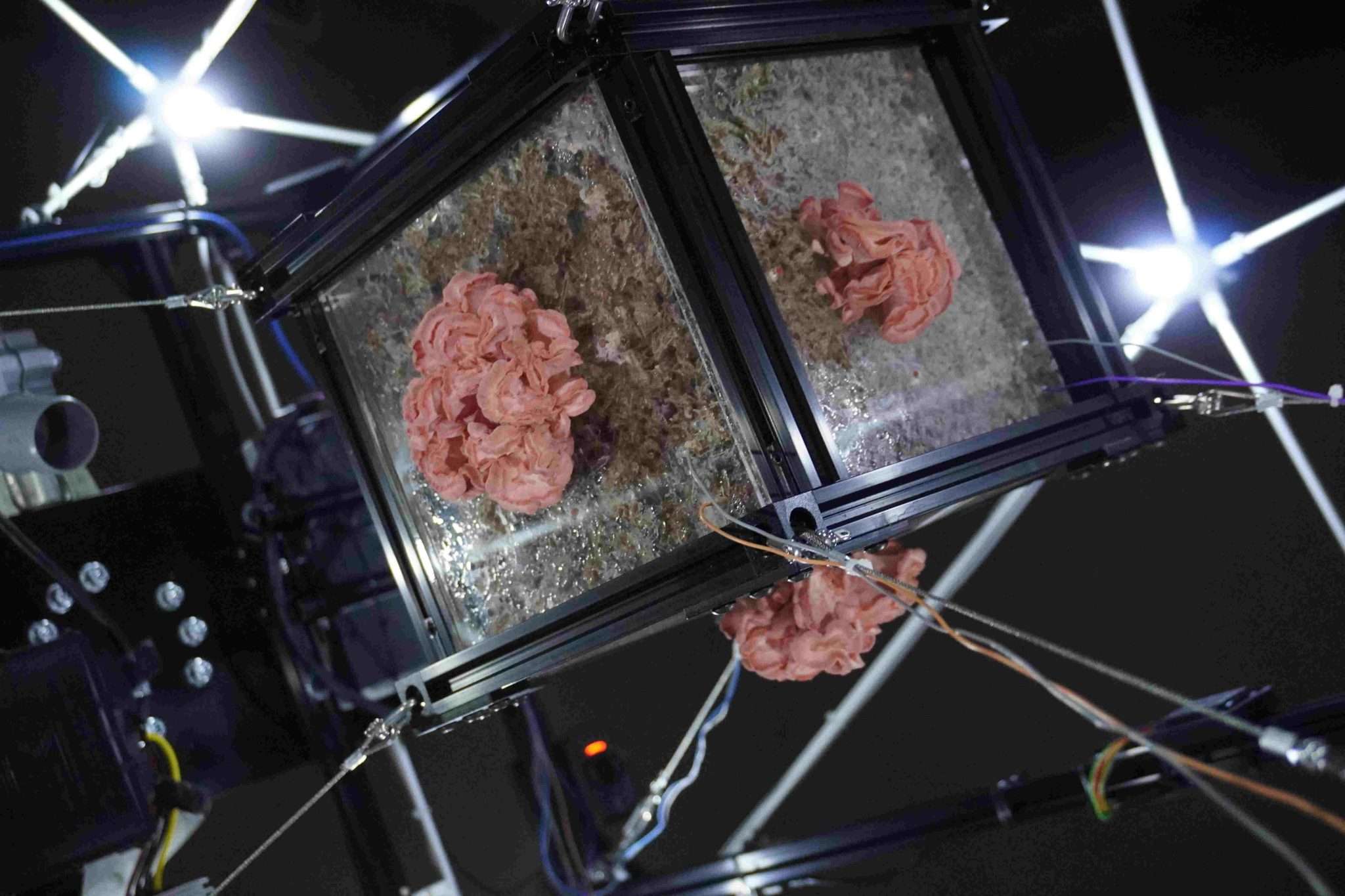
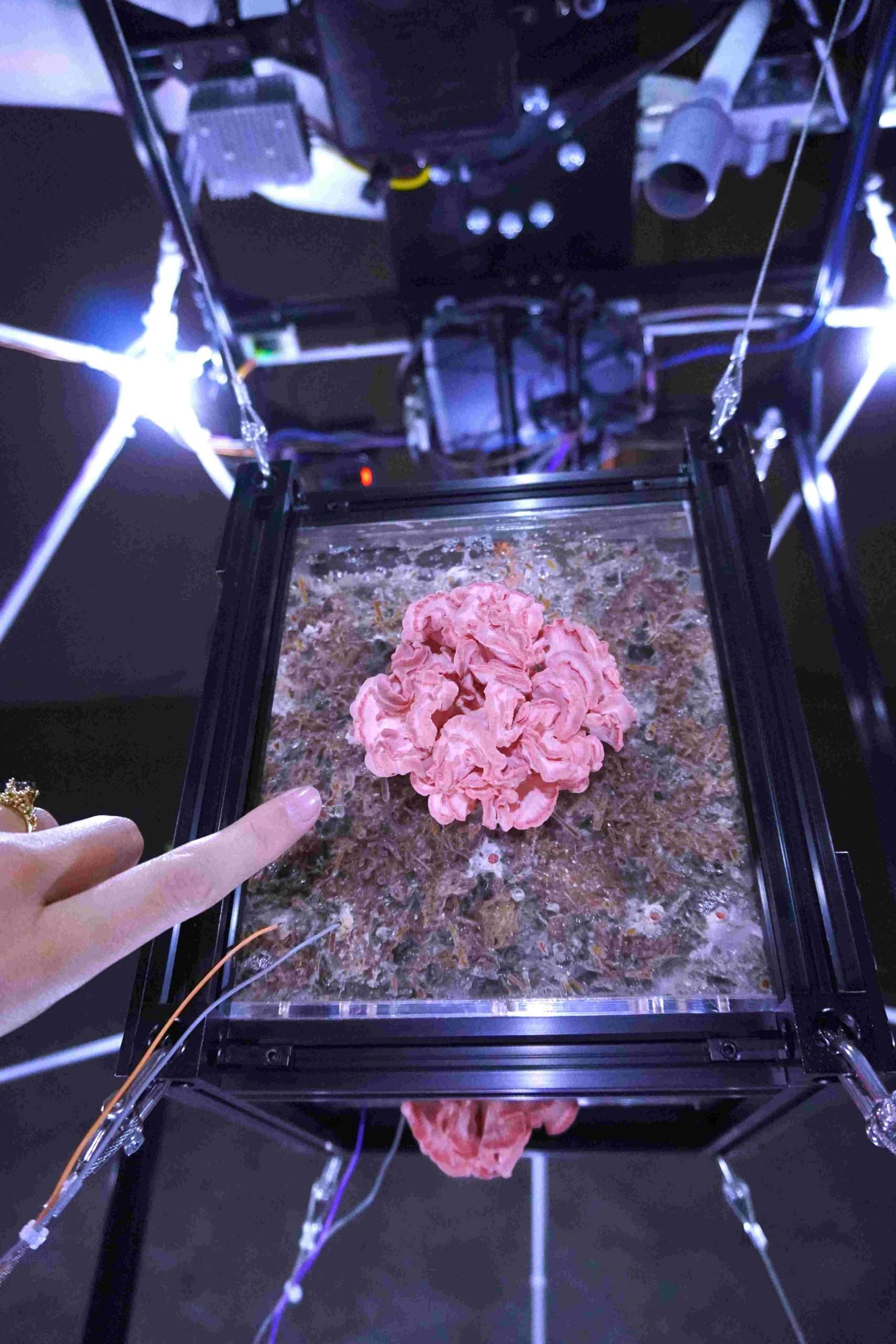
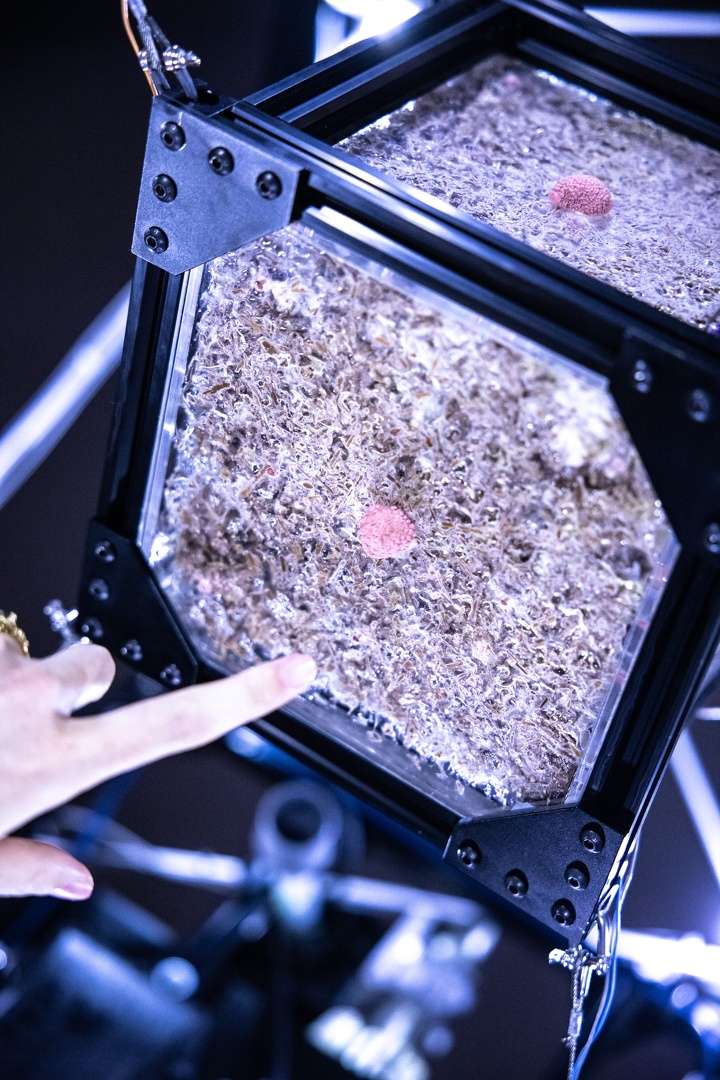
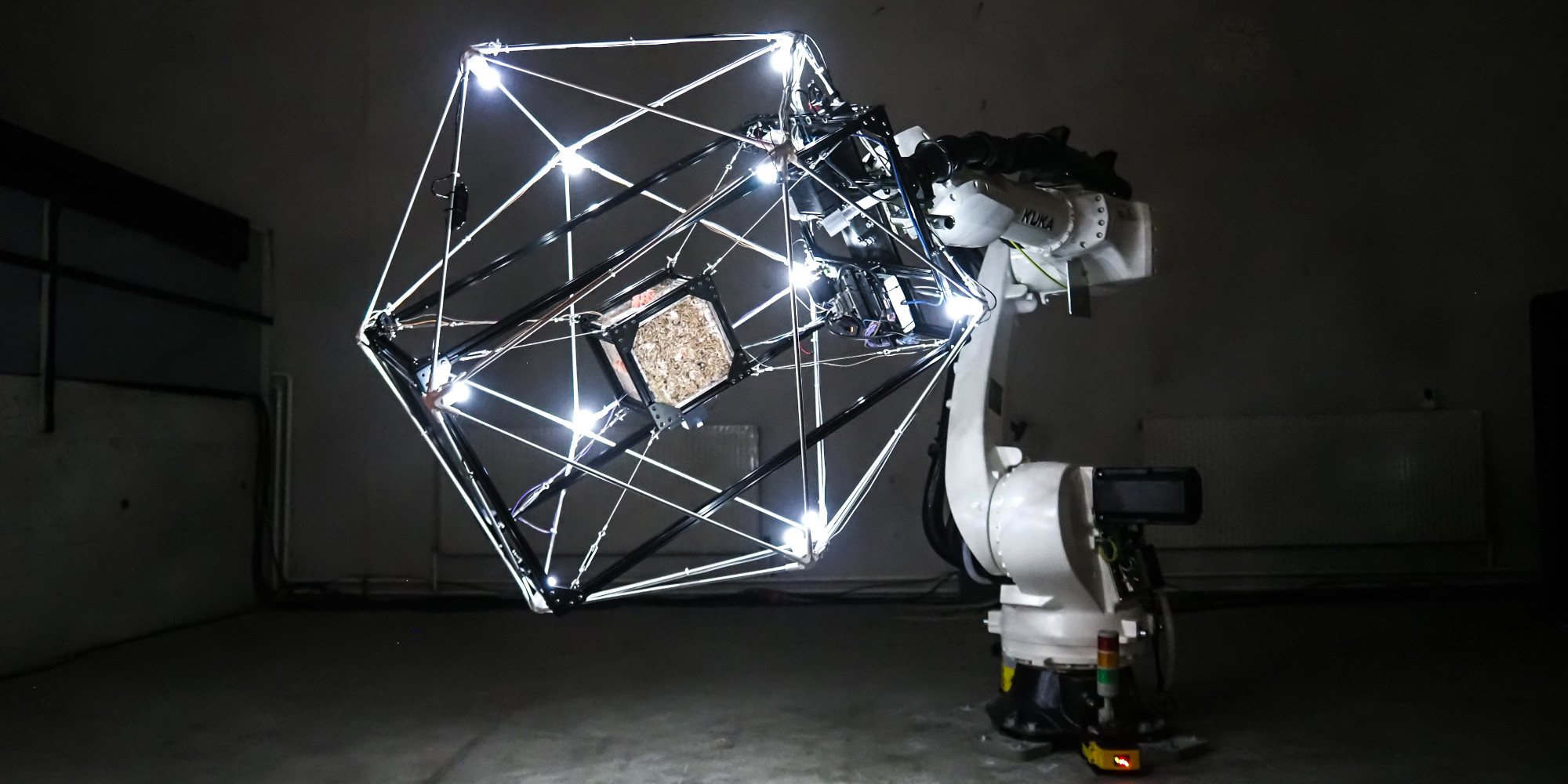
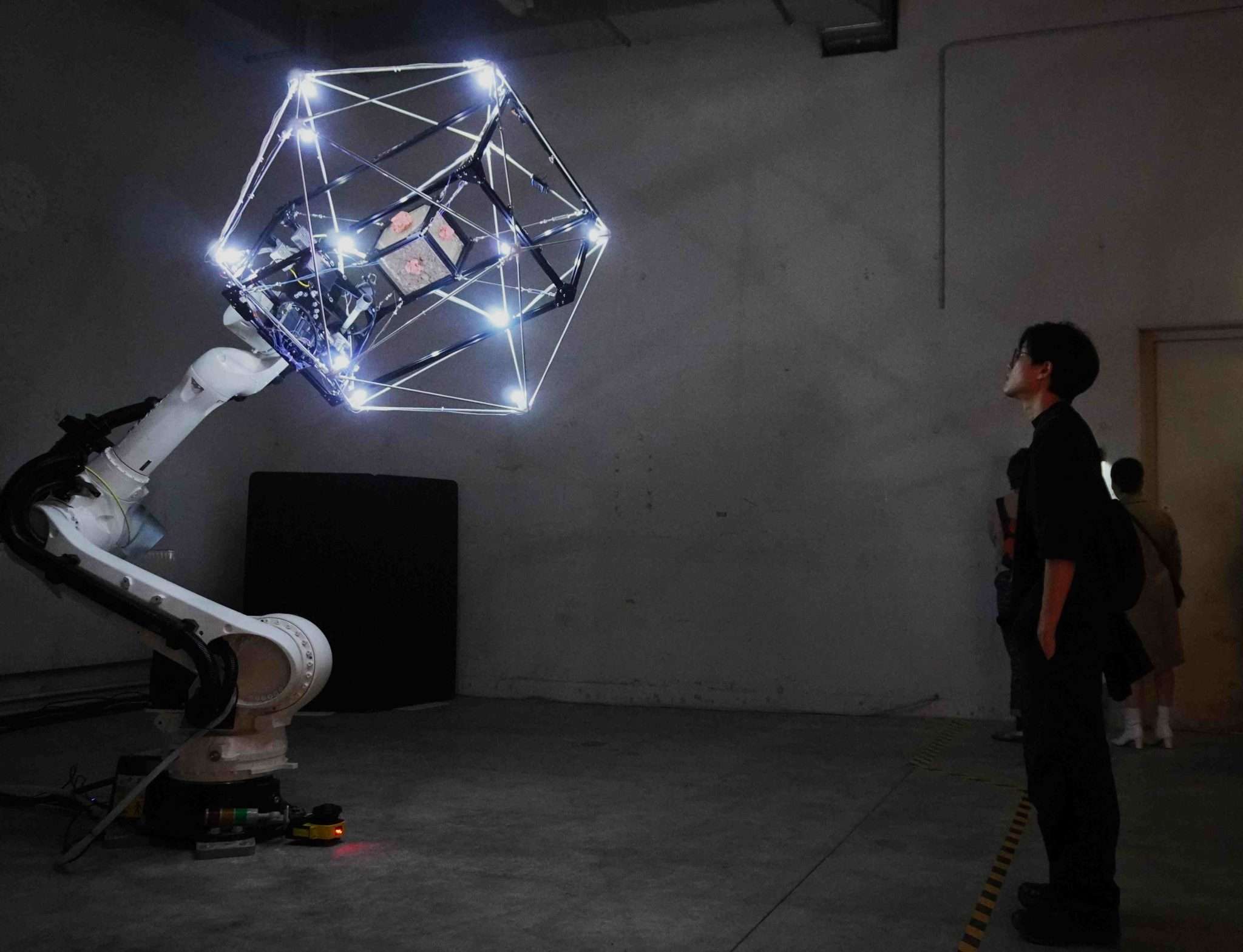
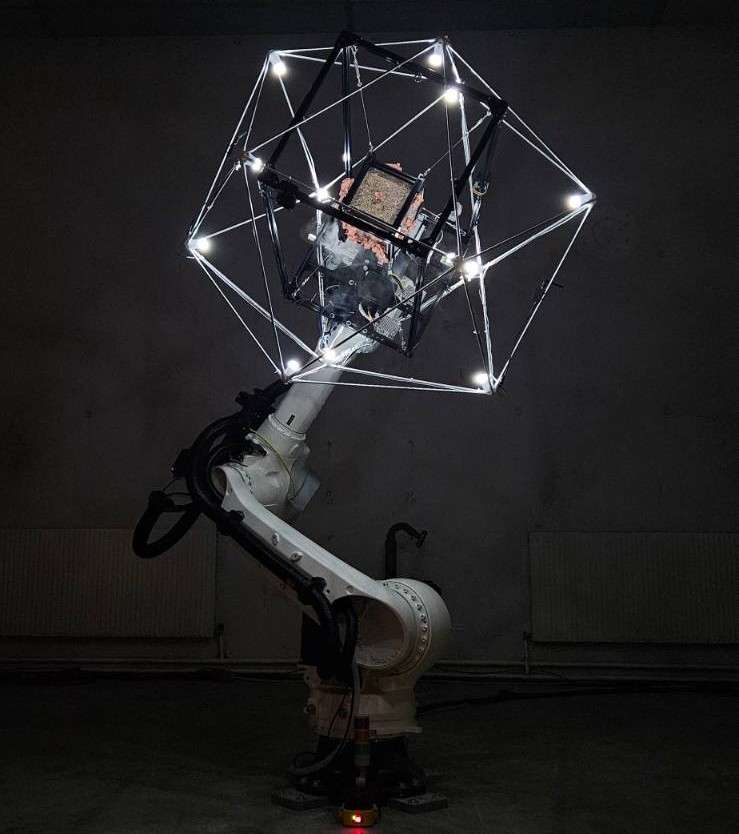
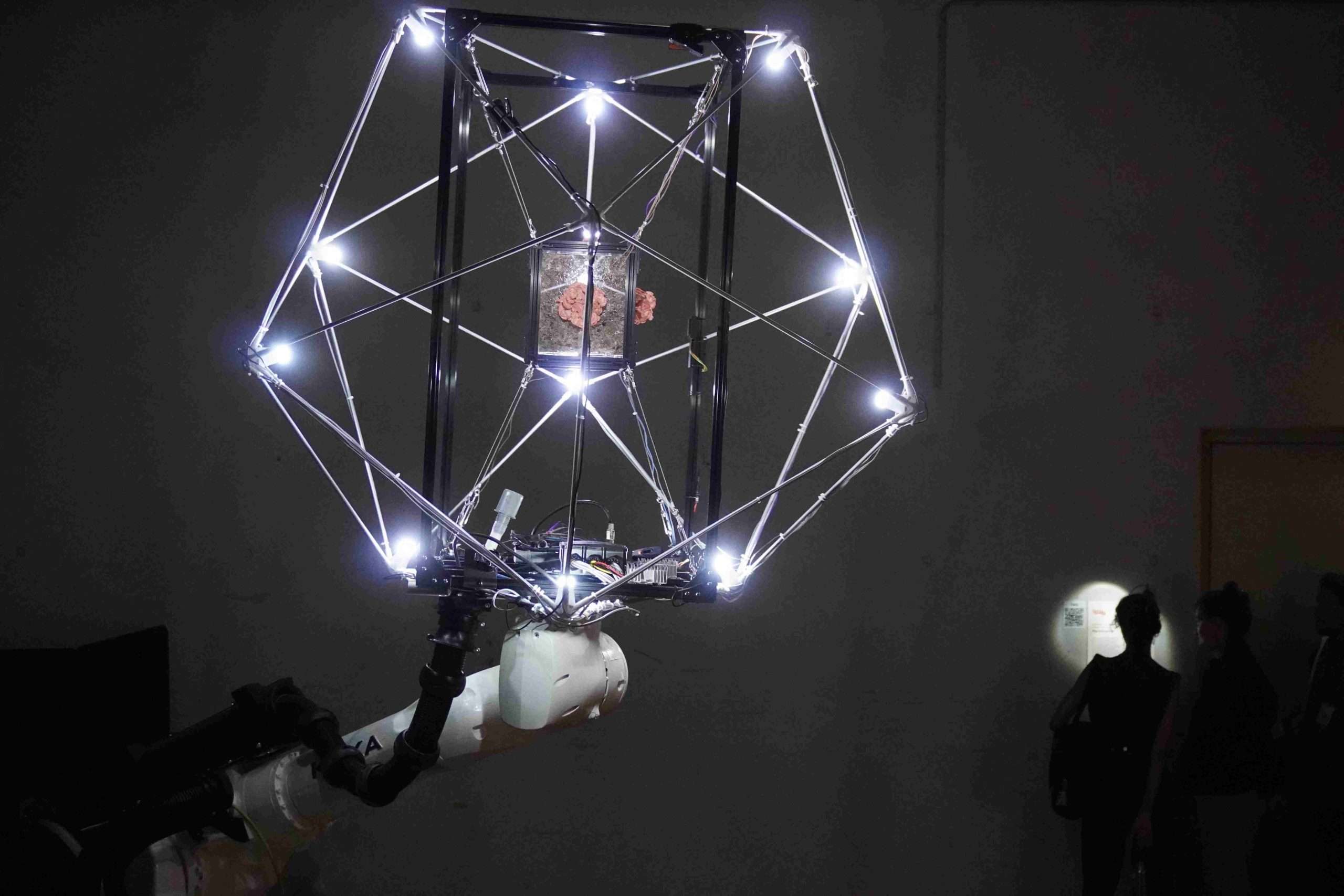
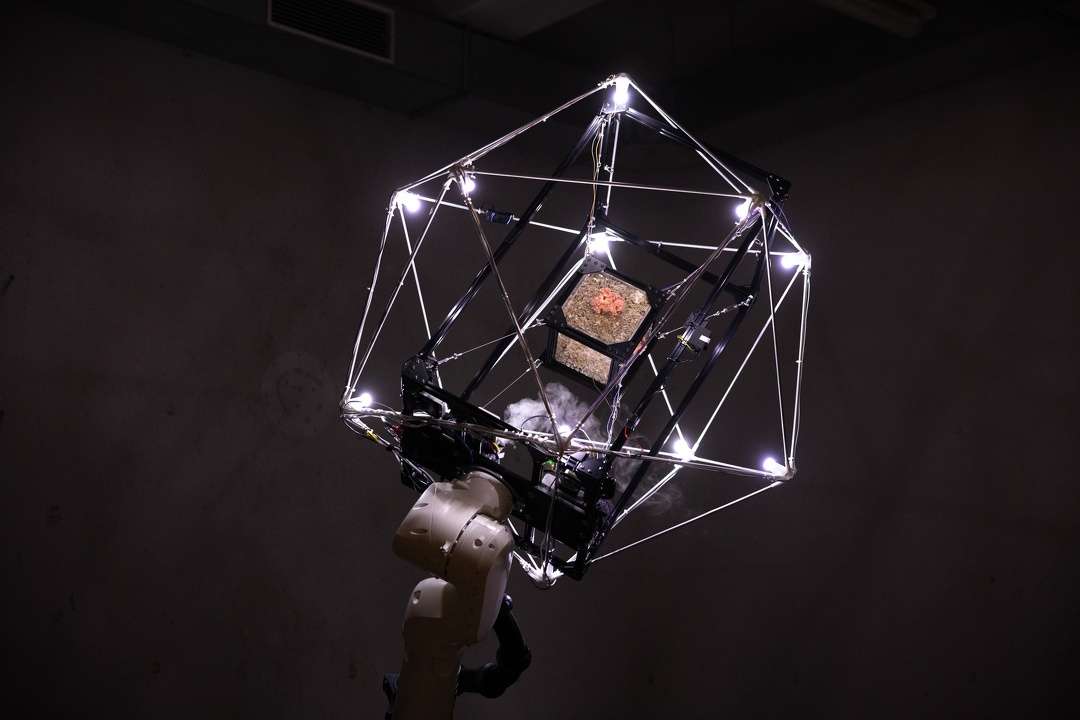
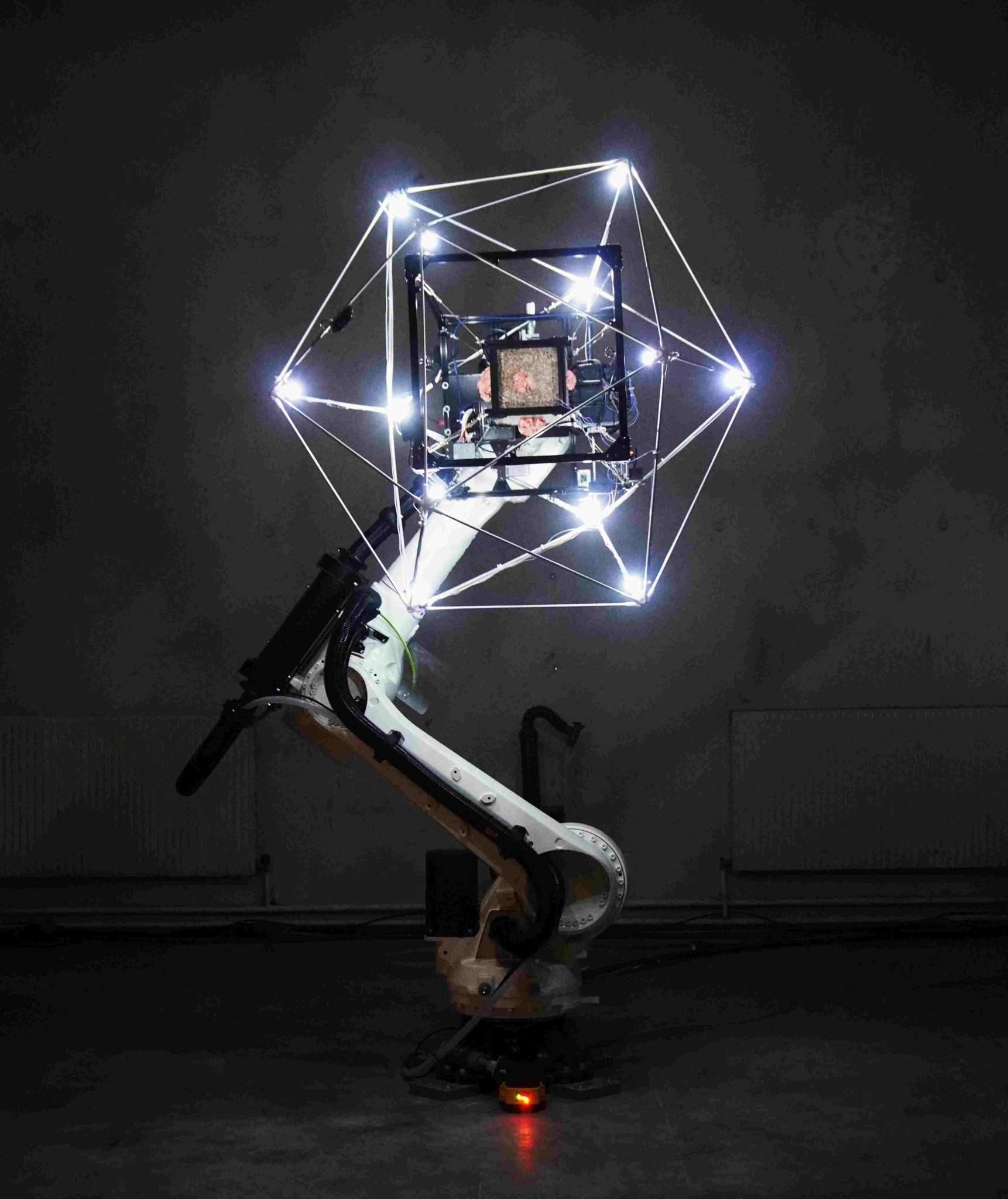
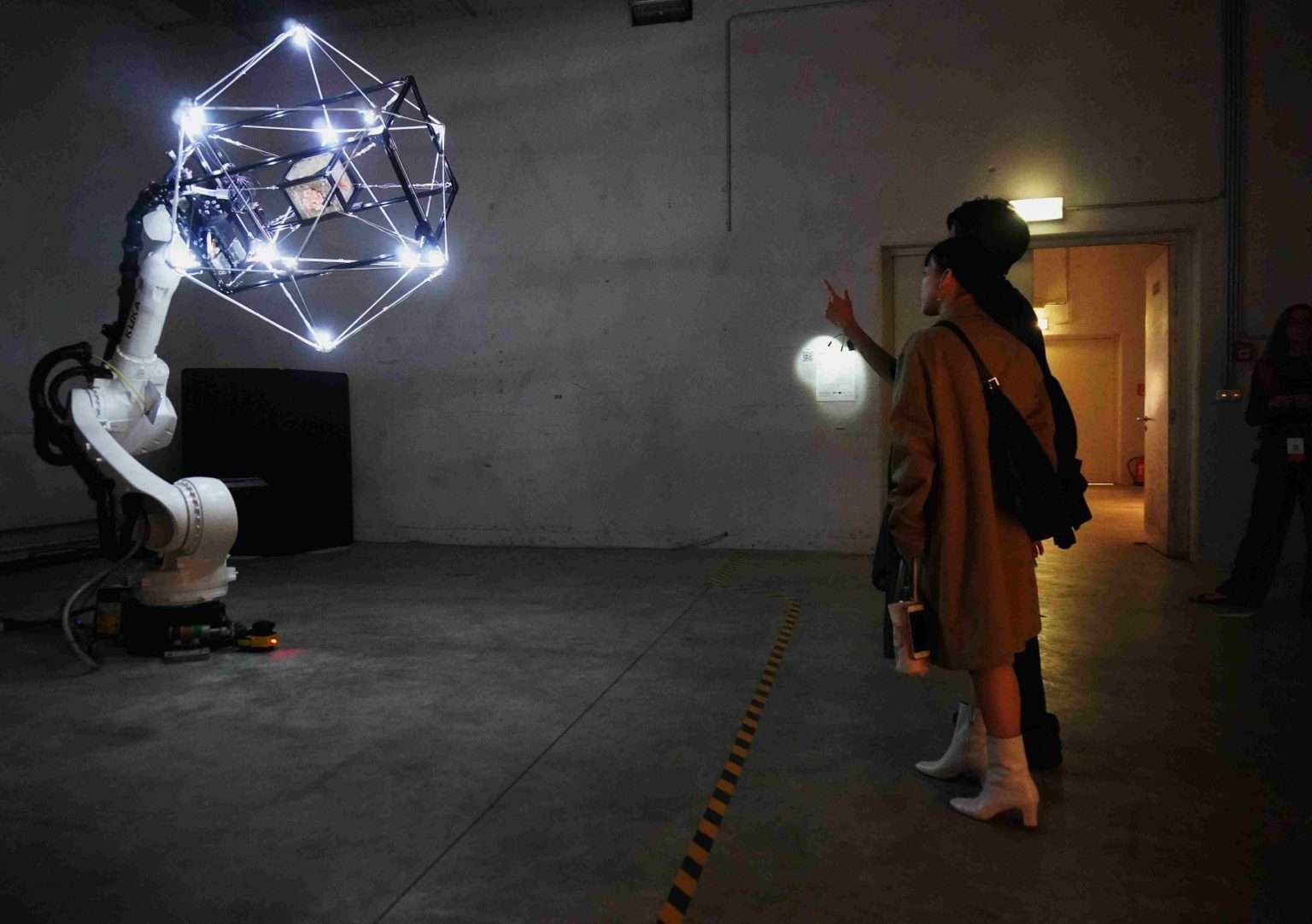
MycoGravity에서는 분홍 느타리버섯이 KUKA Iontec K30R2100 로봇 팔에 장착된 맞춤 제작 바이오리액터 안에서 자랍니다. NASA의 무작위 위치 조정 장치(Random Positioning Machine)에서 영감을 받아, 로봇의 움직임은 중력이 변형된 환경을 시뮬레이션하도록 프로그래밍되어 있습니다. 바이오리액터 내부의 균사체 챔버에서 균류가 성장하고, 균사체 속에는 피하 니들 전극이 삽입되어 생체 전기 신호를 기록합니다. 외층에는 온도·습도·CO₂·빛·움직임(IMU) 센서와 가습기, 성장 조명, 카메라, PICO24 고해상도 데이터 로거가 탑재되어 환경 및 생리 데이터를 실시간으로 수집합니다. 이 데이터는 전용 Wi-Fi 액세스 포인트를 통해 외부 로컬 서버로 전송되고, 시스템은 이를 바탕으로 로봇의 움직임과 내부 환경 조건을 함께 조율합니다. 일정한 중력 방향 없이 환경에 반응하며 자란 버섯들은, 시간이 흐를수록 독특한 조각적 형태를 갖추어 갑니다.
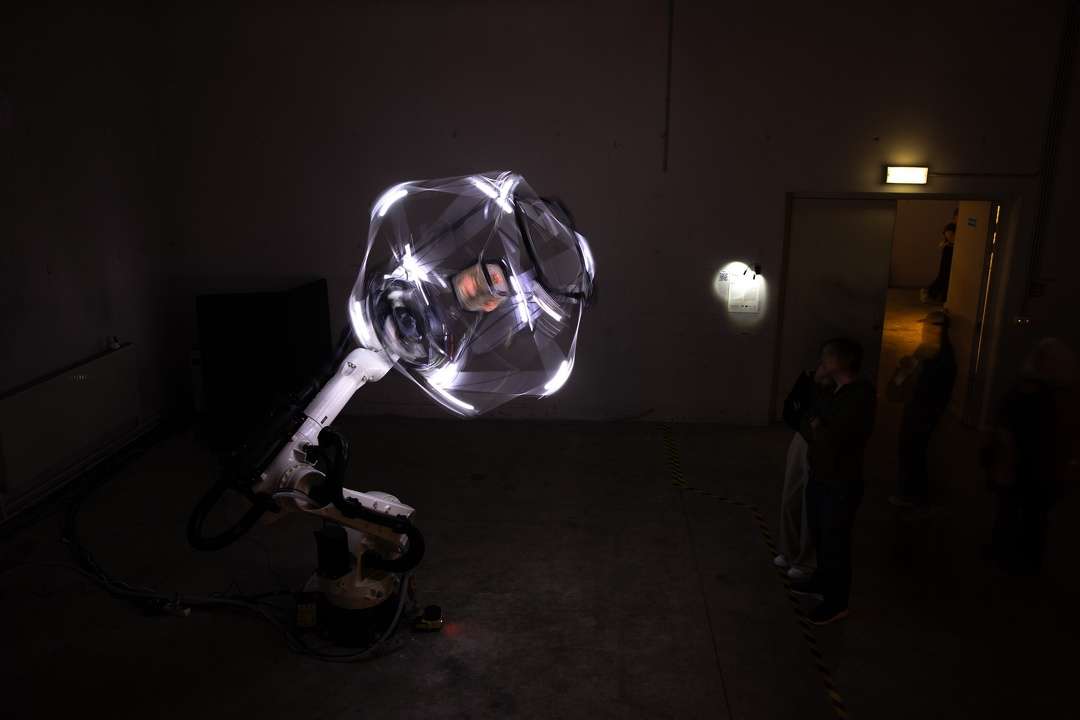
지구에서 살아가는 모든 생명체는 중력의 영향을 받으며 형태를 갖춥니다. 버섯도 마찬가지입니다. 중력을 감지하고, 갓 아래의 얇은 주름이 항상 아래를 향하도록 자랍니다. 마이코그래비티(MycoGravity)에서는 로봇 팔이 버섯이 자라는 챔버를 끊임없이 회전시켜, 중력이 일정한 방향으로 작용하지 못하도록 합니다. 지구에서의 일정한 중력과는 전혀 다른, 변형된 중력 환경을 만들어내는 것입니다. 우리는 이 끊임없이 바뀌는 방향 속에서 버섯이 어떻게 적응해 가는지를 관찰합니다. 생명의 가장 근본적인 조건 중 하나가 달라질 때, 삶은 어떤 모습으로 변해가는지를 탐구하는 작업입니다.
누어 스텐페르트 크루스(Noor Stenfert Kroese)
MycoGravity는 지구의 생명체를 낯선 환경으로 데려간다는 것이 어떤 의미인지, 그리고 생명이 그 속에서 어떻게 섬세하고 예측할 수 없는 방식으로 반응을 이어가는지를 탐구합니다.
MycoGravity는 2025년 아르스 일렉트로니카 페스티벌(Ars Electronica Festival)에서 선보였습니다. 린츠 예술대학교(University of Arts Linz) 크리에이티브 로보틱스(Creative Robotics) 팀이 KUKA CEE, 오스트리아 버섯연구센터(Mushroom Research Center Austria)와 공동 제작했습니다.
Created by Amir Bastan , Noor Stenfert Kroese , and Johannes Braumann at the Creative Robotics , University of Arts Linz , MycoGravity is a robotic installation and artistic research project that explores fungal growth under altered gravitational conditions. It is part of a continuing series of works including RHIZA and ZOE that investigate how fungi, sensing systems, and robotics can form new environments of interaction. Life on Earth has evolved in constant relation to gravity, yet we rarely consider how deeply it shapes living systems, until we imagine a place without it. Fungi sense gravity through gravitropism, guiding the growth of fruiting bodies, though the mechanisms behind it remain largely unknown. Noor Stenfert Kroese In MycoGravity , pink oyster mushrooms grow inside a custom-built bioreactor mounted on a KUKA Iontec K30R2100 robotic arm. Inspired by NASA’s random positioning machines, the robot’s programmed movement simulates altered gravity. Inside the bioreactor is a mycelium chamber where the fungi grow. Subdermal needle electrodes are embedded in the mycelium to record bioelectric signals. In the outer layer, the bioreactor houses sensors for temperature, humidity, CO₂, light, and motion (IMU), a humidifier, grow lights, camera’s, a PICO24 high-resolution data logger and all these devices collect environmental and physiological data in real time. This data is sent via a dedicated Wi-Fi access point to an external local server. The system uses this data to adjust both the robot’s movement and the environmental conditions. Over time, sculptural mushrooms emerge, shaped by their environment without a stable gravitational direction. All organisms that grow on Earth are shaped by gravity. Mushrooms sense it and usually grow with the thin stripes under their caps facing downwards. In MycoGravity, a robotic arm keeps turning a growth chamber with mushrooms so gravity never points in one direction for long. This creates altered gravity, unlike the constant gravity that shapes life on Earth. We explore how mushrooms adapt to this shifting orientation, observing how life may change when one of its most basic conditions is altered. Noor Stenfert Kroese MycoGravity explores what it means to bring terrestrial life into unfamiliar environments, and how life might continue to respond, delicately and unexpectedly. Project Page | Noor Stenfert Kroese | Amir Bastan | Johannes Braumann MycroGravity was presented at Art Electronica Festival in 2025 . Creative Robotics, University of Arts Linz in co-production with KUKA CEE, Mushroom Research Center Austria.