3d ScanningarchivecameracapturecityDecayEnvironmentinfrastructureinteractivemappingPhotogrammetryphotographyPolycampublic spaceresearch
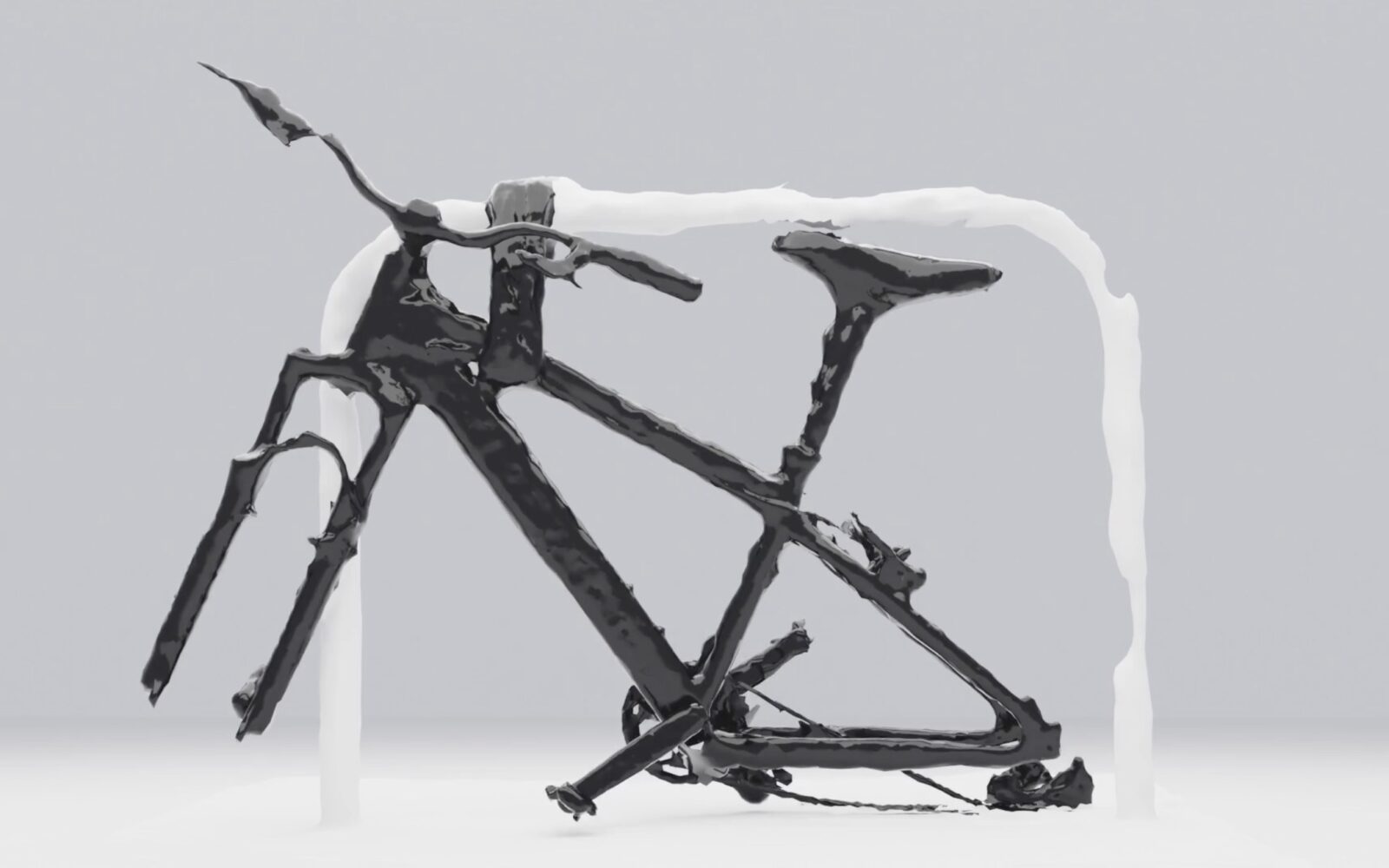
랙스(Racks)(2026)는 런던 4개 자치구에 방치되거나 해체된 자전거들을 기록한 인터랙티브 설치 작품입니다. 이 프로젝트는 한때 누군가의 것이었던 자전거들, 때로는 수년간 함께한 자전거들이 도난으로 부품이 뜯겨나간 채 도시 곳곳의 거치대에 묶여 버려진 현실을 들여다봅니다. 스티커, 긁힌 자국, 개인적인 커스터마이징, 잠금장치, 오랜 사용의 흔적들—많은 자전거에는 아직도 이전 주인의 손길이 남아 있습니다. 도시 공간에 여전히 물리적으로 존재하지만, 본래의 쓸모와 누군가에게 속했던 관계는 이미 사라진 지 오래입니다.
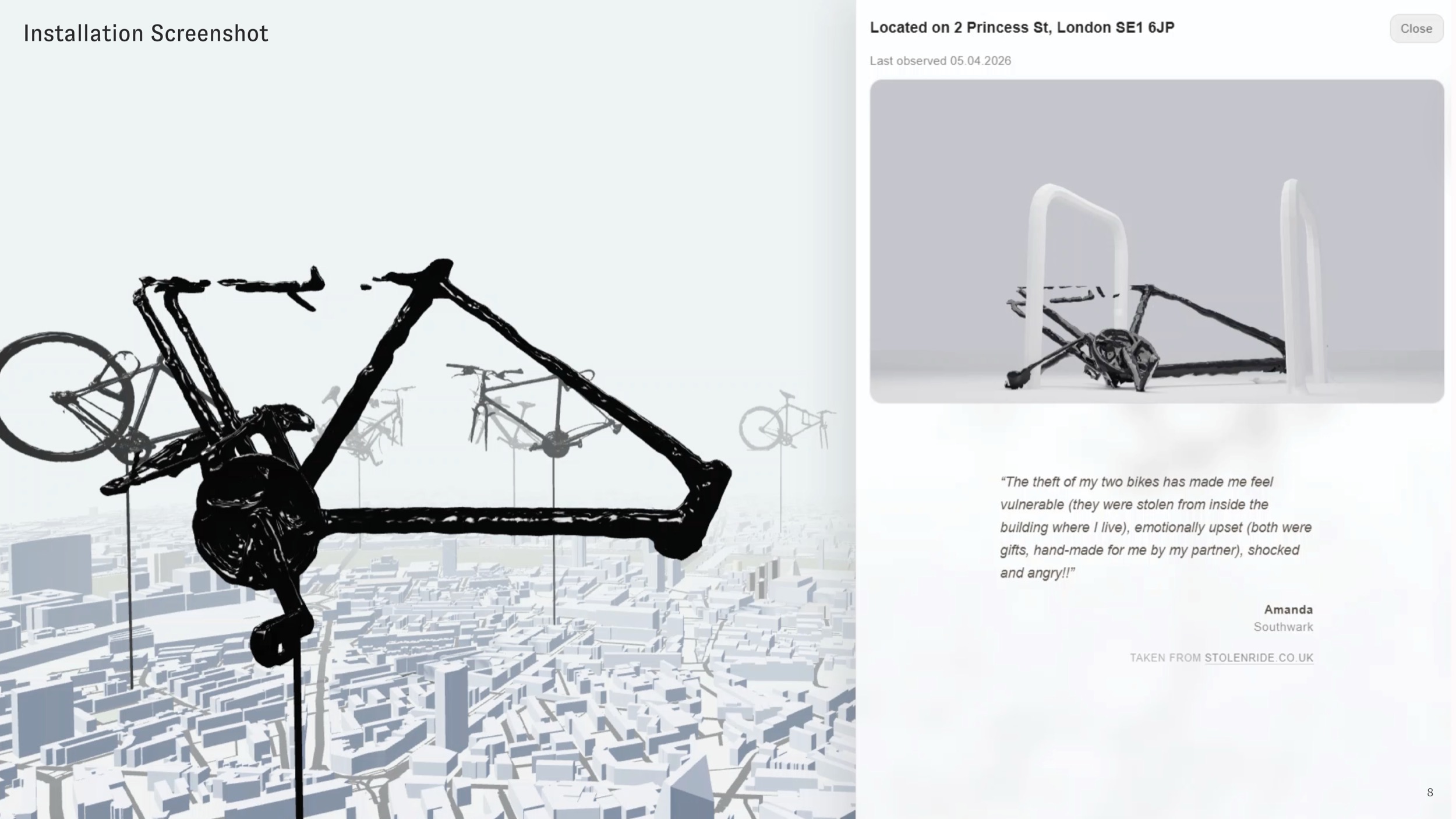
이 프로젝트의 출발점은 스톨른 라이드(Stolen Ride)가 공개한 피해자 진술서였습니다. 자전거를 잃은 사람들이 그로 인한 감정적·현실적 고통을 직접 써내려간 글들이죠. 이 증언들이 작품의 개념적 토대가 되었습니다. 이후 저는 런던 곳곳을 직접 돌아다니며, 이 진술들이 나온 바로 그 자치구에서 해체된 자전거들을 찾아 기록했습니다. 그리고 각 증언을 위치에 따라 아카이브에 통합했습니다.
이 자전거들은 사용과 방치 사이 어딘가에 멈춰 있습니다.
엄밀히 따지면 여전히 사유재산이기 때문에, 자치구 당국은 이 자전거들이 공공장소에서 계속 낡아가고 있음에도 철거하기 어려운 상황입니다. 시간이 흐르면서 이 자전거들은 도시의 기반시설 속에 파묻힌, 조각난 도시의 유물이 되어갑니다.
기술적으로 이 작업은 포토그래메트리, 3D 스캐닝, 인터랙티브 매핑, 무빙 이미지, 웹 기반 인스탈레이션을 결합합니다. 각각의 자전거는 Blender와 AI 보조 워크플로우, 커스텀 인터랙티브 시스템을 통해 디지털로 아카이빙되고 애니메이션으로 구현됐습니다. 스캔 데이터와 함께, 무빙 이미지 시퀀스는 런던의 도시 환경 속에서 자전거들이 겪는 '고통'을 담아냅니다. 도난과 방치, 소유와 부식이라는 시스템 속에서 무심코 지나쳐온 목격자로서 자전거를 바라보는 것입니다.
Racks는 포토그래메트리, 3D 애니메이션, 웹 기술, 무빙 이미지, 공간 사운드를 결합한 브라우저 기반 디지털 아카이브이자 인터랙티브 인스탈레이션입니다. 이 프로젝트는 런던 4개 자치구에 걸쳐 버려지거나 해체된 자전거들을 기록하며, 현장 리서치와 디지털 생성 환경, 인터랙티브 시스템을 하나의 워크플로우로 통합했습니다. 먼저 런던 곳곳에서 자전거를 직접 찾아 사진, 영상, 포토그래메트리 스캐닝으로 현장 기록을 남겼습니다. 각 자전거를 다각도로 촬영한 이미지들은 Polycam과 포토그래메트리 워크플로우를 통해 3D 에셋으로 변환됐습니다. 이렇게 만들어진 스캔 데이터는 Blender 안에서 정리·최적화·재구성 과정을 거치며, 지오메트리와 텍스처, 라이팅, 머티리얼을 실시간 웹 환경에 맞게 다듬었습니다.
손상된 구조물, 파손된 부품, 긁힌 자국이나 자물쇠, 사라진 부품 같은 소유의 흔적들은 모델링 단계에서 수작업으로 세밀하게 보정했습니다. 자전거 애니메이션 시스템은 Blender에서 물리 기반 움직임 시뮬레이션과 Python 커스텀 워크플로를 활용해 구축했습니다. 바퀴, 페달, 체인, 크랭크, 프레임 등 개별 부품을 각각 리깅하고 독립적으로 애니메이션을 적용해, 생성된 파라미터에 반응하는 불안정한 기계적 움직임을 만들어냈습니다. 이 모션 시스템은 불안정성과 노후화, 기계적 스트레스를 시뮬레이션하도록 설계되어, 자전거들이 끊임없이 무너져가는 상태에 놓인 것 같은 감각을 자아냅니다. 렌더링 테스트, 환경 조명, 안개 시스템, 카메라 연출도 내보내기 전에 Blender 안에서 완성했습니다.
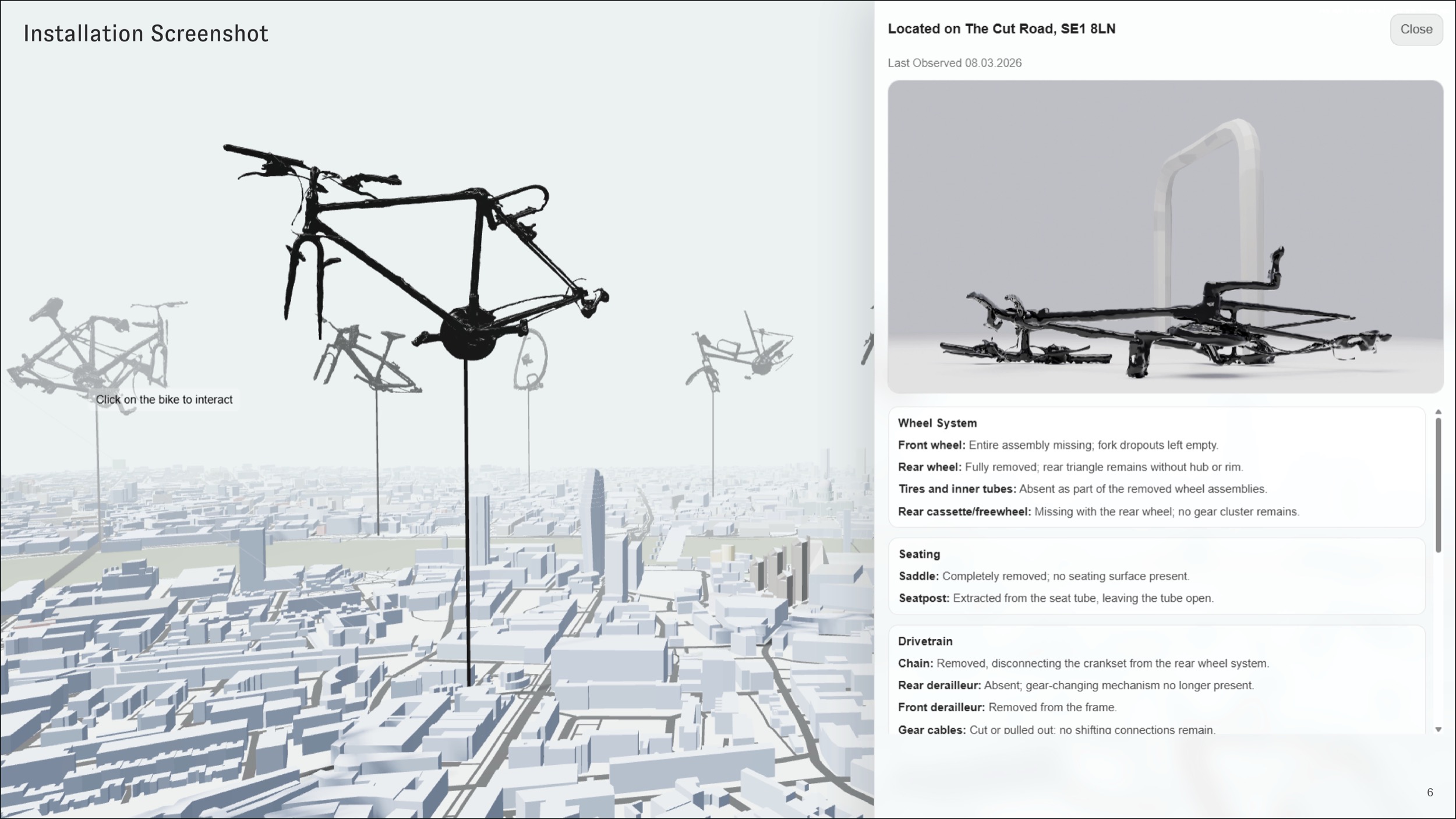
인터랙티브 아카이브 본체는 JavaScript와 Three.js를 사용한 웹 기반 인스탈레이션으로 구현했습니다. 브라우저에서 GLTF 3D 모델을 실시간으로 불러오고 표시하는 시스템을 커스텀 코드로 개발했으며, OrbitControls, 동적 조명 시스템, 환경 안개, 섀도 매핑, 근접 기반 인터랙션, 반응형 카메라 시스템을 활용해 관람객이 디지털 아카이브를 공간적으로 탐색할 수 있도록 했습니다. HTML, CSS, JavaScript로는 인터페이스와 아카이브 레이아웃, 자치구 기반 내비게이션 시스템, 그리고 자전거 위치마다 연결된 임팩트 스테이트먼트를 구성했습니다. 사운드 레이어도 더해 아카이브 특유의 기계적이고 감성적인 분위기를 한층 깊게 만들었습니다.
AI 보조 워크플로와 ChatGPT 기반 코딩 프로세스는 개발 전반에 걸쳐 활용했습니다. 특히 스크립팅, 인터랙티브 프로토타이핑, 모션 시스템, 디버깅, 최적화, 그리고 웹 환경과 애니메이션 파이프라인 전반의 제너러티브 동작 구현에 적극적으로 사용했습니다.
Racks (2026) is an interactive installation documenting abandoned and dismantled bicycles across four London boroughs. The project examines bicycles that once belonged to someone, often for years, before being stripped for parts through theft and left attached to public racks throughout the city. Many still retain traces of former ownership, including stickers, scratched paint, custom modifications, locks, and signs of prolonged use. Although physically present within the urban environment, their original purpose and relationship to ownership have collapsed. The project was initially developed in response to the impact statements published by Stolen Ride , where victims of bicycle theft describe the emotional and practical consequences of losing their bicycles. These testimonies became the conceptual foundation of the work. I later travelled across London to locate and document dismantled bicycles in the same boroughs from which these statements originated, integrating the testimonies into the archive according to location. The bicycles exist in a suspended state between use and abandonment. Because they are technically still private property, councils are often unable to remove them, despite their continued deterioration in public space. Over time, they become fragmented urban artefacts embedded within the city’s infrastructure. Technically, the work combines photogrammetry, 3D scanning, interactive mapping, moving image, and web-based installation. Each bicycle was digitally archived and animated using Blender , AI-assisted workflows, and custom-coded interactive systems. Alongside the scans, moving image sequences capture the bicycles’ ongoing “agony” within London’s urban environment, positioning them as overlooked witnesses to systems of theft, neglect, ownership, and decay. Racks was developed as a browser-based digital archive and interactive installation combining photogrammetry, 3D animation, web technologies, moving image, and spatial sound. The project documents abandoned and dismantled bicycles across four London boroughs through a workflow that merged physical field research with digitally generated environments and interactive systems. The bicycles were first located and documented on-site across London using photography, video recording, and photogrammetry scanning methods. Multiple image sets of each bicycle were captured and processed into 3D assets using Polycam and photogrammetry workflows. The resulting scans were cleaned, optimised, and reconstructed inside Blender, where geometry, textures, lighting, and materials were refined for real-time web presentation. Additional modelling adjustments were made manually to preserve damaged structures, fragmented components, and traces of ownership such as scratches, locks, and missing parts. Animation systems for the bicycles were developed in Blender using physics-based movement simulations and custom Python-assisted workflows. Individual bicycle components such as wheels, pedals, chains, cranks, and frames were rigged and animated independently to create unstable mechanical movement responding to generated parameters. These motion systems were designed to simulate instability, deterioration, and mechanical stress, creating the sense that the bicycles remained in an ongoing state of collapse. Rendering tests, environmental lighting, fog systems, and camera choreography were also developed within Blender before export. The interactive archive itself was built as a web-based installation using JavaScript and Three.js . Custom-coded systems were developed for loading and displaying GLTF 3D models in real time within the browser. The project utilised OrbitControls, dynamic lighting systems, environmental fog, shadow mapping, proximity-based interactions, and responsive camera systems to allow viewers to navigate through the digital archive spatially. HTML, CSS, and JavaScript were used to construct the interface, archival layouts, borough-based navigation systems, and embedded impact statements connected to individual bicycle locations. Sound layers were incorporated to reinforce the mechanical and emotional atmosphere of the archive. AI-assisted workflows and ChatGPT -supported coding processes were used throughout development, particularly during scripting, interactive prototyping, motion systems, debugging, optimisation, and the construction of generative behaviours across the web environment and animation pipeline. Project Page | Timothy Yufit | Instagram