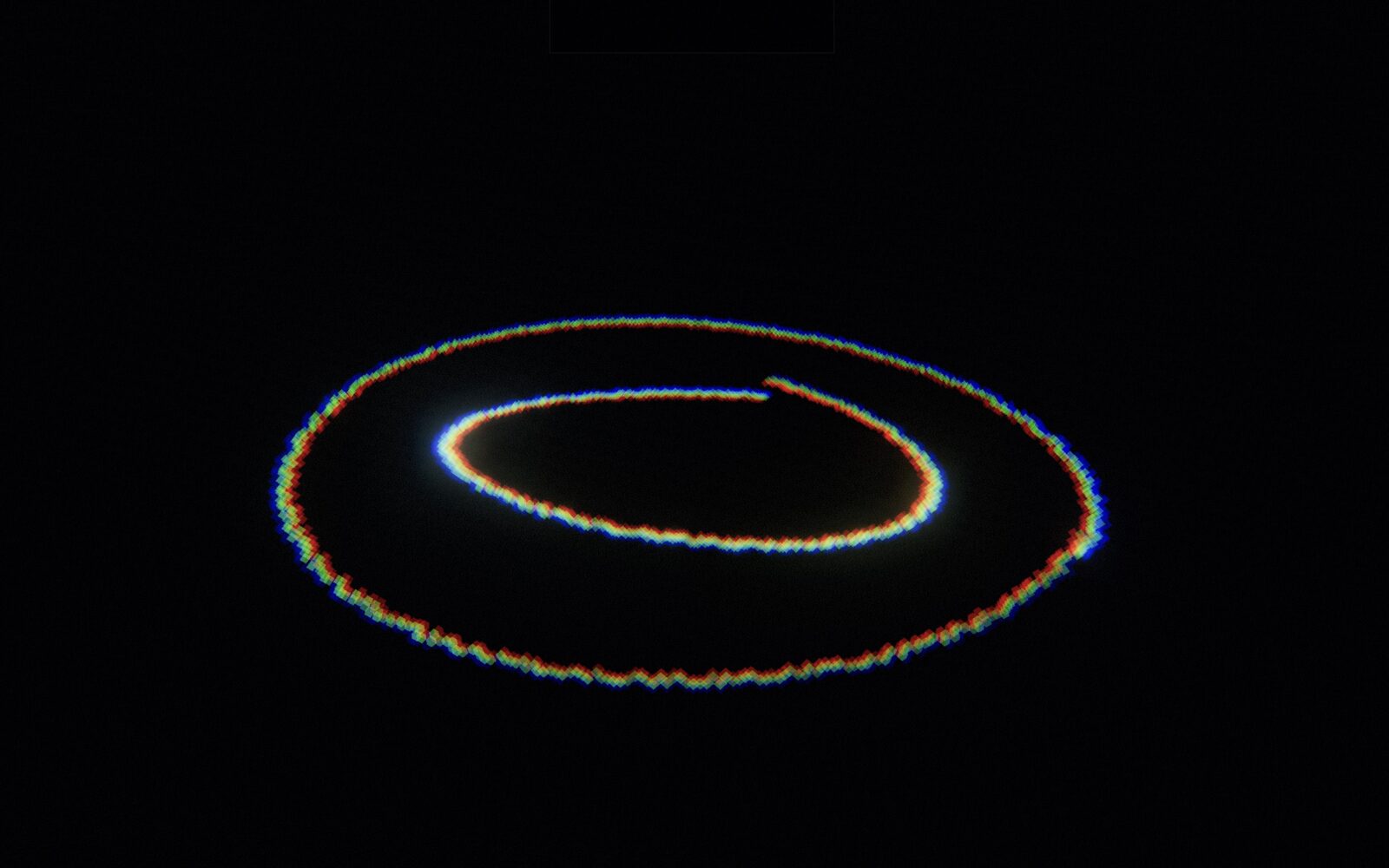
Dreamrs Studio는 시청각 예술 작품, 설치, 인터랙티브 경험을 위한 자연어 기반 저작·퍼포먼스 환경입니다. 사운드, 이미지, 물리적 컨트롤 서피스(MIDI, OSC, 네트워킹, DMX)가 하나의 환경 안에서 통합되며, 작업에 직접 참여하는 대화형 에이전트와 함께 작동합니다. 에이전트는 처음에는 공동 저자로, 이후에는 공동 퍼포머로 작업에 개입합니다.
저작과 퍼포먼스는 동일한 환경에서, 때로는 하나의 제스처 안에서 이루어지는 같은 행위입니다.
Dreamrs는 현재 오픈 알파 단계입니다. Creative Applications Network 커뮤니티의 아티스트와 엔지니어로 구성된 첫 번째 코호트를 모집하고 있습니다. 스튜디오를 활용해 실제 작업을 만들고, 플랫폼의 방향을 함께 설계해나갈 실무자들입니다. 코호트 멤버는 저작, 퍼포먼스, 런타임, 에이전트 기능 전체에 대한 완전한 접근 권한을 가집니다. 모든 신청서는 직접 검토하고 개인적으로 접근 권한을 부여합니다. 코호트는 개발자와의 지속적인 대화로 운영됩니다. 이 코호트는 하나의 생태계를 여는 출발점입니다. 여기서 만들어지는 작품들은, 이후에 합류할 모든 이들이 처음으로 마주하게 될 첫 번째 결과물이 될 것입니다.
우리가 품고 있는 질문들
이 스튜디오는 어떤 질문에 답을 내리는 대신, 그 질문들 속에 머뭅니다. 네 가지 질문은 실천 속에서 곧바로 등장하며, Dreamrs 안에서 작업하는 아티스트라면 매일 마주하게 됩니다.
– 저작권 문제. 낯선 이의 트랜스포머나 커뮤니티의 프리미티브가 작품 안으로 들어올 때, 우리는 저작권에 관한 어떤 질문과 마주합니다. 인간의 기여가 이어지는 사슬 속에서 무엇을 남기고, 거부하고, 수정하고, 흡수할 것인가 하는 문제입니다. 반면 에이전트가 작품 구성 안에서 어떤 움직임을 제안하는 순간, 이는 전혀 다른 차원의 질문이 됩니다. 의도의 층위에서 저작에 참여하는 비인간 협력자의 등장이니까요. 스튜디오는 이 두 질문 사이에 머물며, 어느 쪽도 서둘러 해소하려 하지 않습니다.
– 주체성의 문제. 인간 창작자와 AI 에이전트, 두 명의 만든 이가 하나의 작품을 함께 구성합니다. 누가 무엇을 만들었는지는 열린 채로 남아 있고, 작업은 그럼에도 계속됩니다. 그 불확실성을 아티스트가 어떻게 받아들이느냐 — 그것 자체가 실천의 일부가 됩니다.
– 제약과 목소리의 문제. 진정한 숙련이란 언제나 제약을 보이지 않게 만드는 것이었습니다 — 한계를 충분히 깊이 흡수하여 하나의 기울기로, 하나의 성향으로, 하나의 목소리로 바꿔내는 것. 자연어 레이어 역시 그 자체로 고유한 결을 가진 제약입니다. 창작자가 그 결 안에서 어떻게 자리를 잡느냐 — 어디서 밀어붙이고, 어디서 양보하고, 어디서 표면 전체를 우회하느냐 — 바로 거기에 이 환경 속 장인정신이 깃들어 있습니다.
– 발견의 문제. 하나의 작품은 커뮤니티 트랜스포머, 관습, 선행 작업들이 얽힌 생태계 안에 존재합니다. 필요한 순간 무엇을 찾을 수 있느냐에 따라 시도 자체가 달라집니다. 찾지 못하는 것은 당신을 변화시킵니다 — 빠진 조각을 직접 만드는 사람이 되거나, 그 공백을 우회하는 새로운 길을 찾는 사람이 되거나.
이것은 요약본입니다. 더 깊은 탐구 — 답이 아닌 질문의 형태로 쓰인 열다섯 개의 입장 — 는 dreamrs.art/ontology에서 확인할 수 있습니다.
이것은 동의를 구하는 주장이 아닙니다. 스튜디오가 그 주위를 맴돌며 쌓아온 살아있는 질문들이고, 그 질문들이 실제 작업과 만나는 지점 — 균열이 생기거나, 예상치 못한 발견을 하거나, 전혀 다른 방식으로 풀려나가는 순간 — 이야말로 우리가 진심으로 궁금해하는 것입니다. 알파 버전은 이 환경이 무엇을 가능하게 하는지 궁금한 모든 실무자와 엔지니어에게 열려 있습니다. 특히 이런 긴장감 속에서 이미 작업해온 분들, 자신의 작업 안에서 이 질문들과 씨름해온 분들, 그리고 스튜디오 안에서 그 논쟁이 어디로 이어지는지 직접 확인하고 싶은 분들의 이야기를 듣고 싶습니다.
이 모든 것의 시작
스튜디오의 중심에는 2018년 홍콩의 댄스 프로젝트에서 찾아온 질문들이 있습니다 — 포스트모던 이론의 한복판에서, 몸과 시스템과 존재감의 경계가 흐릿해지던 그 공간에서:
> *장소가 없을 때 현존이란 무엇인가? 주체의 경계가 흔들릴 때 자아란 무엇인가? 작업이 만든 이를 넘어설 때 '만든다'는 것은 무엇을 의미하는가?*
그 질문들이 이론으로 수렴되기를 멈추고, 무언가를 만들어나갈 장소로 쌓이기 시작했을 때 — dreamrs가 탄생했습니다. 탐구는 소프트웨어보다 수년 앞서 존재했고, dreamrs 스튜디오는 그 대화가 마침내 형태를 갖춘 결과입니다.
지원하기
dreamrs.art/request-invite에서 신청할 수 있습니다. 양식에는 이름, 이메일, 그리고 스튜디오에서 진행할 다음 쇼나 작품에 대한 짧은 소개 한 줄을 적어주세요. 모든 신청서는 14일 이내에 검토하며, 승인 시 기재하신 이메일로 매직 링크가 전달됩니다.
creativeapplications를 통해 지원하는 아티스트와 엔지니어를 위한 별도 자리를 마련해두었습니다. 메시지에 이를 언급해주시면 해당 코호트에 배정해드립니다.
— Ugur Kaya · dreamrs studio · 2026 · https://dreamrs.art · ugur@dreamrs.art
dreamrs는 당신의 악기를 만드는 환경입니다. 악기 그 자체가 아니라, 그것을 만들어내는 공간이죠. 스튜디오 안에서 탄생한 작품은 온전히 당신의 것입니다. dreamrs는 그것을 저작하고, 실행하고, 라이브로 펼쳐내는 무대입니다.
저작 인터페이스
스튜디오에는 세 가지 저작 인터페이스가 모드 전환 없이 함께 공존합니다.
에이전트와의 자연어 대화
모든 파라미터와 연결선을 직접 조작하는 그래픽 컨트롤
코드 — 텍스트로 직접 작성하고 수정하는 트랜스포머
이 세 가지는 동일한 환경을 이루는 층위들입니다. 그래프에서 파라미터를 조정하면 대화창이 업데이트되고, 에이전트가 제안을 내놓으면 기반 코드가 수정되며, 코드를 바꾸면 컨트롤에 즉시 반영됩니다. 클릭 한 번이면 언제든 대화형 레이어로 돌아올 수 있습니다.
멀티미디어 스코프
dreamrs는 진정한 의미의 멀티미디어 환경입니다. 오디오, 이미지, 조명, 물리적 인터페이스가 모두 동등한 매체로 공존합니다.
제너러티브 비주얼 — 파티클 시스템, 셰이더, 기하학적 프리미티브
오디오 합성 및 처리 — 오실레이터, 필터, 신호 흐름
조명 및 물리적 환경 — DMX 출력
물리적 컨트롤 서피스 — MIDI, OSC, 네트워크 입력
멀티 머신 및 분산 구성
직접 만든 인스트루먼트는 이미 갖고 있는 컨트롤러의 신호를 받아들이고, 공간의 조명을 제어하며, 여러 대의 머신에 걸쳐 실행될 수 있습니다.
제작 자체가 퍼포먼스다
작품을 만드는 환경이 그대로 퍼포먼스 공간이 됩니다. 지금 당신이 빚어가는 구성이 곧 실행되는 구성입니다. 제작 화면과 런타임은 같은 상태, 같은 화면 위에 존재합니다.
만드는 과정에서 발견하기
무엇이 가능한지는 만드는 도중에 드러납니다. 에이전트는 작업의 전체 상태를 담고 있으며, 그 안에서 다음 움직임을 제안합니다. 커뮤니티 트랜스포머, 기본 오퍼레이션, 구조적 제안들이 필요한 순간, 이미 열려 있는 대화 속에서 자연스럽게 나타납니다.
에이전트
에이전트는 함께 만드는 존재입니다. 세션 전반에 걸쳐 프로젝트의 전체 맥락을 유지합니다. 사용 중인 트랜스포머, 와이어링, 파라미터, 런타임 상태까지. 에이전트는 오서링 그래프 위에서 당신과 나란히 작업하고, 작품이 라이브로 올라간 이후에도 공동 퍼포머로서 함께합니다.
퍼포먼스 중에는 에이전트에게 작품의 일부를 실시간으로 맡길 수 있습니다. 파라미터 클러스터를 조정하거나, 트랜스포머를 교체하거나, 특정 상태를 유지하거나, 큐에 반응하는 동안 나머지는 당신이 직접 다룹니다. 제작과 퍼포먼스 사이의 경계는 작품이 완성되면서 사라지는 것이 아니라, 작품이 스스로 조율해나가는 하나의 관계가 됩니다.
Dreamrs Studio is a natural-language-native authoring and performance environment for audiovisual artworks, installations, and interactive experiences. Sound, image, and physical control surfaces (MIDI, OSC, networking, DMX) live in a single environment alongside a conversational agent that participates in the work — first as a co-author, then as a co-performer. Authoring and performance are the same act, in the same environment, often in the same gesture. The works-like demo is live at dreamrs.art/demo — a glimpse of the authoring experience. Dreamrs is in open alpha. We are seating a cohort of artists and engineers from the Creative Applications Network community — practitioners who would use the studio to build real work and shape what the platform becomes next. Members of this cohort have full access to authoring, performance, runtime, and the agent. We read every application manually and grant access personally, and the cohort runs as an ongoing conversation with the builder. This cohort is the founding of the ecosystem; the compositions you make here are the first artifacts anyone who comes after you will discover. The questions we sit inside The studio sits inside a set of live questions rather than pretending to resolve them. Four of these arrive immediately in the practice and remain part of what an artist working in dreamrs encounters daily: The authorship question. A stranger's transformer or a community primitive entering your piece runs through one kind of authorship question — the chain of human attribution, what you keep, refuse, modify, or absorb. An agent suggesting a move inside the composition is a different kind of question altogether: a non-human collaborator participating in authorship at the level of intent. The studio sits in both, without resolving either. The agency question. Two makers — human and agent — share one composition. The question of who shaped what is open, and the work continues anyway. What an artist does with that uncertainty becomes part of the practice. The constraint and voice question. Virtuosity has always been constraint made invisible — limitation absorbed deeply enough to become a tilt, a leaning, a voice. The natural language layer is itself a constraint with its own grain. How a maker inhabits that grain — where they push, where they yield, where they bypass to the full surface — is where craft lives in this environment. The discovery question. A composition lives inside an ecosystem of community transformers, conventions, and prior work. What you can find at the moment you need it changes what you attempt. What you cannot find changes who you become — the person who builds the missing piece, or the person who reroutes around the gap. This is the short form. The longer inquiry — fifteen positions, written as questions, not answers — is at dreamrs.art/ontology. These are not positions to be agreed with. They are the live questions the studio is built around, and where they meet practice — where they crack, surprise, or resolve differently than expected — is what we are genuinely curious to discover. The alpha is open to any practitioner or engineer curious about what this environment makes possible. We are especially excited to hear from those who already live inside some version of these tensions — who have been arguing with the questions in their own work, and want to see where that argument goes from inside the studio. Where this came from The studio's center of gravity sits in questions that arrived in 2018, during a dance project in Hong Kong — inside post-modern theory, inside spaces where body, system, and presence blurred: > *What is presence when it isn't located? What is the self when the boundary of the subject is in question? What does making mean when the work exceeds the maker?* dreamrs is what happened when those questions stopped resolving into theory and started accumulating into a place to build. The inquiries preceded the software by years; dreamrs studio is the conversation, materialised. Applying Visit dreamrs.art/request-invite . The form asks for your name, your email, and one line about the next show or piece you would run inside the studio. We read every application within fourteen days; access arrives as a magic link to the email you provided. We are holding dedicated seats for artists and engineers applying from creativeapplications — mention it in your message and we will seat you in this cohort. — Ugur Kaya · dreamrs studio · 2026 · https://dreamrs.art · ugur@dreamrs.art dreamrs is the environment in which you build your instrument — not the instrument itself. What you make inside it is yours; the studio is what you author it in, what it runs on, and what performs it live. Authoring surfaces Three authoring surfaces coexist in the studio without mode-switching: Natural language conversation with the agent Direct graphical control of every parameter and wire Code — transformers written and modified directly in text The three are layers of the same environment. A parameter touched in the graph updates the conversation, an agent suggestion modifies the underlying code, a code change is reflected back in the controls. The full surface is always one click from the conversational layer. Multimedia scope dreamrs is a multimedia environment in the full sense — audio, image, lighting, and physical surfaces are co-equal mediums: Generative visuals — particle systems, shaders, geometric primitives Audio synthesis and processing — oscillators, filters, signal flow Lighting and physical environments — DMX output Physical control surfaces — MIDI, OSC, networked input Multi-machine and distributed setups The instrument you build can listen to the controllers you already own, drive the lighting in the room, and run across multiple machines. Authoring is performance The same environment that authors the work performs it live. The composition you are shaping is the composition that runs — the authoring surface and the runtime are the same state, the same surface, on the same screen. Discovery from inside the making What is possible surfaces while you are making. The agent carries the full state of the work and offers the next move from inside it — community transformers, primitive operations, structural suggestions — at the moment they are relevant, in the conversation you already have open. The agent The agent is a maker. It carries the full context of the project across a session — the transformers in play, the wirings, the parameters, the state of the runtime. It works alongside you on the authoring graph and stays present when the work goes live, available as a co-performer. In performance, you can ask the agent to operate parts of the piece in real time — adjust a parameter cluster, swap a transformer, hold a state, respond to a cue — while you handle the rest. The boundary between authoring and performing becomes a relationship the work negotiates, rather than a state the work resolves. Project Page