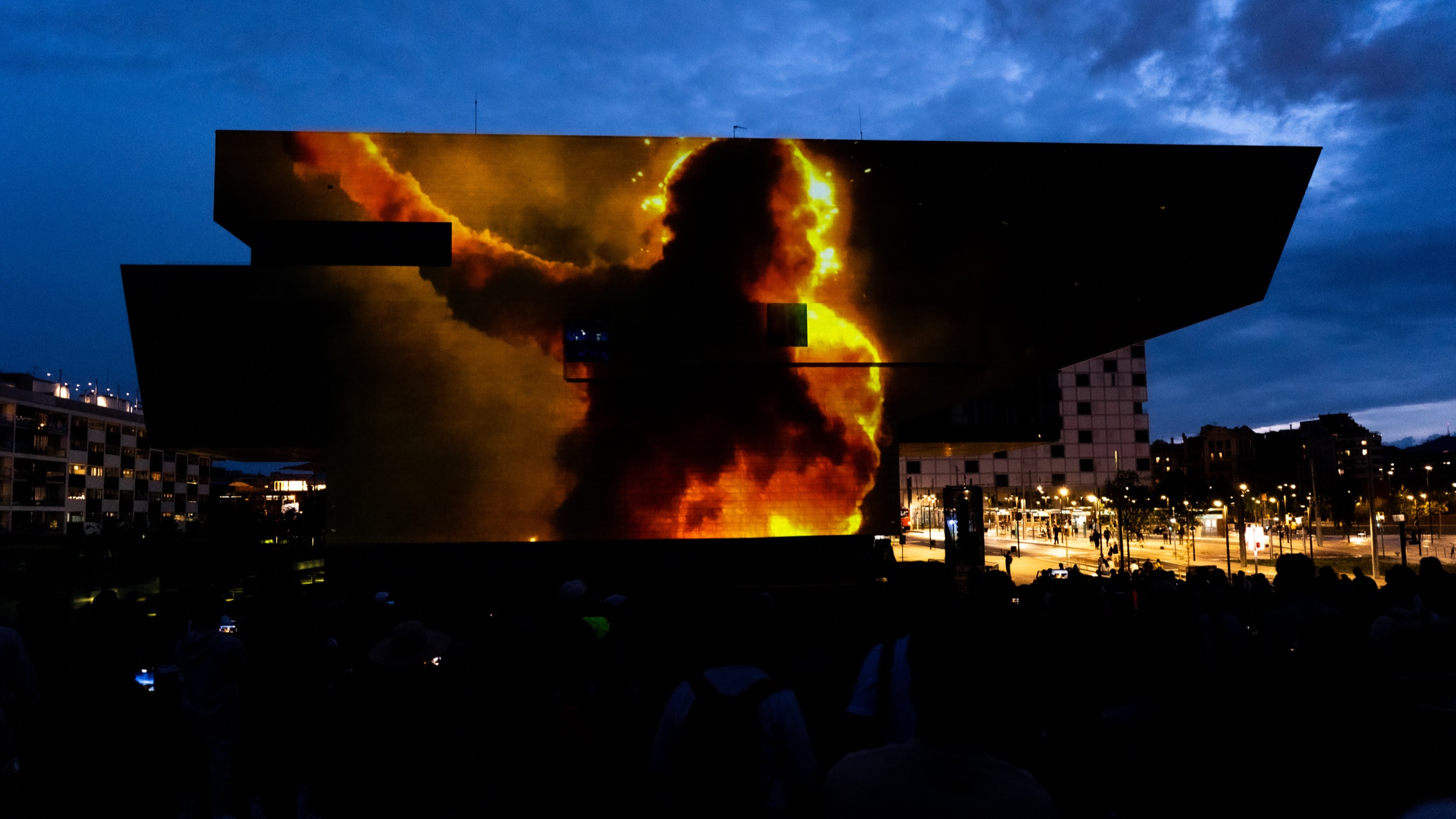
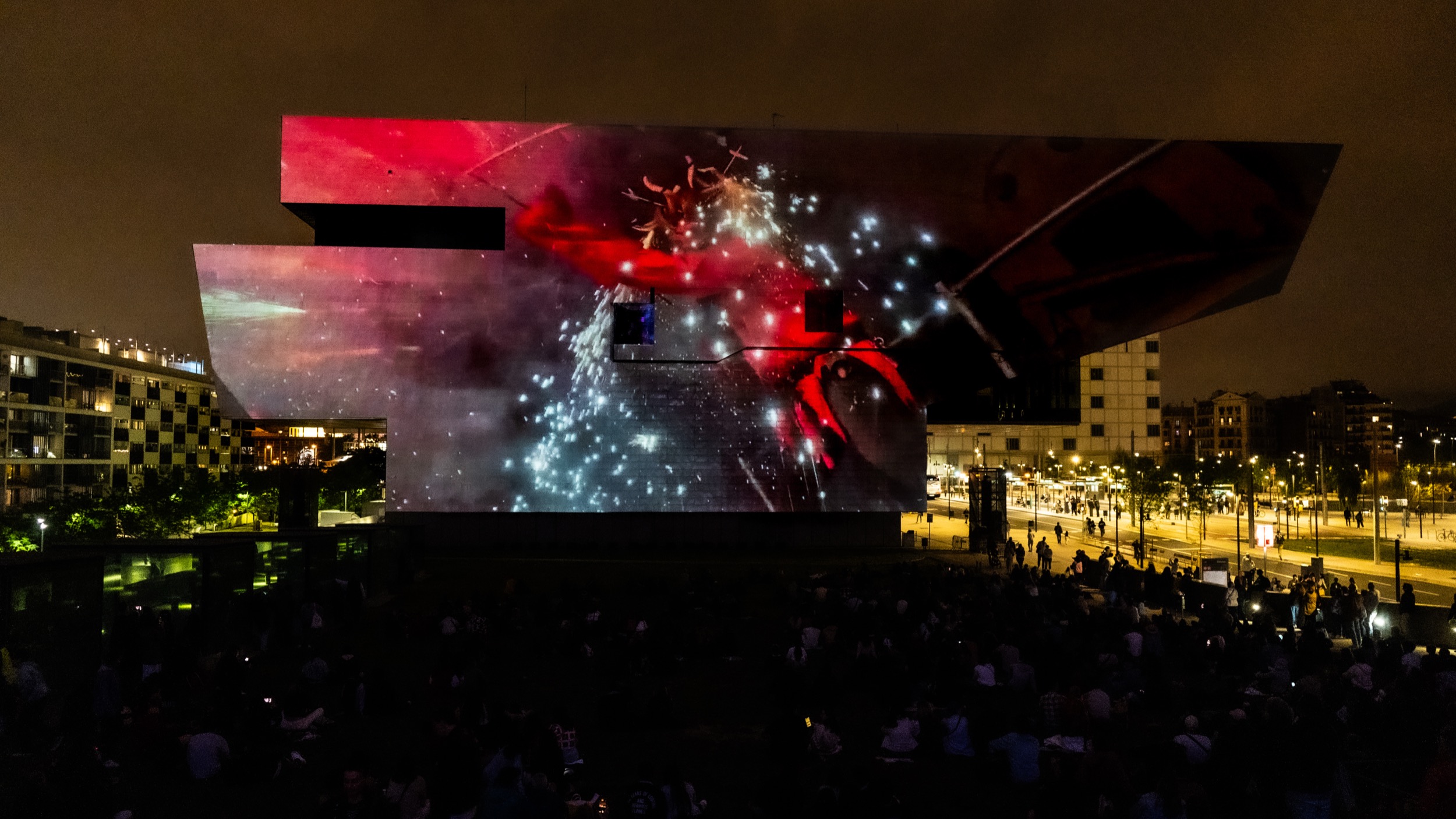
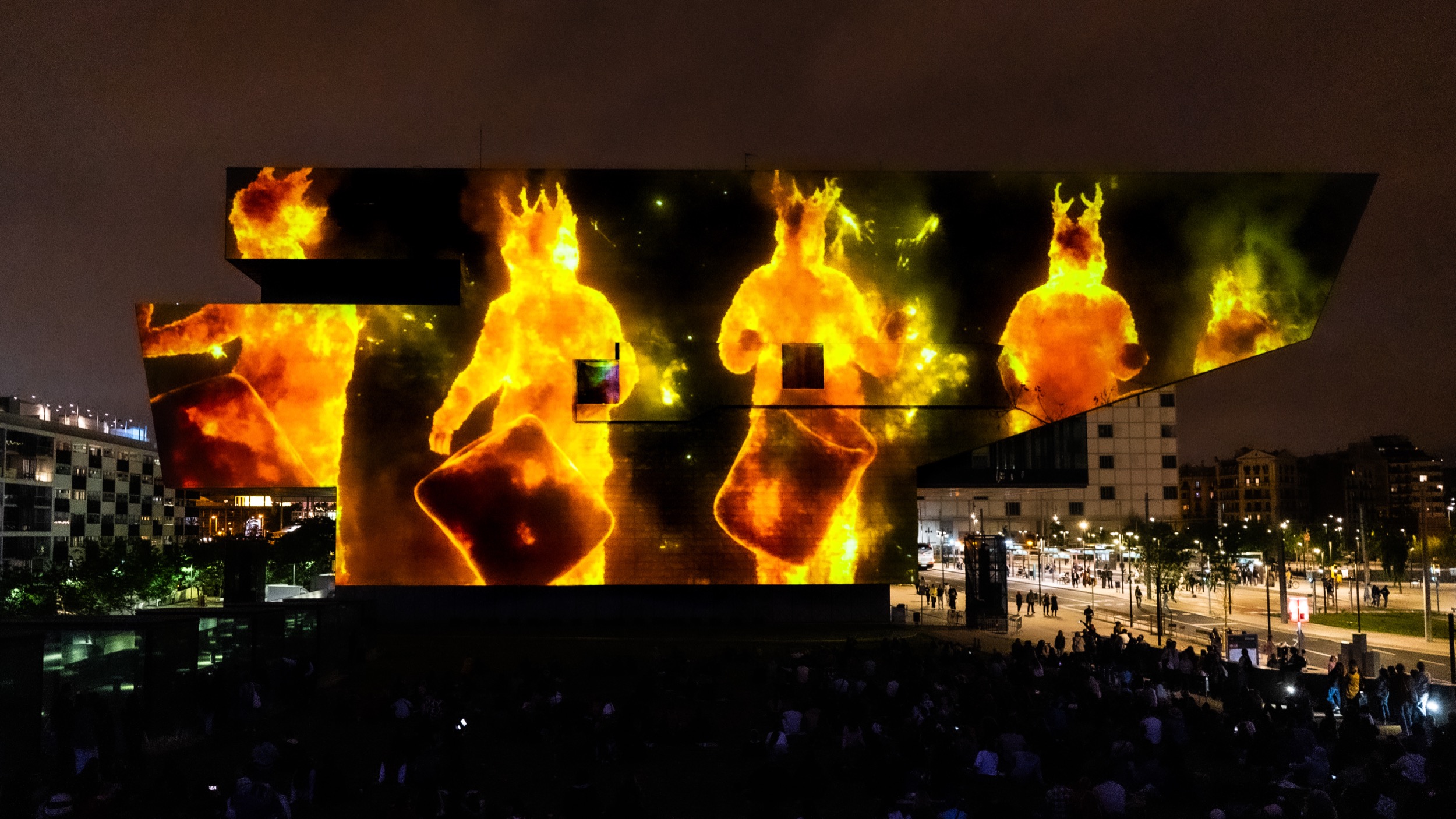
불은 인류의 역사와 함께 춤을 춰왔습니다. 태고의 화톳불부터 지난 새해를 밝힌 불꽃놀이까지. 그런데 일부 AI 시스템의 눈에는, 축제의 불꽃과 억압의 화염이 구별되지 않습니다. 픽셀 하나하나, 데이터 포인트 하나하나로 분해되면, 춤추는 불씨는 그저 춤추는 불씨일 뿐입니다. 신작 비디오 매핑 설치작 낫 올 스파크스 아 이퀄(Not All Sparks Are Equal)은 바로 이 지점을 파고듭니다. 기술적 인식이 얼마나 쉽게 맥락을 지워버리는지, 그리고 그 맥락이야말로 인간 경험에 의미를 부여하는 핵심임을 이 작품은 묻습니다.
카탈루냐에서 불은 전혀 다른 두 얼굴을 가집니다. 하나는 코레포크(correfoc)입니다. 중세에서 이어져 내려온 이 사랑받는 전통에서는, 악마 분장을 한 무용수들이 불꽃을 내뿜는 횃불을 들고 인파로 가득 찬 거리를 누빕니다. '불의 질주'라 불리는 이 축제는 공동체가 기쁨으로 공공 공간을 되찾는 행위이자, 카탈루냐의 정체성과 결속을 온몸으로 표현하는 의식입니다. 반면 또 다른 얼굴도 있습니다. 시위대를 향한 경찰의 진압 장면입니다. 최루탄과 섬광 수류탄, 고무탄이 날아들면 광장은 국가 권력이 강제하는 질서의 공간으로 변하고, 어느새 쓰레기통에 불이 붙습니다. 여기서 불은 공동체의 기쁨이 아니라 통제와 억압의 도구입니다. 지난 5년간 카탈루냐는 이러한 공권력 행사의 장면들을 숱하게 목격해왔습니다.
이 프로젝트를 통해 우리는 알고리즘이 어떻게 복잡한 현실을 단순하고 명확한 이분법적 범주—안전/위험, 질서/혼돈, 허용/금지—로 납작하게 만들어버리는지 탐구합니다.
코레포크(correfoc) 댄서와 최루탄을 피해 달아나는 시위자는 알고리즘의 눈에 똑같은 열신호와 움직임 패턴으로 읽힐 수 있습니다. 그러나 두 경험 사이의 간극은 이보다 더 클 수 없습니다. 하나는 문화적 정체성을 기리는 축제이고, 다른 하나는 권리를 위한 투쟁이니까요. 진짜 위협은 단순한 기술적 오분류가 아닙니다. 보호라는 이름으로 포장된 문화적 굴복입니다. 코레포크가 한때 프랑코 정권의 금지령에 맞서 저항의 춤을 췄듯, 우리는 이제 알고리즘에 의해 그 춤이 길들여지는 것을 거부해야 합니다. 이번에 맞서야 할 것은 법이 아닙니다. 안전이라는 관료적 언어로 조용히 허가와 금지를 결정하는 소프트웨어입니다.
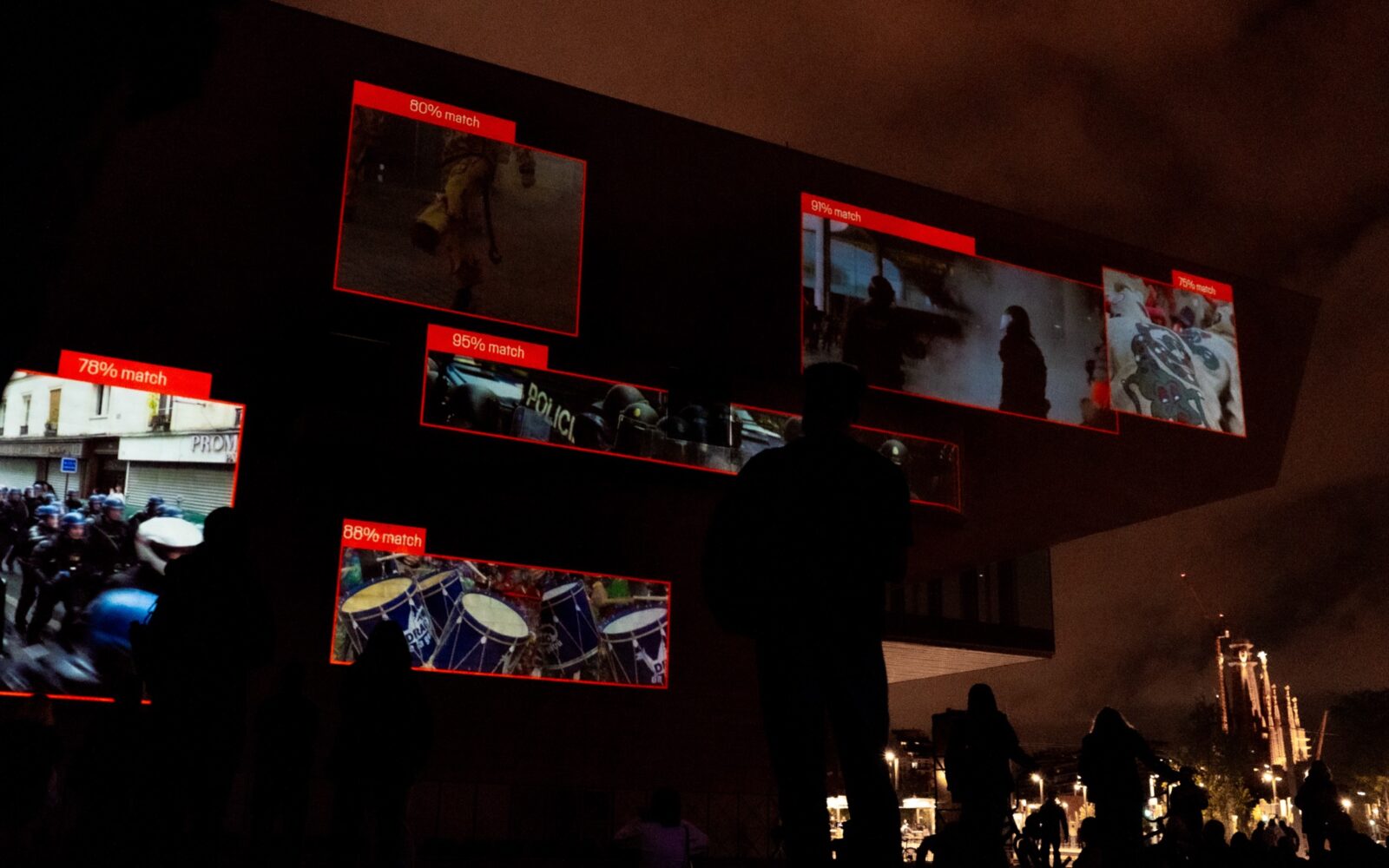
현대의 감시 알고리즘에게는 전혀 다른 상황들이 동일하게 감지됩니다. 혼란스러운 군중, 열 신호, 예측 불가한 움직임, 밤하늘을 가르는 불빛 — 이 모든 것들이 알고리즘의 눈에는 하나로 겹쳐 보입니다. 맥락을 읽지 못하는 알고리즘은 오직 '잠재적 위협'만을 식별하고, 그것을 통제해야 할 대상으로 분류합니다. 이 알고리즘적 맹목성은 우연이 아니라 구조적인 문제입니다. 실리콘밸리의 단일문화적 환경에서 개발되고 서구 중심의 데이터셋으로 학습된 이 시스템들은, 질서와 혼돈을 사회적 표현의 상호 연결된 요소가 아닌 대립하는 힘으로 바라보는 이분법적 세계관을 강요합니다. 단순한 시각과 이진 분류를 우선시하는 데이터셋으로 훈련된 탓에, 공장 최적화 같은 작업에는 효과적일지 몰라도 문화적 뉘앙스를 포착하는 데에는 완전히 실패합니다. 이 프로젝션 설치 작품은 실제 영상 위에 알고리즘의 판독 결과를 시뮬레이션하는 방식으로 이 문제를 정면으로 드러냅니다. 코레포크 참가자들의 장면 위로 "오류: 98% 일치 — 폭동 감지됨 (신뢰도: 0.92)"이라는 경고가 번쩍이고, 동일한 신뢰도 수치가 경찰 진압 영상 위에도 그대로 나타납니다.
Fire dances across the human timeline, from the earliest hearths to last New Year's fireworks. But in the eyes of some AI systems, the flames of celebration cannot be distinguished from the fires of oppression, a dancing ember is a dancing ember, pixel by pixel, data point by data point. This flattening of nuance is at the heart of Not All Sparks Are Equal , a new video mapping installation that explores how technological perception often strips away the vital context that gives human experience its meaning. In Catalonia, fire has two dramatically different public faces. On one side stands the correfoc , a beloved tradition dating back to medieval times where dancers dressed as devils carry spinning, sparking fireworks through crowded streets. These "fire-runs" represent a collective reclamation of public space through joyful cultural celebration, embodying community strength and Catalan identity. On the other side, stand police charges against protesters, where tear gas canisters, flash grenades, and rubber bullets transform public squares into zones of state-enforced order that tend to end up with garbage containers in flames. Here, fire becomes not a symbol of communal joy but a tool of control and suppression, and in the last 5 years Catalonia has seen a lot of examples of this use of force from the government. Through this project, we're exploring how algorithms flatten complex realities into simplistic clean-cut binary categories, safe/dangerous, orderly/chaotic, permitted/prohibited. A correfoc dancer and a protester fleeing tear gas may generate identical heat signatures and movement patterns to an algorithm, but the gulf between these experiences could not be wider, one celebrates cultural identity while the other fights for rights. The deeper threat here isn't just technical misclassification, it's cultural submission disguised as protection. As correfocs once danced defiantly against Franco's bans, we must now refuse their being domesticated by algorithms. This time, it is not against laws that one has to resist, but against software silent flags of permission formulated in the bureaucratised language of safety. To modern surveillance algorithms, profoundly different scenarios register as identical: chaotic crowds, heat signatures, unpredictable movements, and bright flashes against the night. The algorithm, blind to context, sees only potential disruption a threat to be managed. This algorithmic blindness isn't accidental but structural. Developed within Silicon Valley's monocultural framework and trained on Western datasets, these systems impose a binary worldview that sees order and chaos as opposing forces rather than interconnected elements of social expression. Trained on datasets that prioritise simple perspectives and binary categorisations, they may work well on targeting factory optimisation but terribly at grasping these nuances. The projection installation highlights this by simulating algorithmic readings over authentic footage: "ERROR: 98% match — Riot detected (confidence: 0.92)" flashes over scenes of correfoc participants, while identical confidence scores appear over footage of police charges. Project Page | Domestic Data Streamers | Instagram