730시간의 폭력(730 hours of Violence)은 미디어퓨처스(MediaFutures)와 EU 호라이즌 2020(Horizon 2020) 펀드의 지원을 받아 자체 기획한 프로젝트입니다. 현대 사회에 존재하고 진화하는 다양한 형태의 폭력을 가시화하고 물리적으로 체험하게 하는 것이 목표였습니다. 아직 눈에 잘 띄지 않지만, 우리의 일상 깊숙이 스며든 새로운 패러다임과 개념들을 다룹니다.
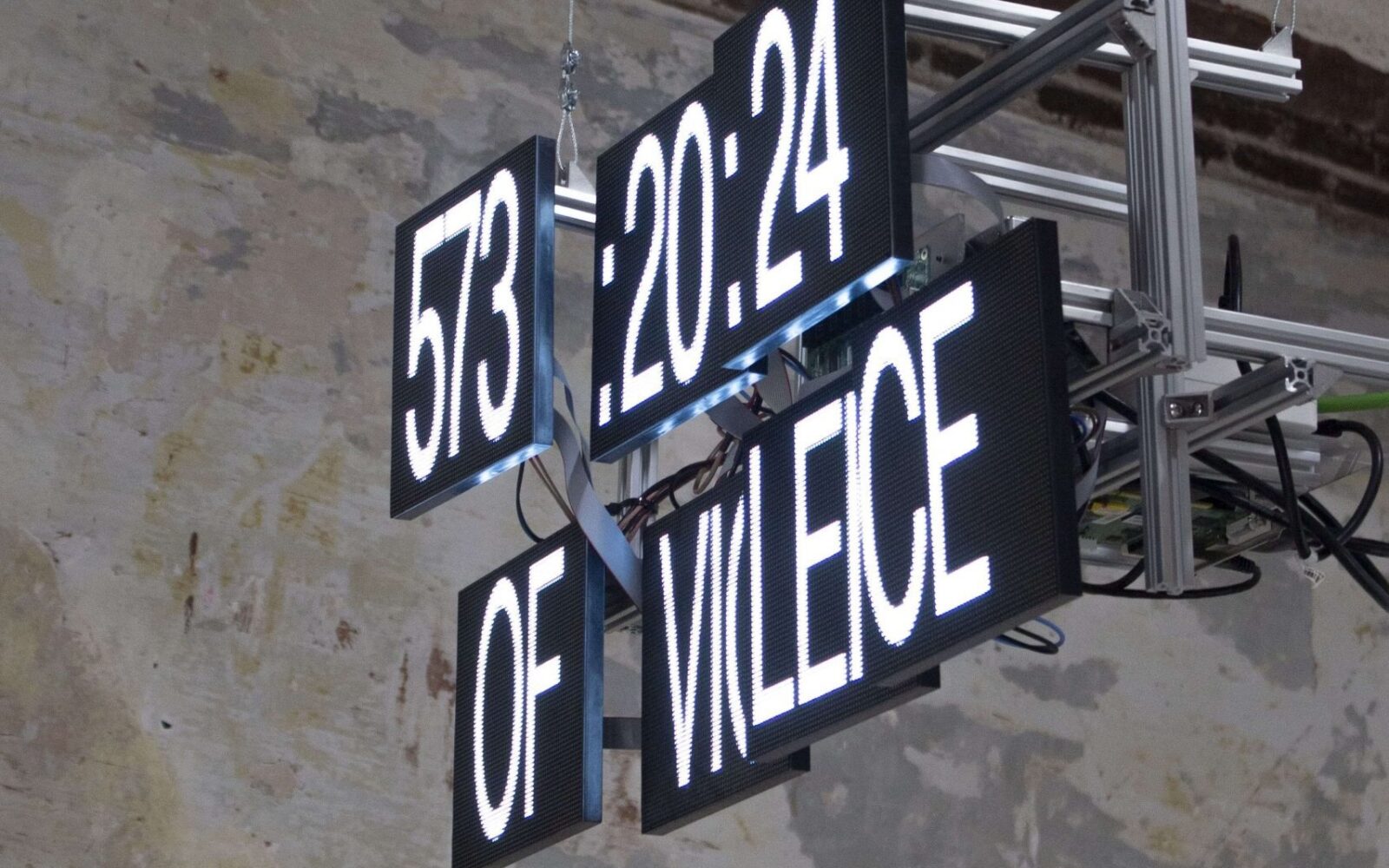
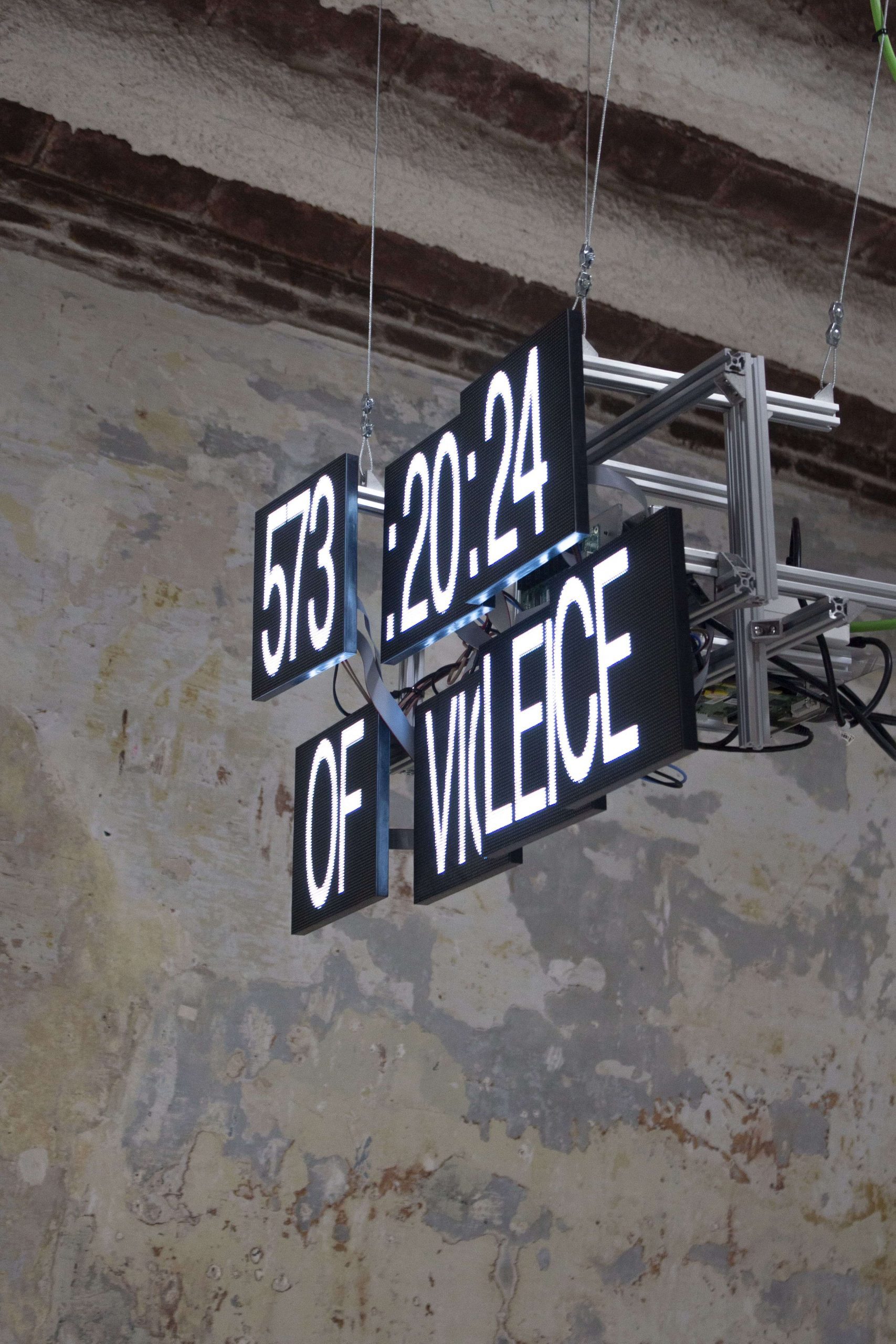
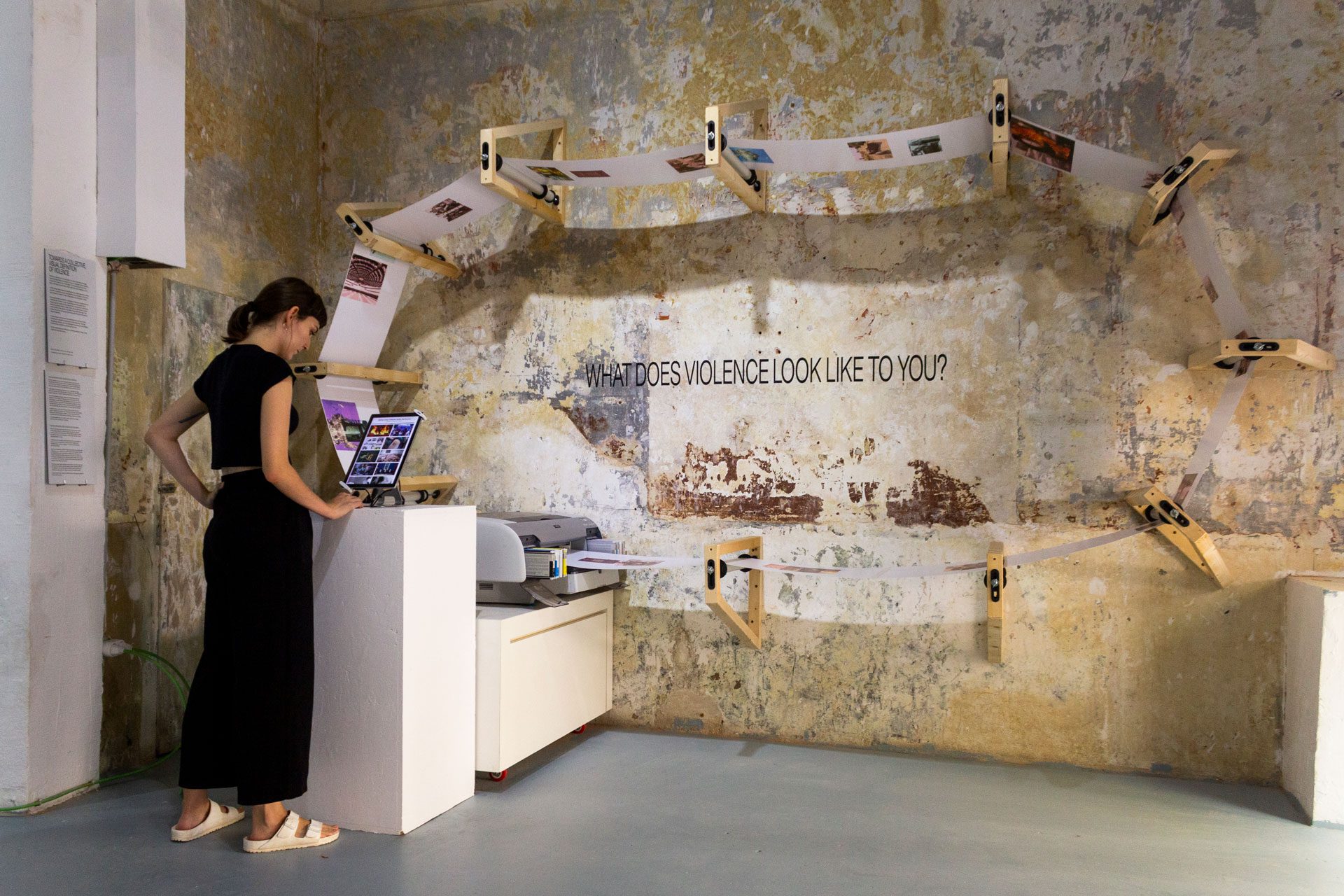
전시장에 들어서면 가장 먼저 카운터가 눈에 들어옵니다. 전시 종료까지 남은 시간을 실시간으로 표시하는 이 카운터는 730시간에서 시작해 0을 향해 흘러갑니다. 첫 번째 공간은 우리가 흔히 떠올리는 폭력의 이미지—폭탄, 무기, 피—로 채워져 있습니다. 폭력이라는 단어를 들으면 대부분 주먹질이나 멍, 개인 간의 충돌을 연상하죠. 첫 번째 작품은 바로 이 지점에서 질문을 던집니다. 폭력을 정의하는 것은 누구여야 하는가?
이후 전시는 개인 간의 폭력을 넘어 다양한 형태로 확장됩니다. 롭 닉슨(Rob Nixon)이 제안한 느린 폭력(Slow Violence) 개념—오염과 기후변화로 서서히 진행되는 환경 재난—을 시작으로, 온라인 혐오 표현과 사이버불링, 도시 안에서 기본권 행사를 가로막는 보이지 않는 경계를 뜻하는 유리 국경(Glass Frontiers), 프로그래머가 알고리즘에 심어놓은 편향으로 인한 데이터 폭력(Data Violence), 그리고 디지털 이미지를 끊임없이 편집하려는 욕망에서 비롯된 신체 이미지 장애 셀피 디스모르피아(selfie dysmorphia)까지 아우릅니다.
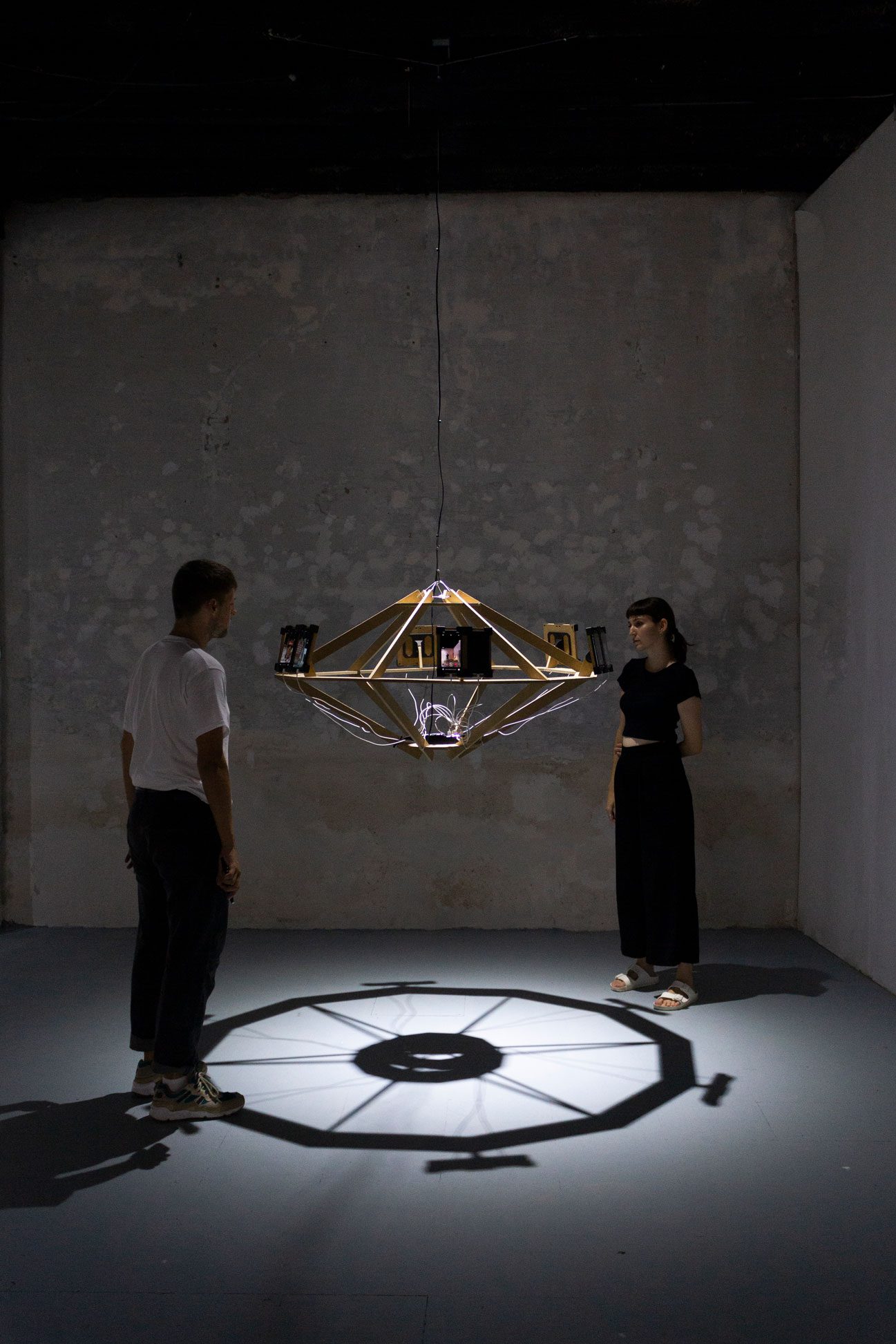
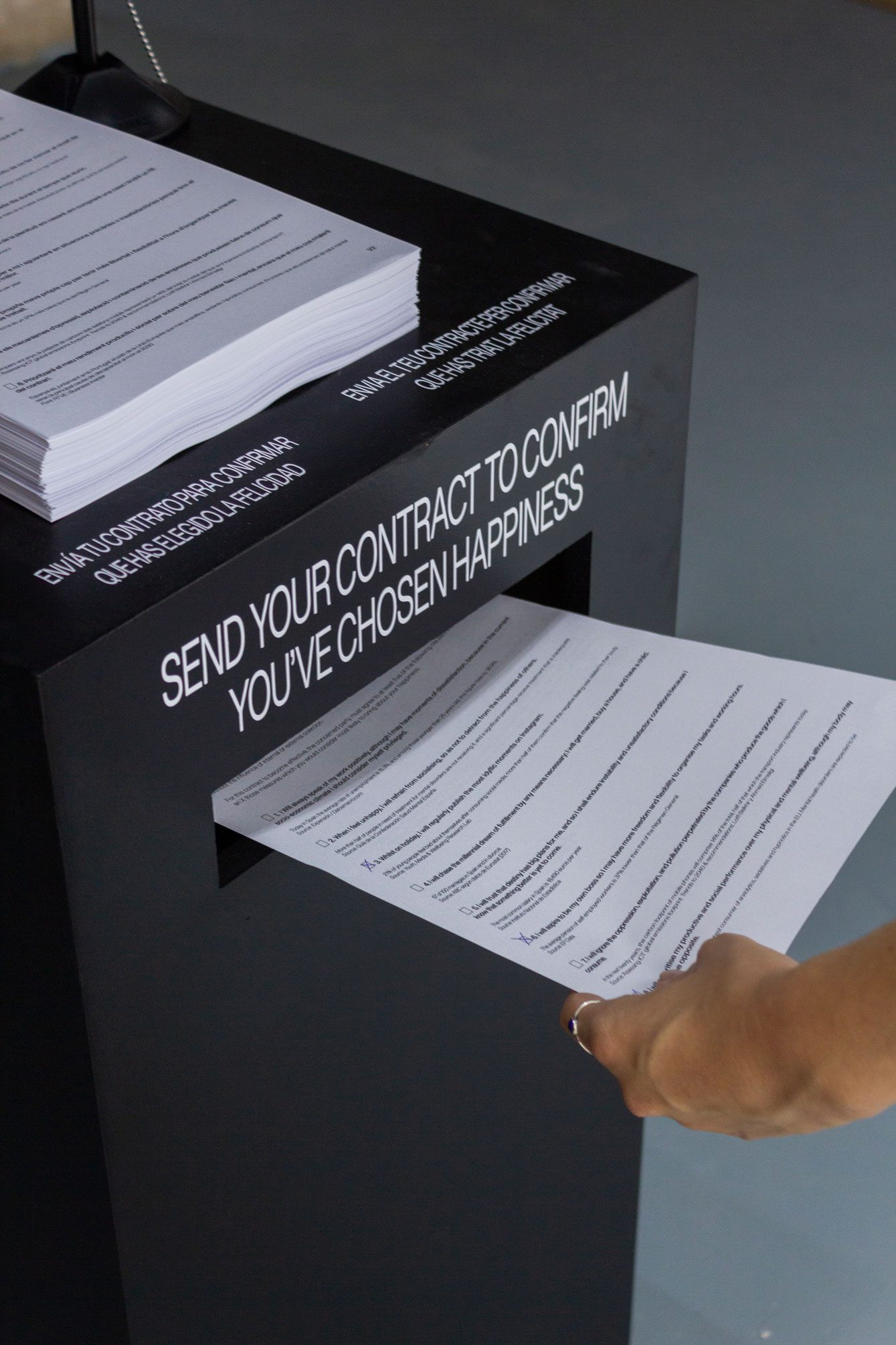
전시의 마지막은 무형의 폭력을 다루는 세 점의 조각으로 마무리됩니다. 바르셀로나 거리 곳곳에 자리한 적대적 건축물, 한병철과 사라 아흐메드(Sarah Ahmed)가 말하는 행복의 폭력, 그리고 폭력을 외면함으로써 억압의 구조를 영속시키는 부작위(omission)의 폭력이 그것입니다.
전시는 관람객을 여러 방으로 안내하며, 각 공간마다 서로 다른 형태의 폭력을 다뤘습니다. 우리가 이미 잘 안다고 믿는 이 개념을 새롭게 바라보고 다시 정의하도록 이끄는 것이 이 전시의 목표였습니다. 저마다의 폭력은 고유한 물리적·인터랙티브 언어로 번역되어 작품 안에 담겼습니다:
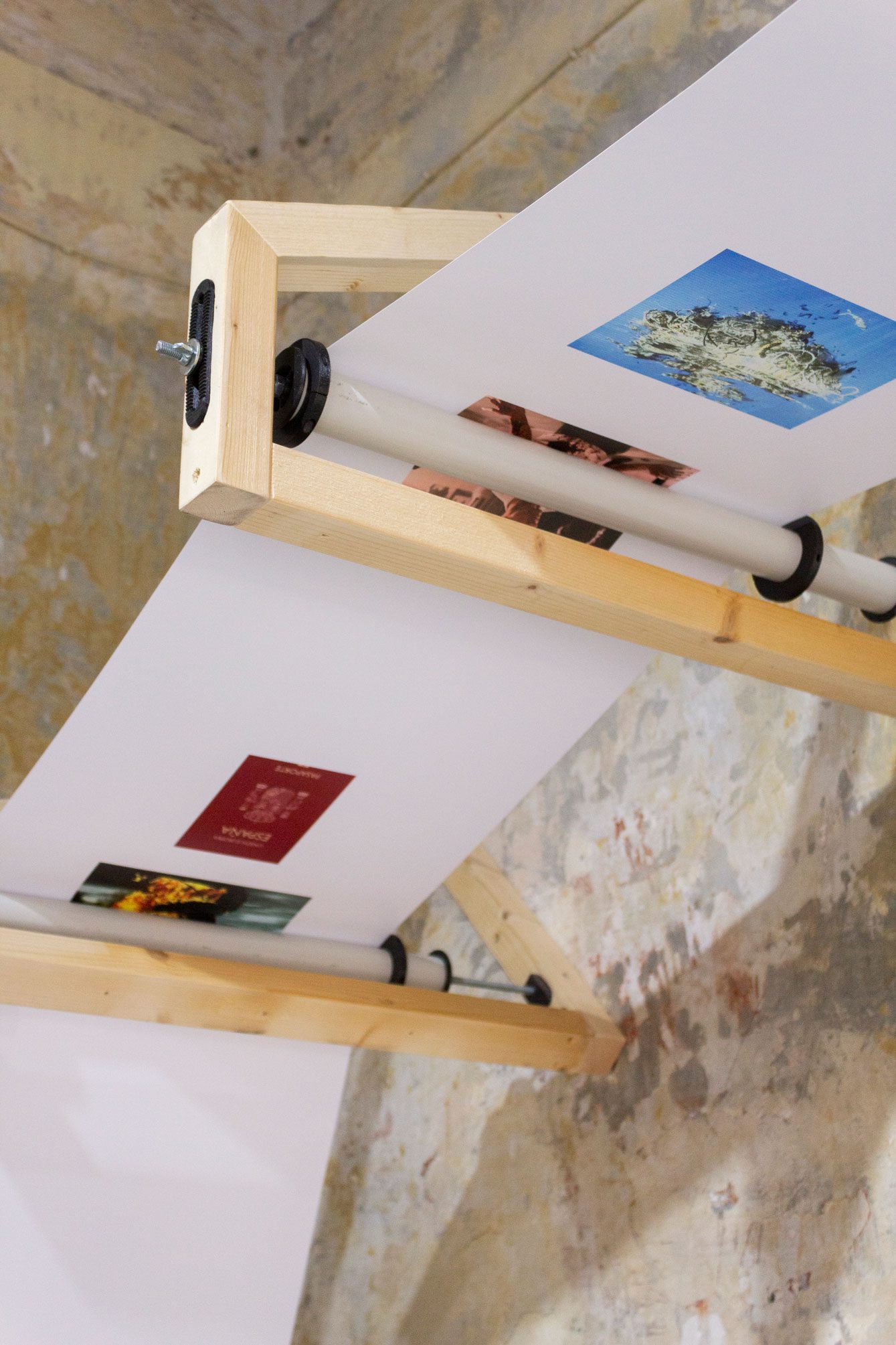
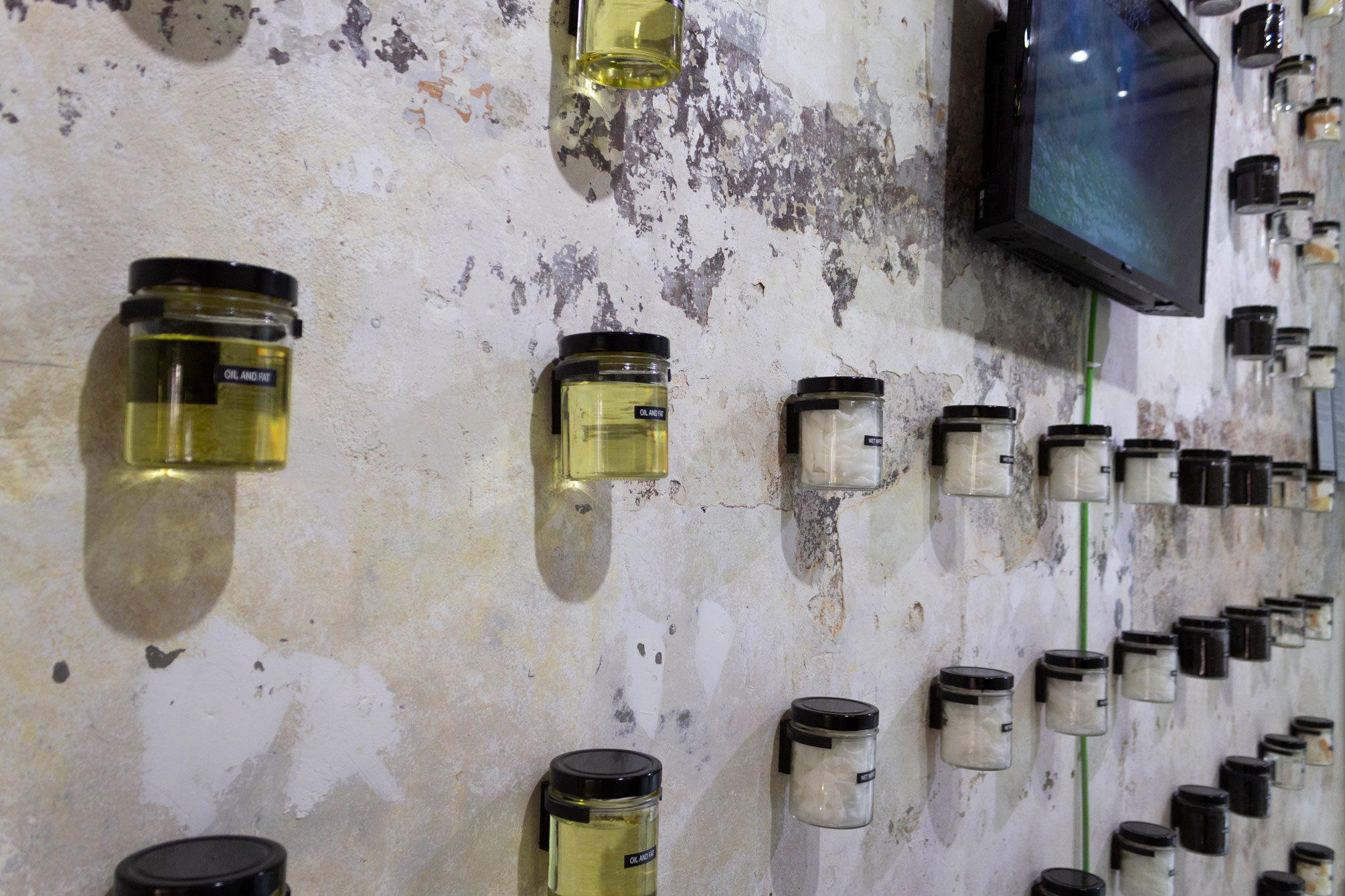
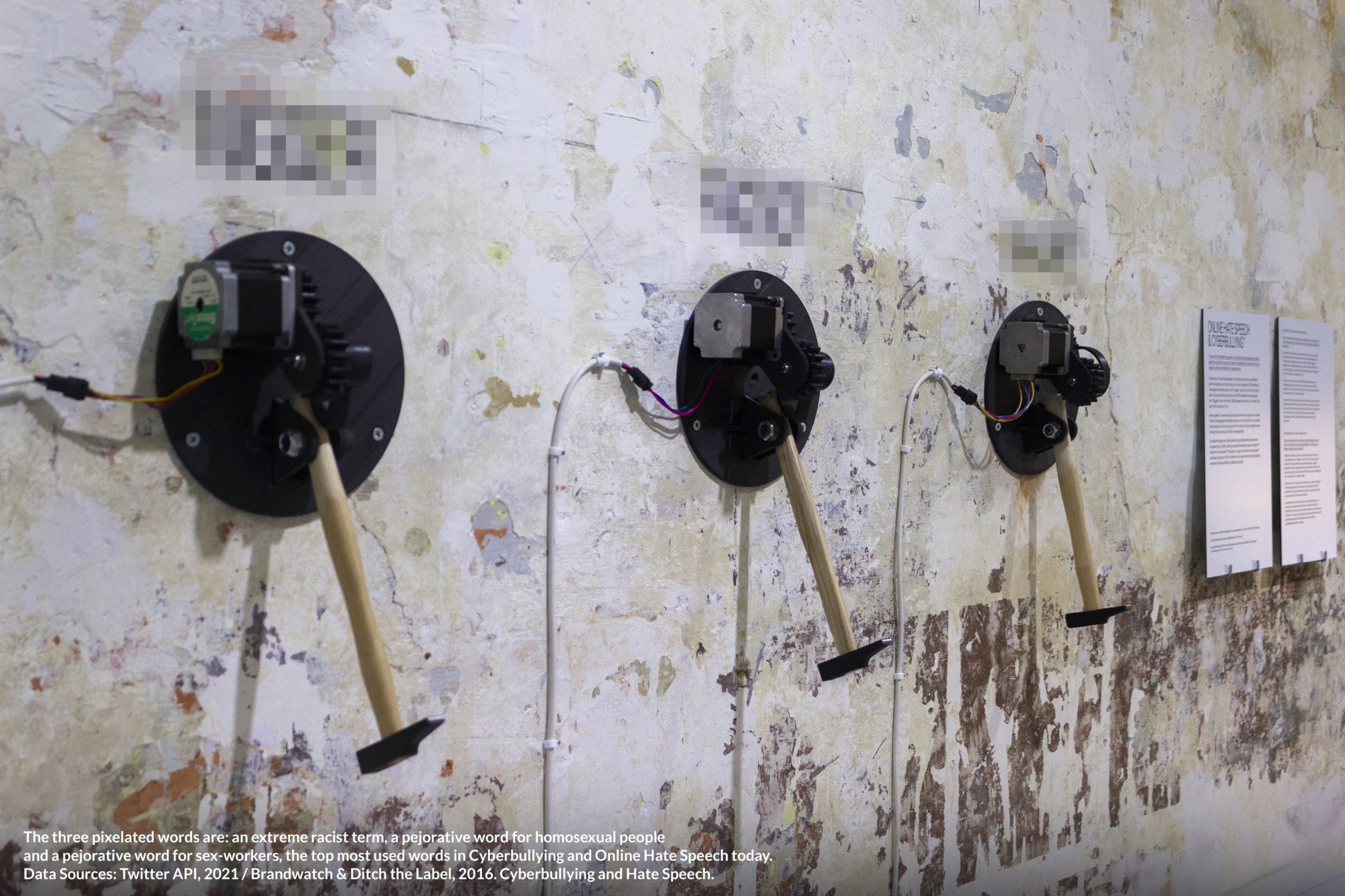
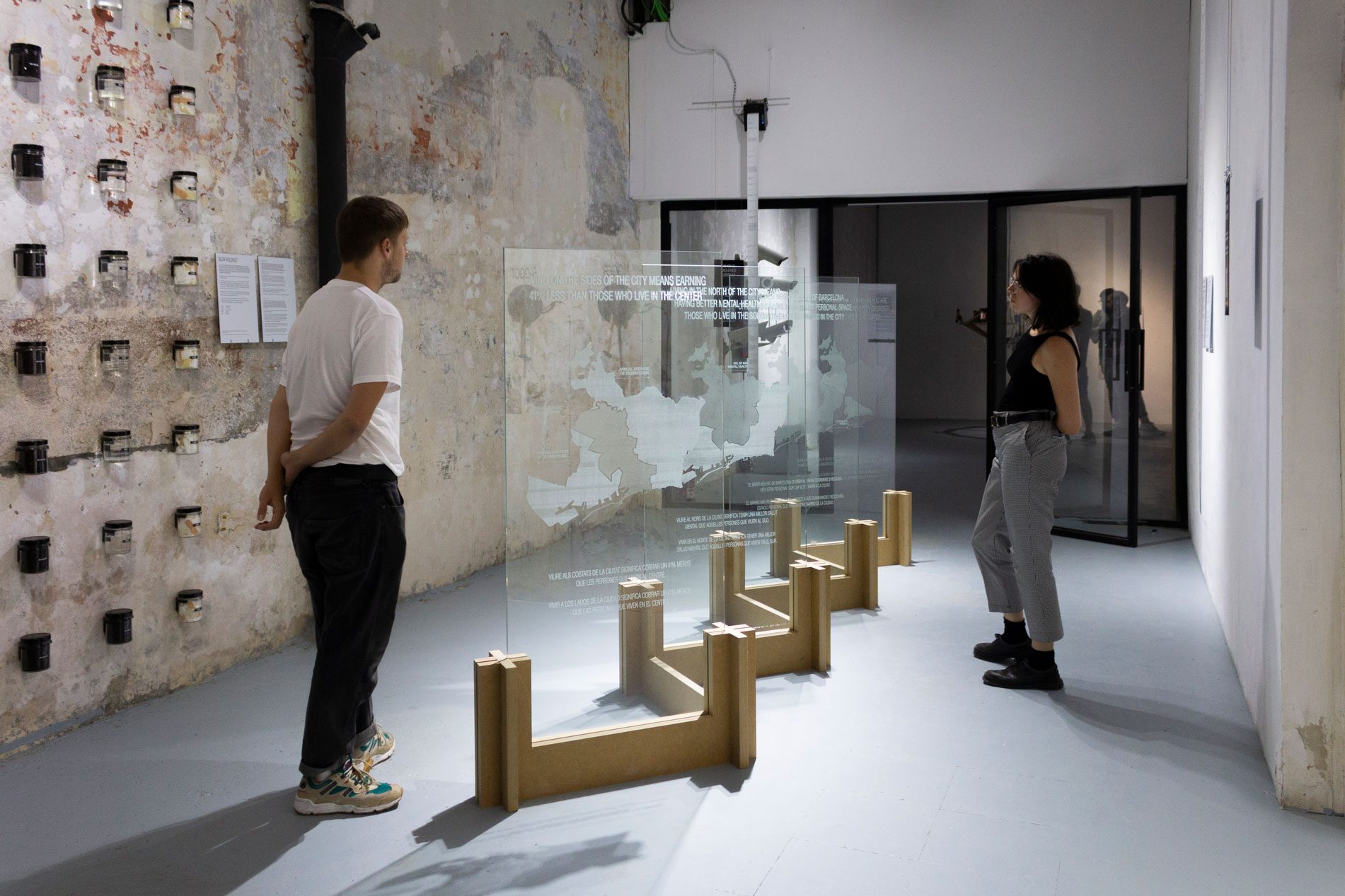
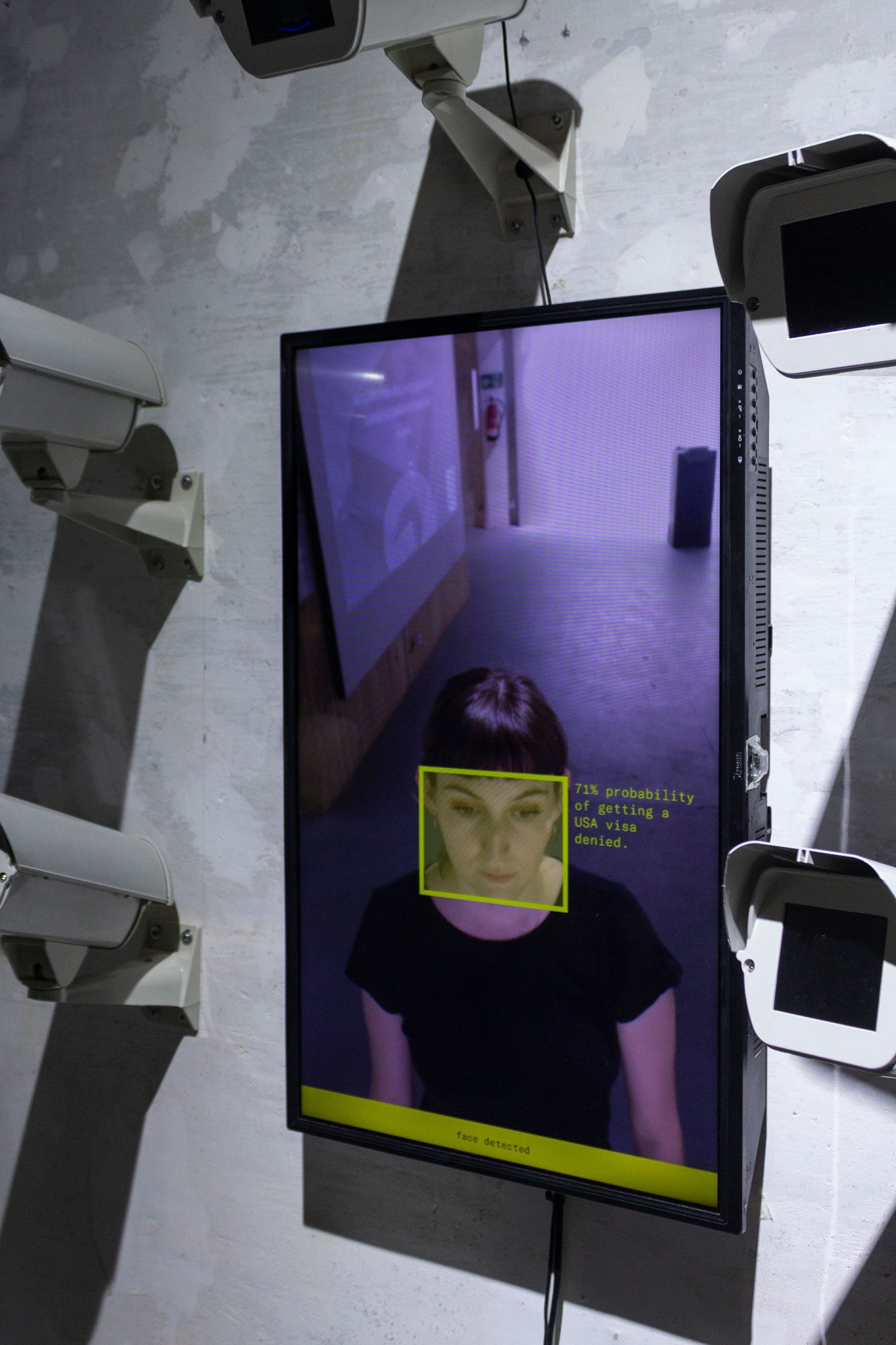
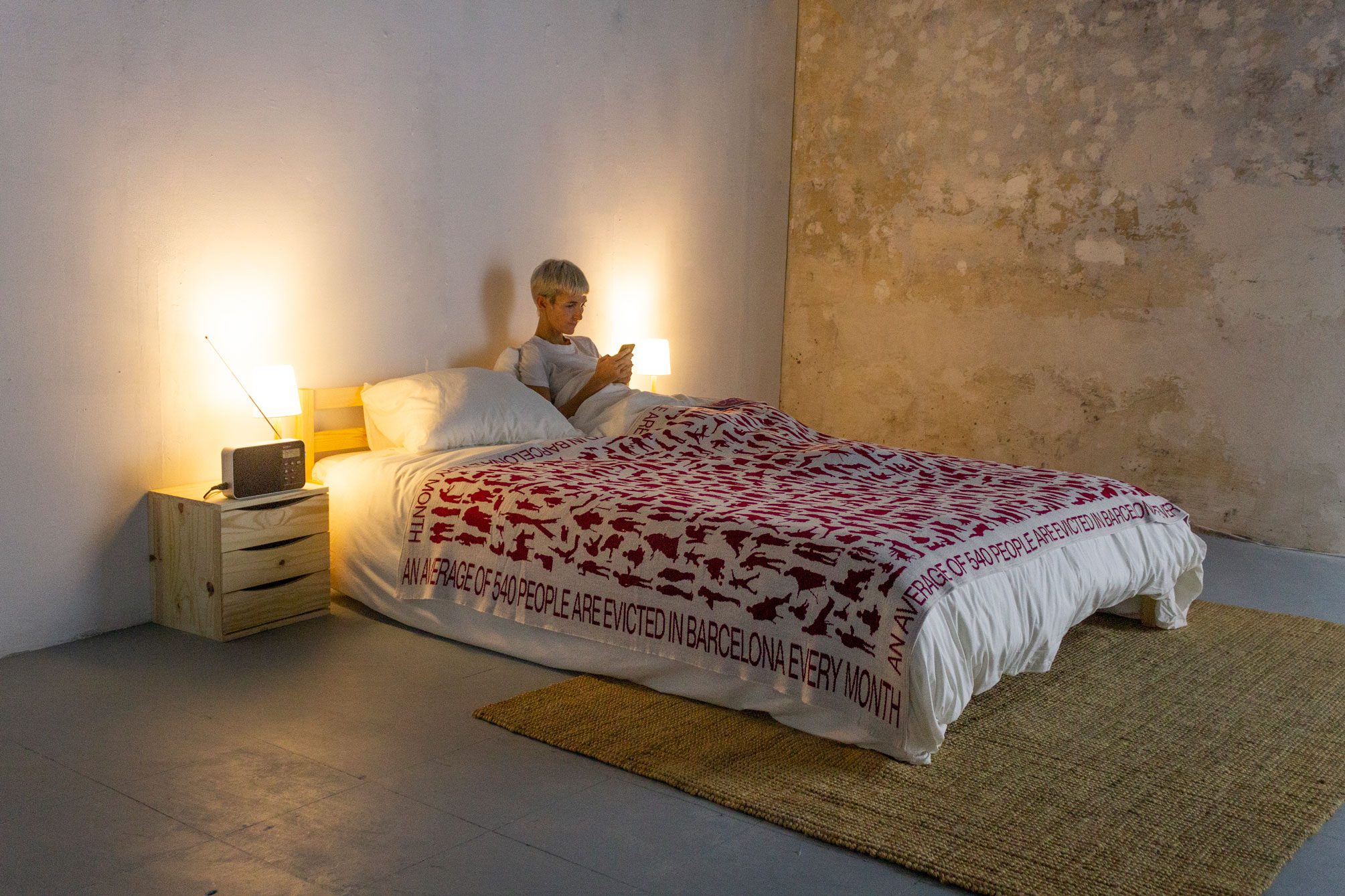
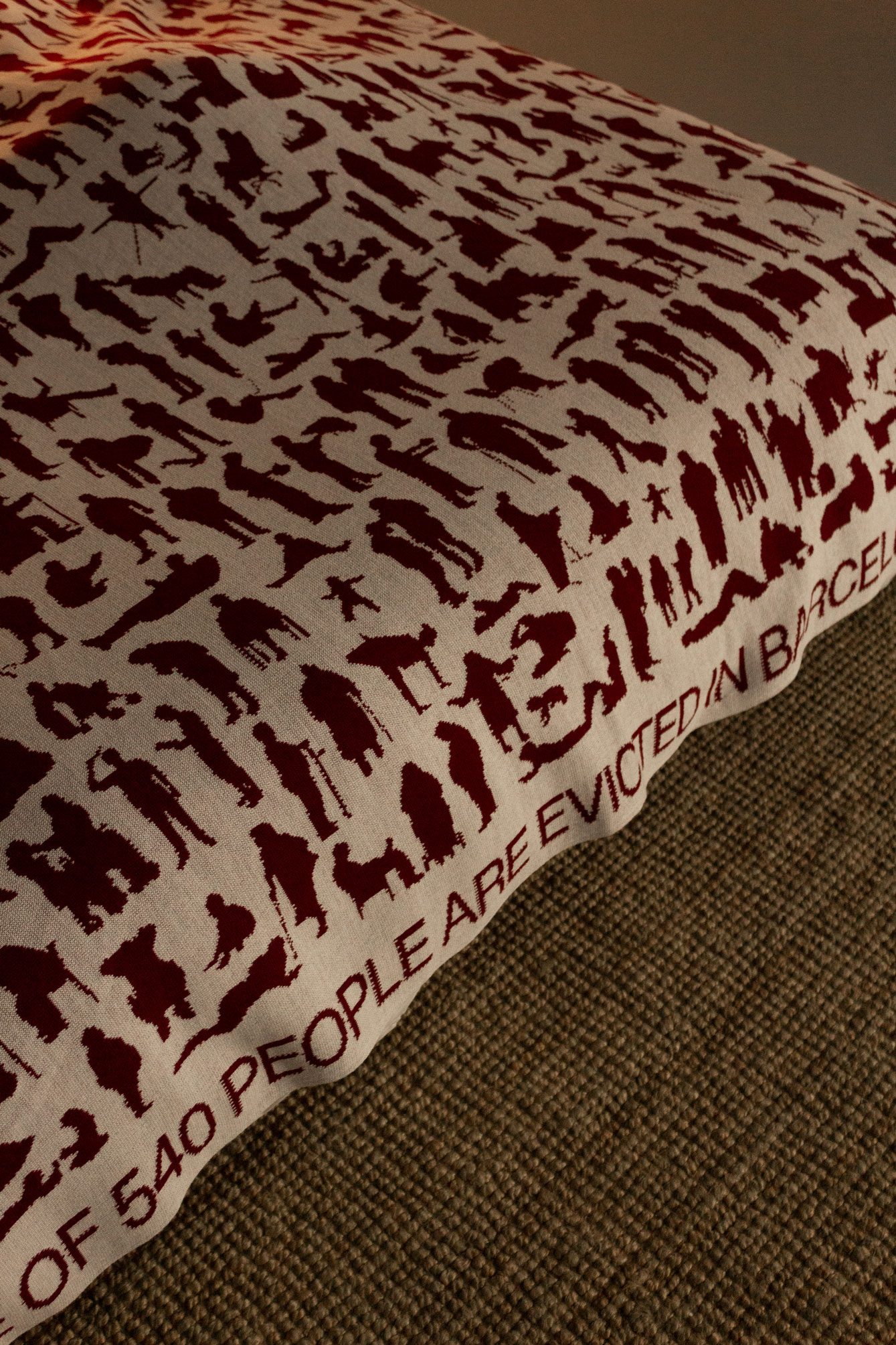
루프 머신은 대중이 제출한 폭력 이미지들을 콜라주로 인쇄해냈고, 100개의 유리병과 런던 하수도 투어 영상으로 이루어진 '지방 덩어리(fatberg)' 해부 작품이 그 옆에 자리했다. 세 개의 망치는 온라인 혐오 발언에서 가장 많이 쓰이는 세 단어 중 하나가 포함된 트윗이 올라올 때마다 갤러리 벽을 두드리며 조금씩 허물어뜨렸다. 네 장의 유리판은 바르셀로나의 경제·교육·주거·의료 불평등의 경계를 모래 언덕 위에 꽂혀 가시화했고, 보안 카메라와 분류 알고리즘은 방문자를 무작위로 판단하고 평가했다. 6개의 필터를 통과하는 여정은 완벽하게 인스타그래머블한 자아와 날것 그대로의 자아를 정면으로 대비시켰다. 의도적으로 쓸모없게 설계된 다섯 개의 의자는 바르셀로나 곳곳의 '적대적 건축' 사례 160가지를 담은 영상과 나란히 놓였으며, 벽에는 "행복을 선택하라(Choose Happiness)"는 상징적인 계약서가 적혀 있었다. 그리고 한 침대 위의 담요에는 매달 바르셀로나에서 벌어지는 540건의 강제 퇴거를 형상화한 실루엣들이 빼곡히 찍혀 있었다.
730 hours of Violence was a self-commissioned project, funded through MediaFutures and the EU fund Horizon 2020, where we wanted to represent and physicalize the different forms of violence that exist and evolve in our modern society, taking the shape of new paradigms and ideas that aren't yet as visible, but ever-present and affecting our everyday. The exhibition is presided over by a counter that marks the hours that remain until the exhibition ends. The project will end when the clock, which started at 730 hours, reaches 0. It begins in a room that symbolizes violence as it is usually understood: bombs, weapons and blood. More often than not, definitions of the term speak of punches, bruises and interpersonal conflicts. The first piece raises the question: Who has to define what violence is? From there, the exhibition explores several forms of violence beyond the interpersonal: Slow Violence , a concept developed by Rob Nixon, integrated into environmental catastrophes that develop slowly due to pollution or climate change; online hate speech and cyberbullying; Glass Frontiers , the invisible borders that prevent people from exercising their basic rights within a city; Data violence and the biases programmers leave in algorithms; and selfie dysmorphia , the body image disorder reflecting the need to edit the digital image itself. The tour ends with three sculptures on intangible violence: hostile architecture on the streets of Barcelona; Byung-Chul Han and Sarah Ahmed's idea of the violence of happiness ; and violence by omission, which indicates that by ignoring violence, we perpetuate systemic structures of oppression. The exhibition took the visitor through various rooms and works, each addressing a different form of violence, with the goal of prompting a reimagining and redefining of a concept we think we know all too well. Across the show, each form of violence was translated into its own physical or interactive language: A loop machine printed a collective collage of public-submitted images of violence; an autopsy of a fatberg with 100 jars and a video-tour of London's sewers; three hammers wearing down the gallery wall, each striking every time someone sends a tweet using one of the three most common words in online hate speech; four panes of glass protruding from a mountain of sand to mark Barcelona's economic, educational, housing and health borders; security cameras paired with a classification algorithm that judges visitors randomly; a journey through 6 filters contrasting the perfectly instagrammable self with the brutally honest one; five chairs redesigned to be useless alongside a video tour of 160 examples of hostile architecture in Barcelona; a symbolic "Choose Happiness" contract written on the wall; and a bed whose blanket is stamped with silhouettes visualising the 540 evictions that occur each month in Barcelona. Project Page | Domestic Data Streamers | Instagram Judith Beheading Holofernes (Caravaggio)