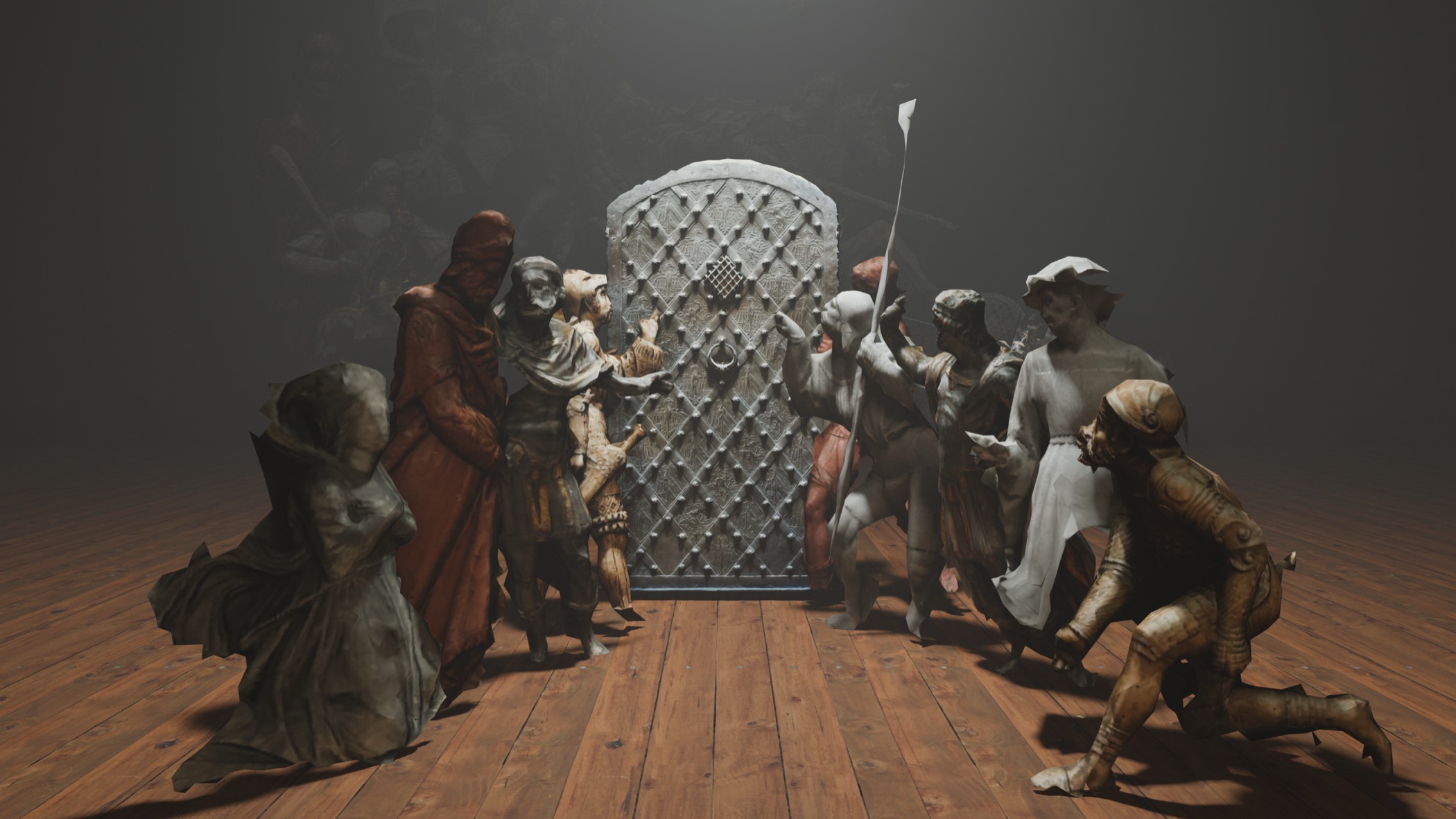
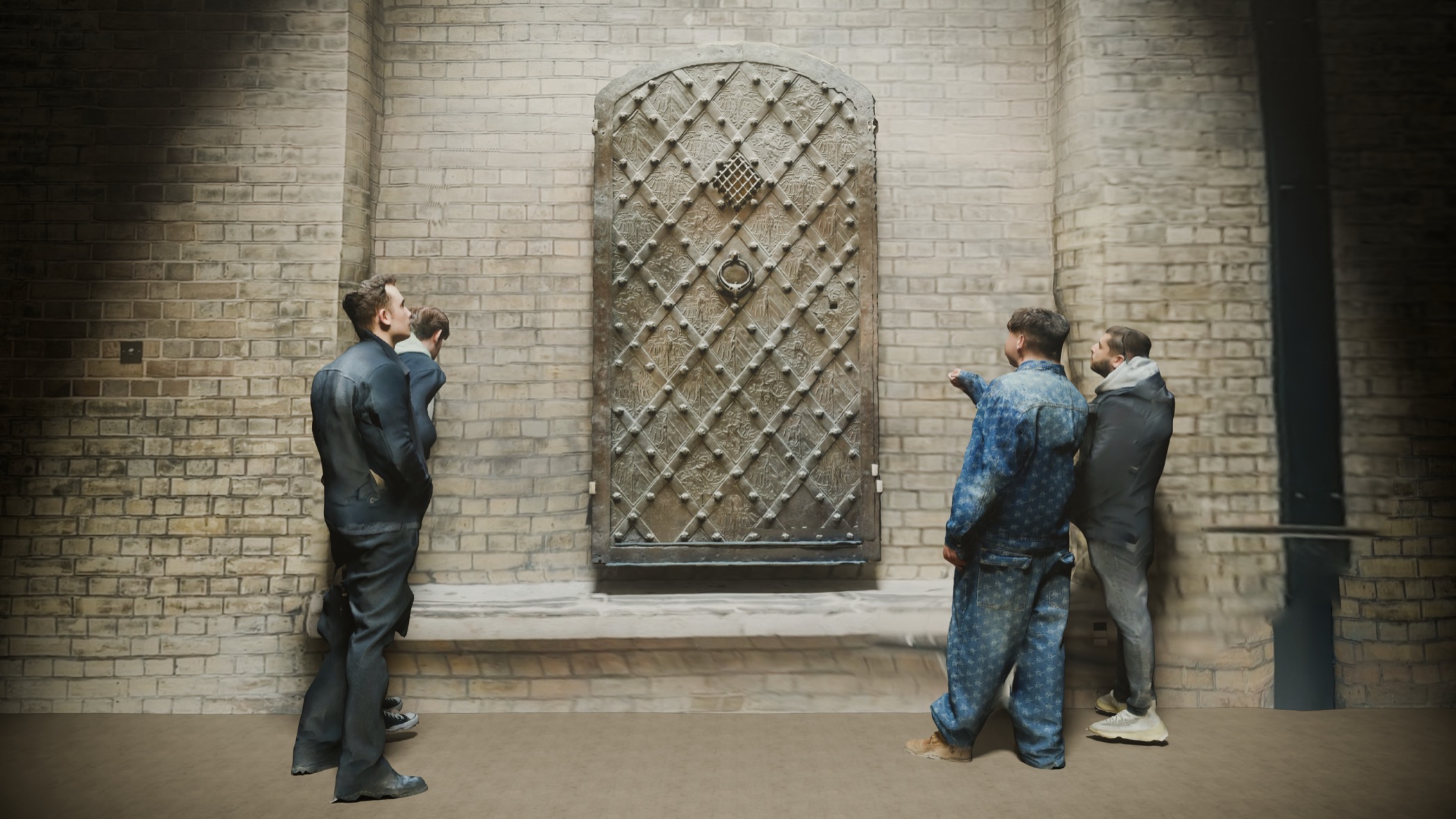
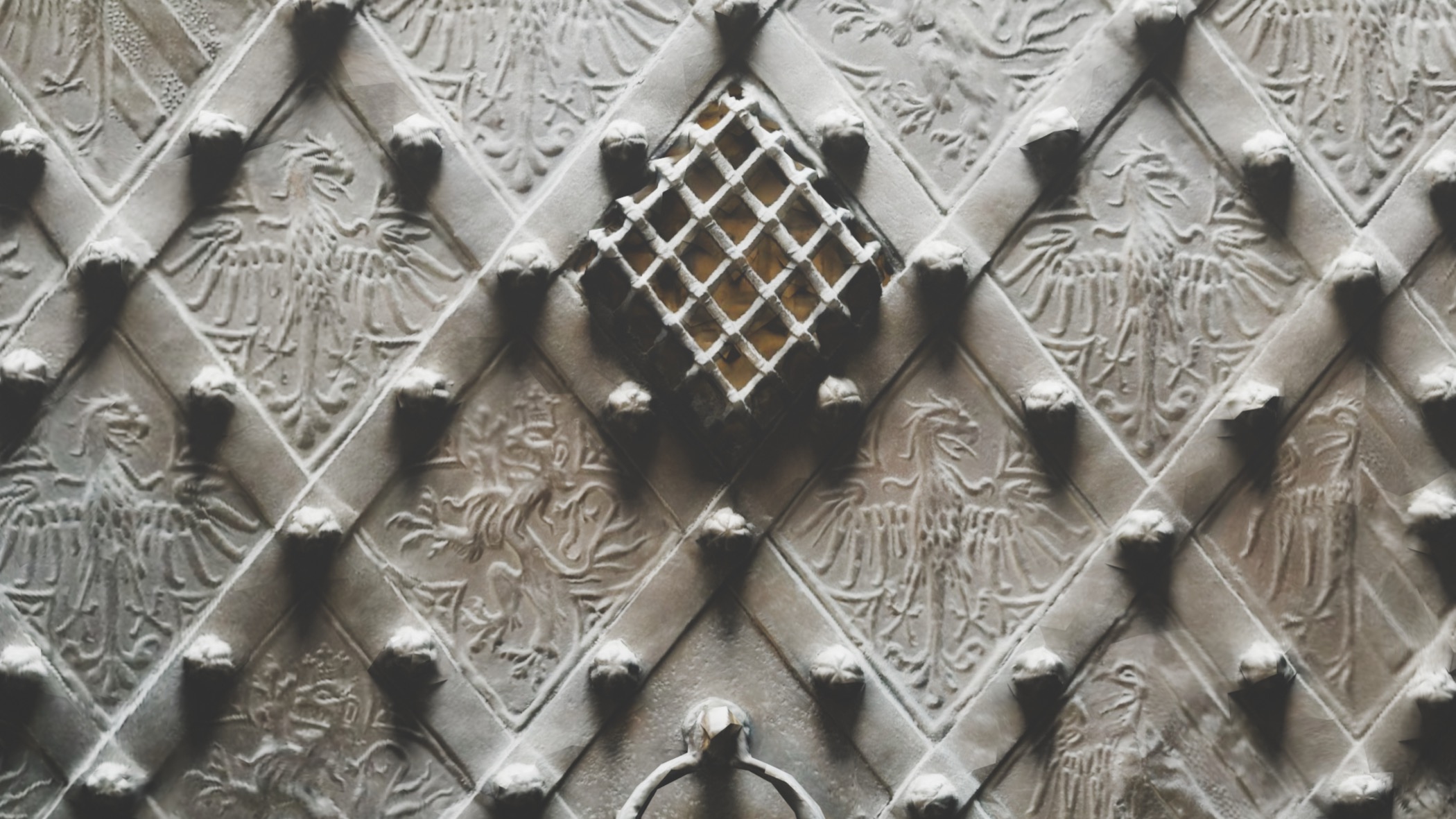
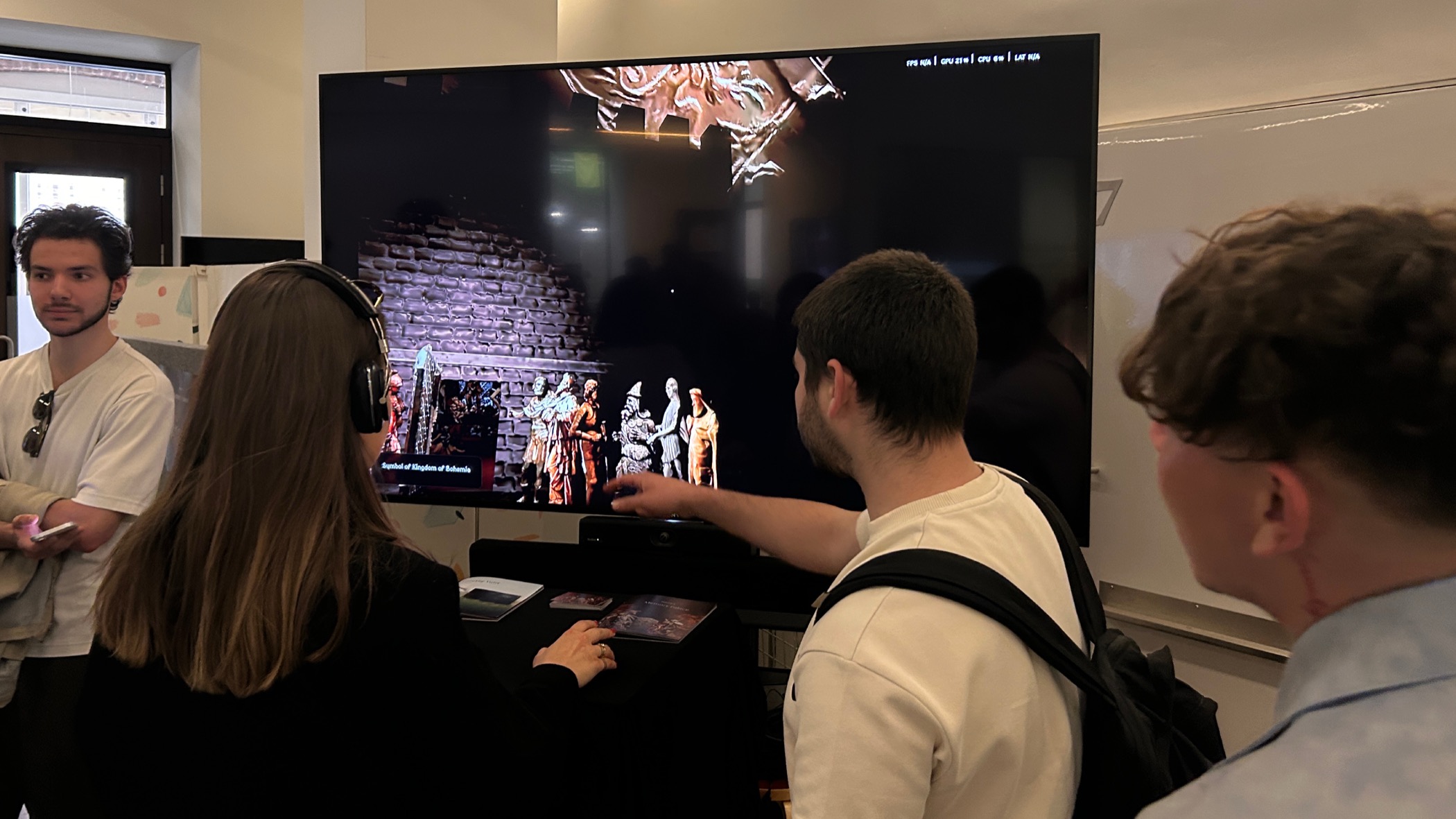
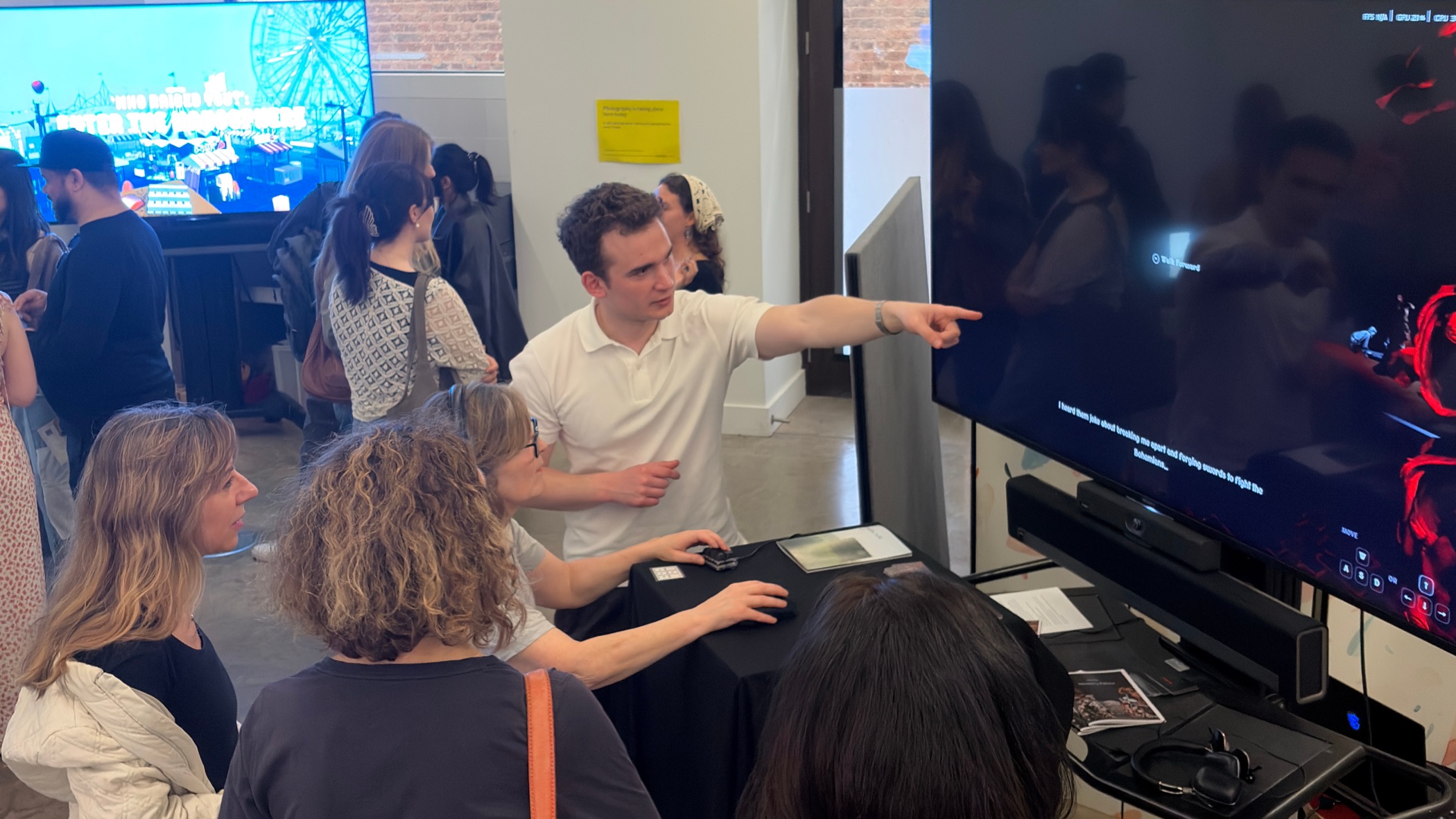
메모리 팰리스(Memory Palace)는 V&A의 "포탈스(PORTALS)" 디자인 프로그램을 통해 제가 개발한 인터랙티브 디지털 경험입니다. 이 프로젝트는 V&A 컬렉션에 소장된 15세기 가정용 문 하나에서 시작되었습니다. 제 눈길을 사로잡은 것은, 이 평범한 생활용 오브제에 두 가지 정치적 상징이 함께 새겨져 있다는 사실이었습니다. 바로 신성 로마 제국의 독수리와 보헤미아의 사자였습니다. 두 문양은 연합과 동맹, 그리고 확고한 자신감의 표명으로 나란히 새겨져 있었습니다. 저에게 이것은 프로젝트의 출발점이었습니다. 당대의 정치 체제는 자신의 권위를 너무도 확신한 나머지, 그 권력을 가정의 문처럼 친밀하고 기능적인 물건 안에 새겨 넣었던 것입니다.
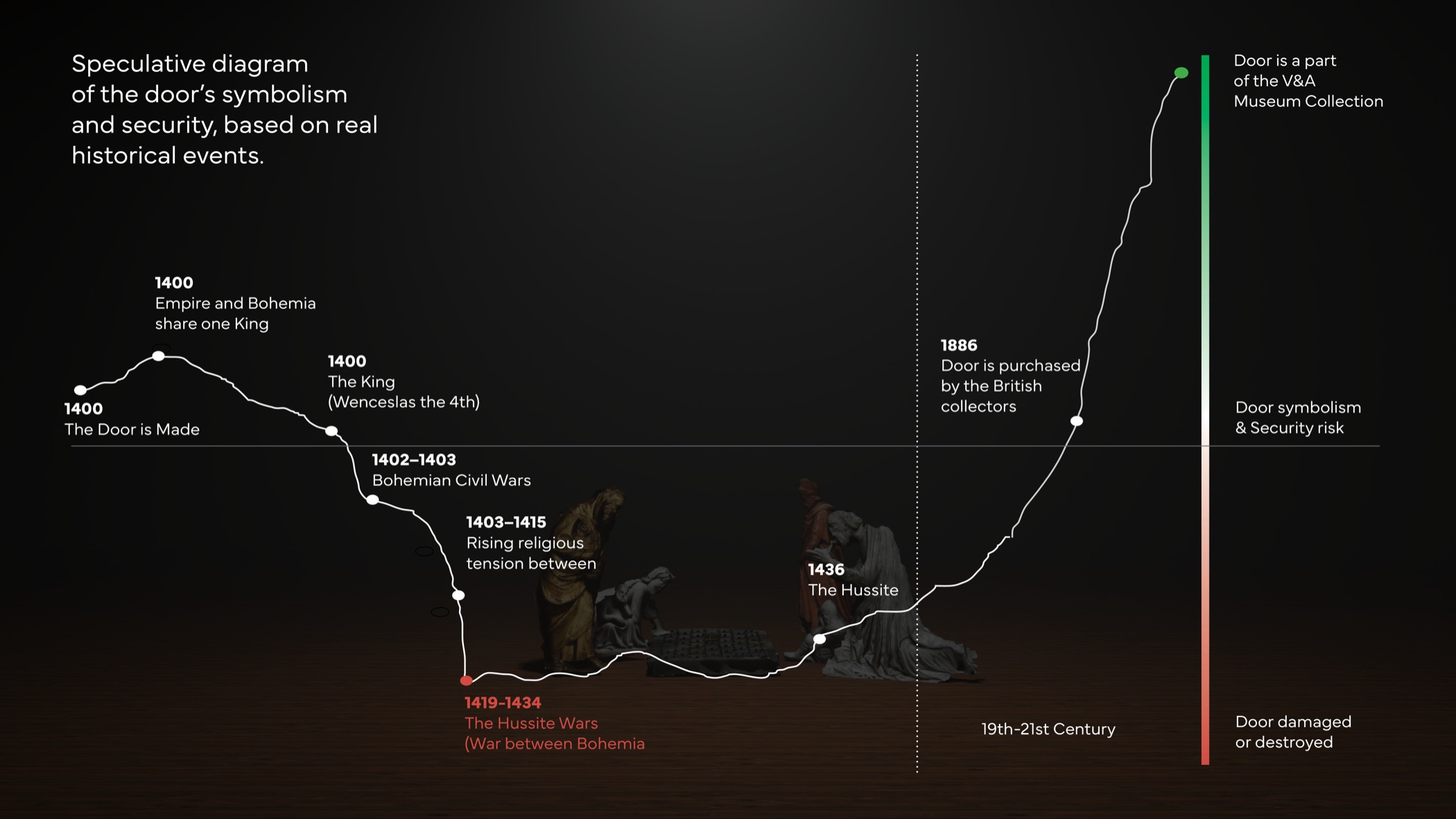
제가 만들어낸 이야기는 허구이지만, 15세기 중부 유럽의 실제 역사적 긴장, 특히 종교 분쟁과 후스파 전쟁(Hussite Wars)을 토대로 합니다. 이 오브제가 강렬하게 다가오는 이유는, 독수리와 사자가 상징하는 연합이 결코 영원하지 않았기 때문입니다. 두 문양은 정치적 유대를 암시했지만, 불과 몇 년 후 그 뒤에 선 세력들은 점점 불안해졌고, 결국 서로를 향해 날을 세우기 시작했습니다. 두 상징을 모두 품고 있었기에, 저는 이 문을 위태로운 오브제로 상상했습니다. 무너져가는 동맹의 흔적을 간직했다는 이유로 훼손되거나, 제거되거나, 파괴될 수도 있었던 생활용 유물로요. 저는 이 문에서 자신의 영속성을 굳게 믿었지만, 이미 균열 직전에 서 있었던 한 체제의 흔적을 보았습니다.
두 문양은 정치적 유대를 암시했지만, 불과 몇 년 후 그 뒤에 선 세력들은 점점 불안해졌고, 결국 서로를 향해 날을 세우기 시작했습니다.
이 프로젝트의 핵심 과제 중 하나는, 15세기 중부 유럽의 역사나 종교 분쟁, 후스 전쟁에 익숙하지 않은 일반 관람객에게 복잡한 역사적 내용을 어떻게 전달할 것인가였습니다. 이름과 연도, 정치적 설명으로 가득 찬 딱딱한 역사 수업처럼 느껴지게 하고 싶지 않았습니다. 제가 찾은 답은 '현장의 목소리', 즉 그 시대의 분위기 속에서 살아남았지만 거대한 정치 구조를 온전히 이해하지는 못했던 평범한 사물의 시선으로 이야기를 풀어나가는 것이었습니다.
그래서 저는 문(door)에 인격을 부여했습니다. 왕도, 학자도, 역사가도 아닌, 일상 한가운데 놓였던 하나의 사물. 저는 그녀를 그 시대의 목격자이자 생존자, 혹은 이름 없는 민중처럼 대했습니다. 문은 공식적인 역사로 갈등을 설명하지 않습니다. 대신 그녀는 기억합니다. 목소리들, 두려움, 소문, 발소리, 종교적 긴장감, 폭력, 상징들, 말의 파편들, 그리고 자신을 둘러싼 공기의 변화를. 모든 이름과 사건을 알지 않아도, 그녀는 그곳에서 일어난 일의 감정적 진실을 고스란히 품고 있습니다. 이러한 접근 덕분에 복잡하고 불확실한 역사적 내용을 훼손하지 않으면서도, 더 많은 사람들이 쉽게 다가올 수 있는 경험을 만들 수 있었습니다. 작품 속 내레이션은 AI 음성으로 구현되어, 문이 하나의 사변적 역사적 존재로서 직접 말을 건네는 방식으로 전달됩니다.
그래서 나는 문을 인간화했습니다. 왕도, 학자도, 역사가도 아닌, 일상 속에 놓인 하나의 사물로서 — 그 시대를 살아낸 목격자이자 생존자이자 평범한 존재로 그녀에게 다가갔습니다. 문은 공식적인 역사로 갈등을 설명하지 않습니다. 그녀는 목소리들, 두려움, 소문, 발소리, 종교적 긴장, 폭력, 상징들, 말의 파편들, 그리고 자신을 둘러싼 공기의 변화를 기억합니다.
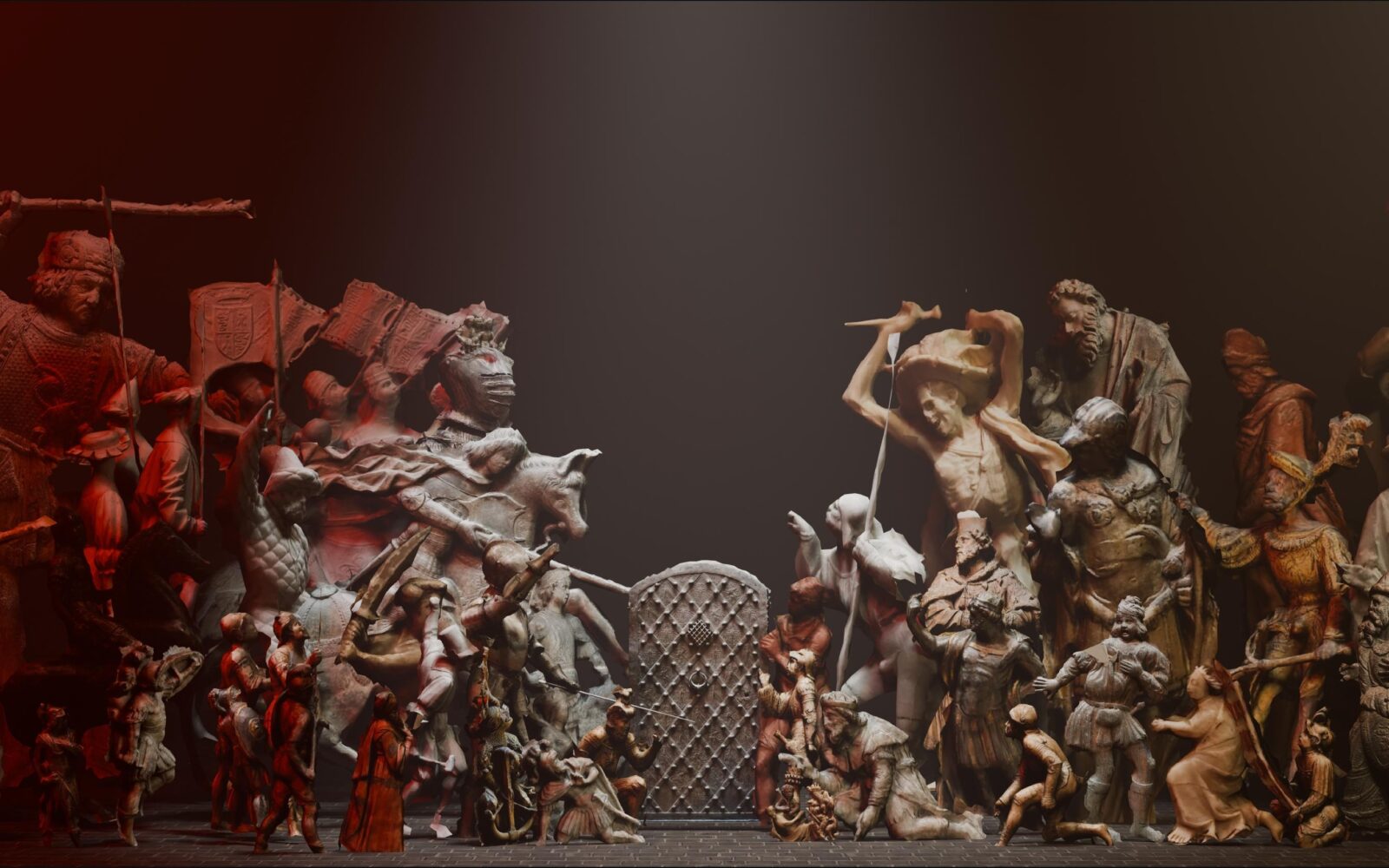
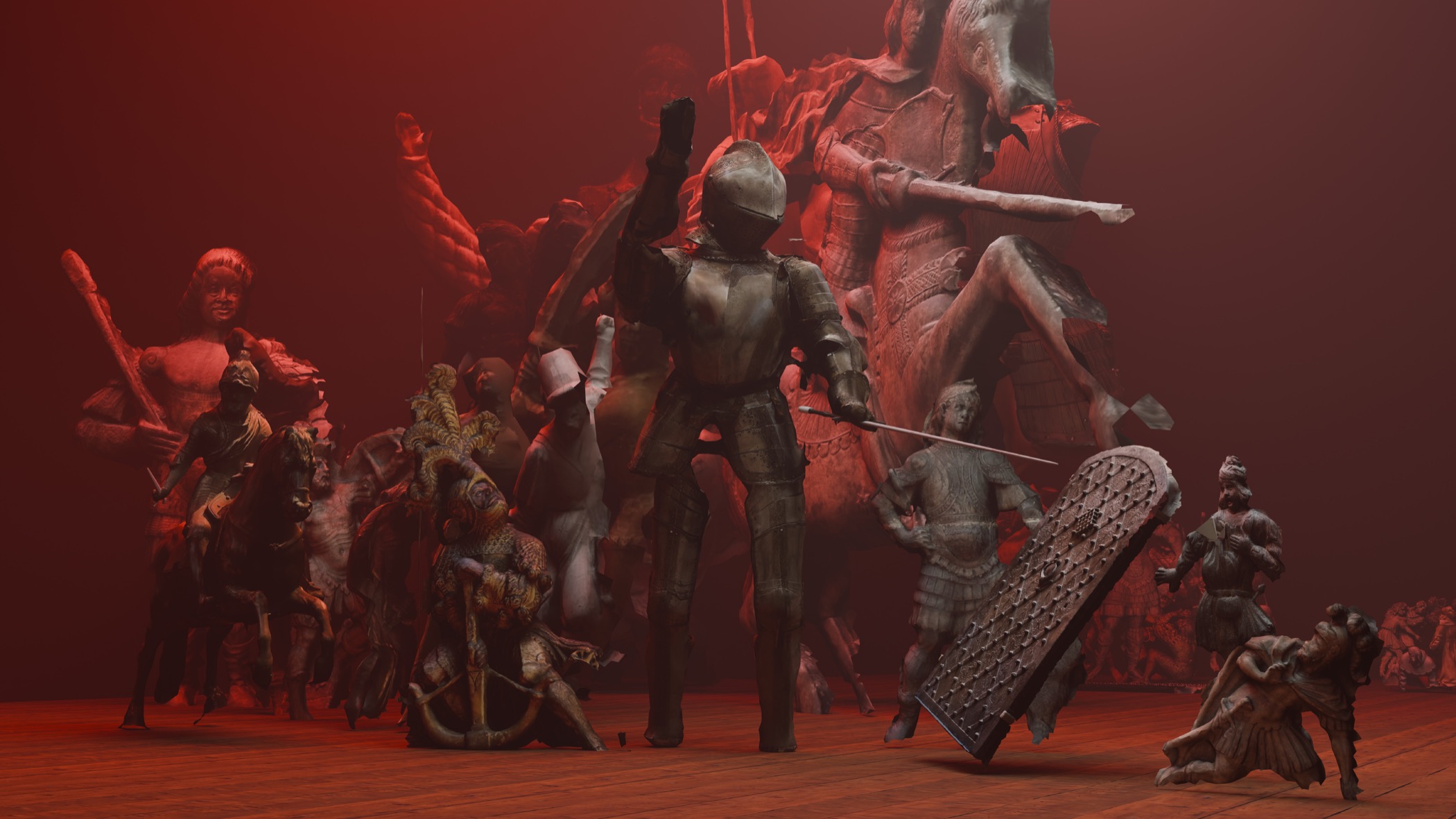
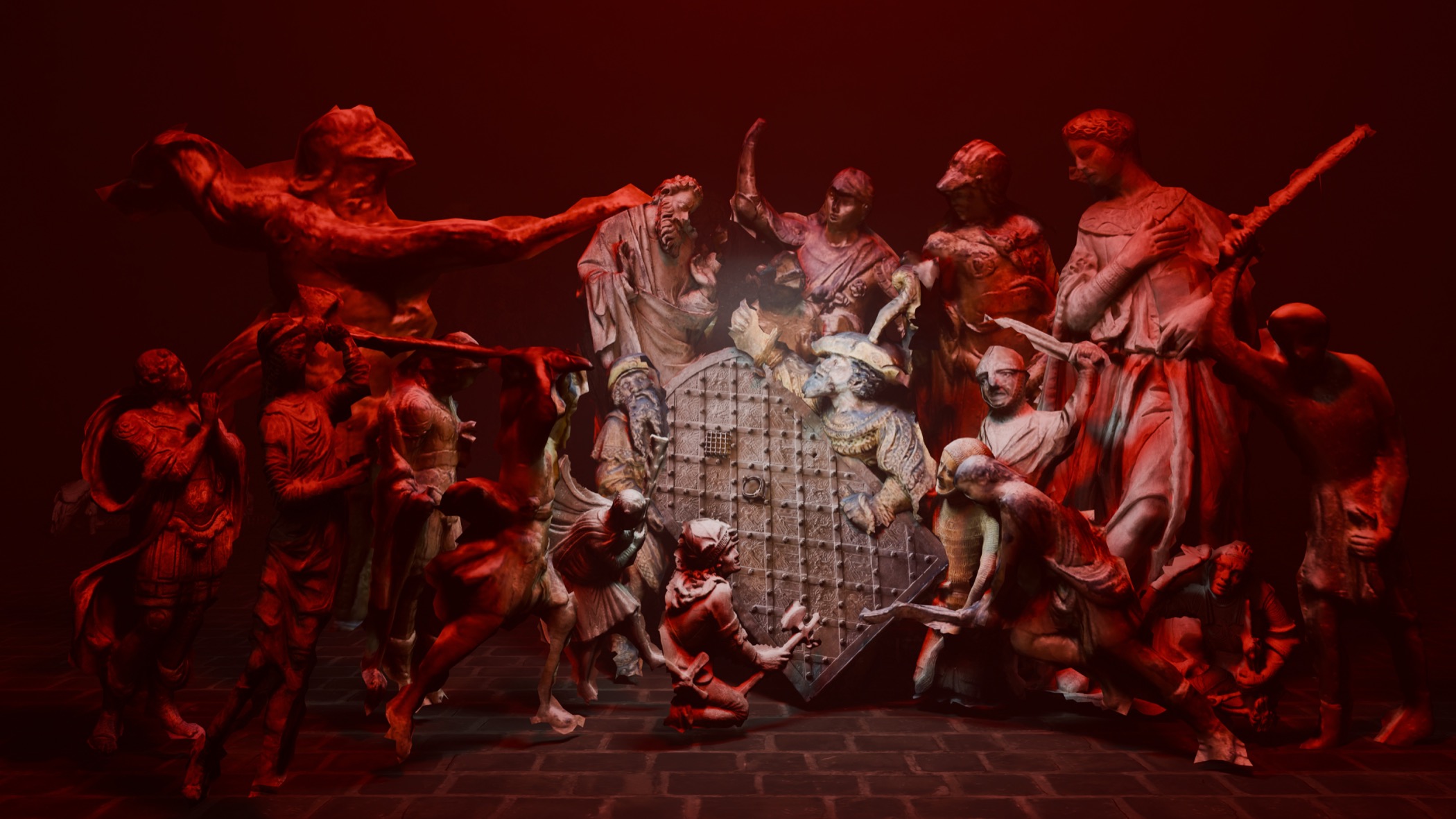
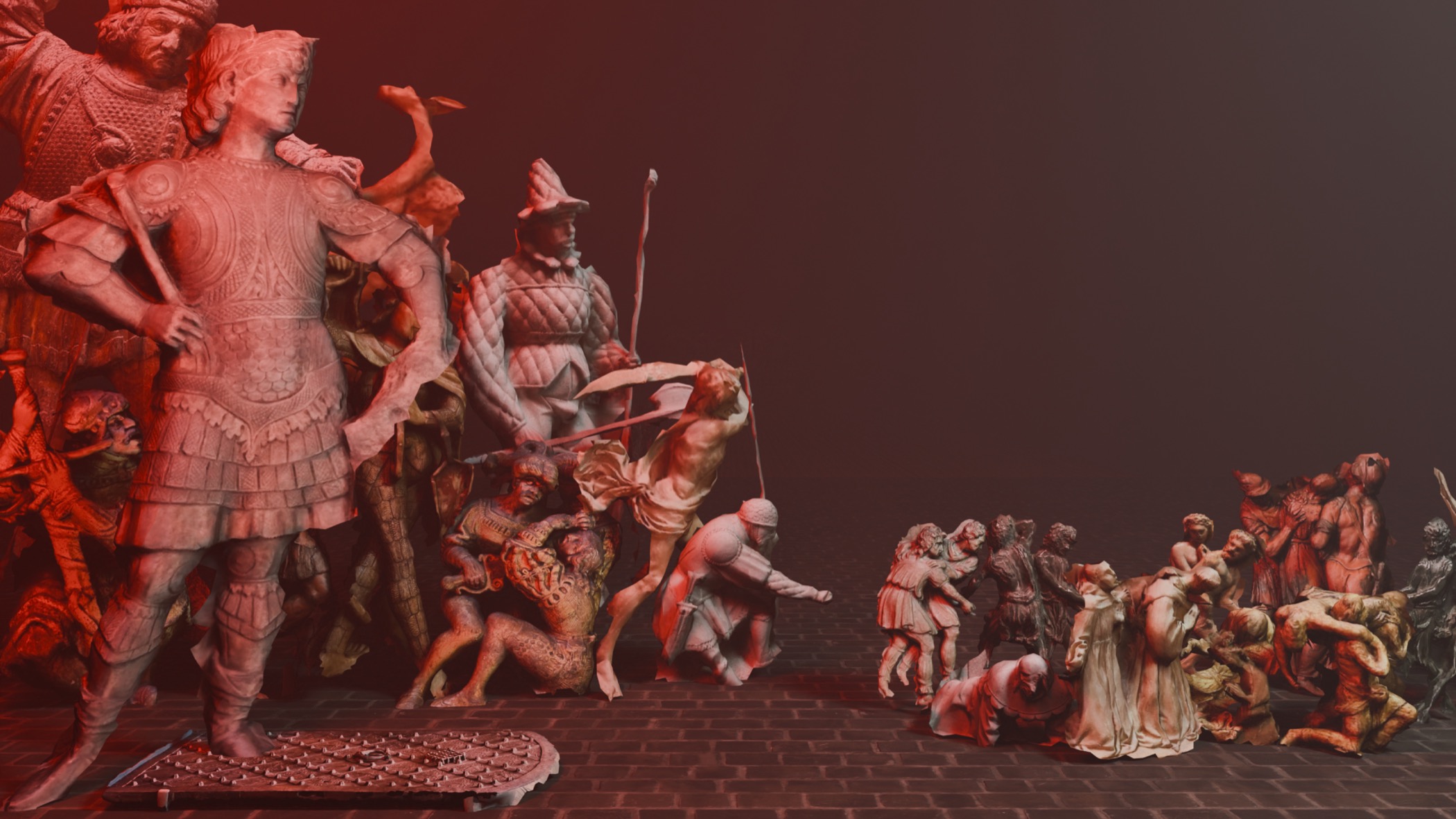
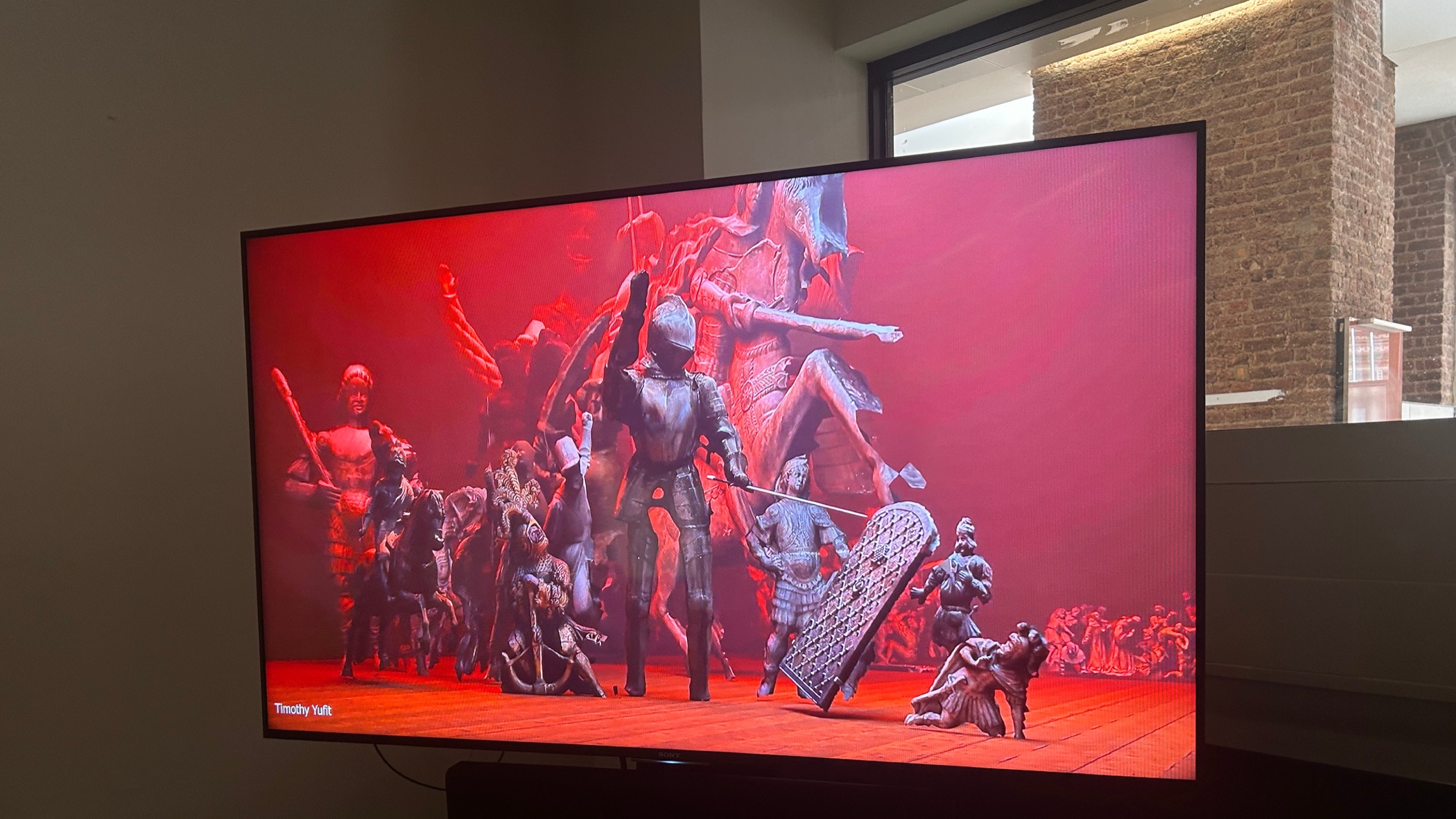
이 작업에서 가장 핵심적인 창작 결정은 문을 하나의 경계로 삼는 것이었습니다. 박물관에 정적으로 전시된 유물로 바라보는 대신, 그 문 자체의 기억 속으로 들어가는 입구로 재해석했습니다. 관객은 디지털 세계를 유영하며, 오브제가 파편화된 장면들과 분위기, 역사적 흔적으로 이어지는 포털이 되는 경험을 하게 됩니다. 역사적 장면들은 14~15세기 중세 미술의 구성 방식에서 영감을 받았습니다. 인물들로 빼곡한 공간 배치, 상징적인 몸짓, 압축된 원근법, 의례적인 인물 표현, 그리고 종교나 정치를 담은 강렬한 이미지들. 저는 이 세계가 중세 회화의 시각적 논리로 빚어진 듯한 느낌을 주되, 오늘날의 디지털 기술을 통해 새롭게 재처리된 것처럼 보이길 원했습니다.
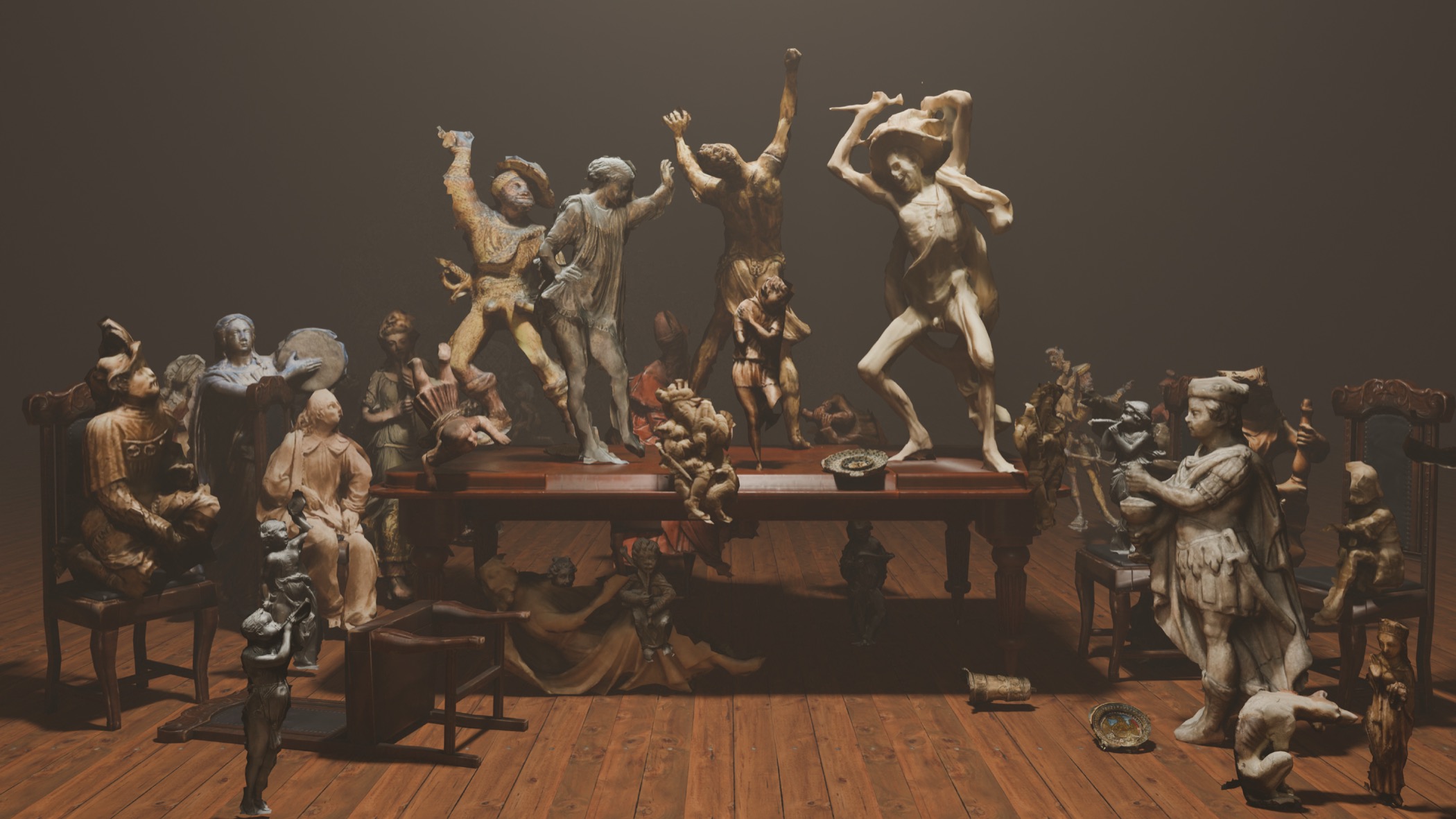
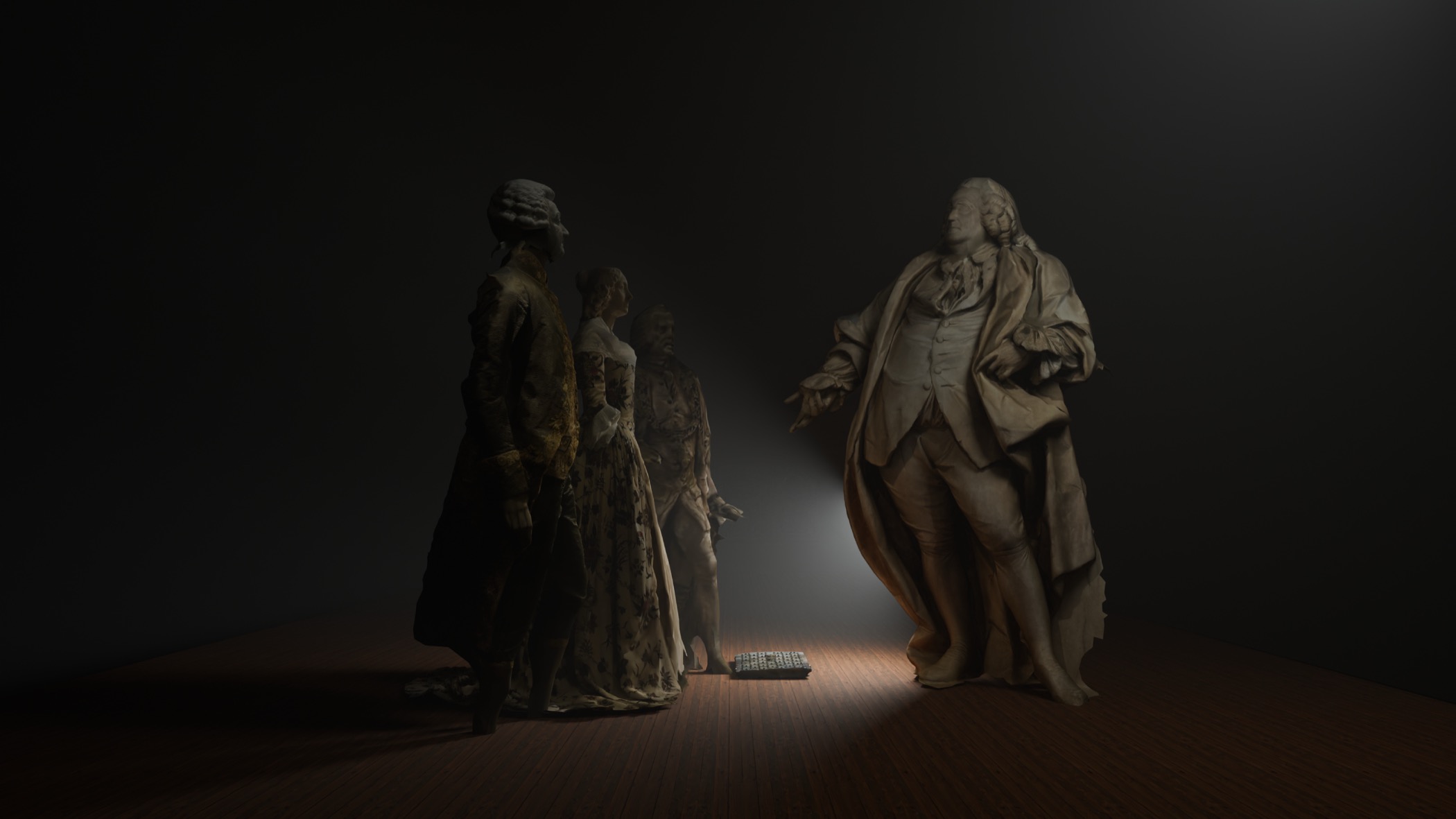
이 프로젝트는 Three.js와 포토그래메트리, 그리고 인터랙티브 웹 기술을 기반으로 만들어졌습니다. V&A 컬렉션에서 스캔한 약 300여 점의 오브젝트를 활용해 문의 기억 속 세계를 구축했습니다. 뮤지엄 컬렉션의 아날로그 자료를 디지털 툴과 프로그래밍으로 결합하는 이 과정 자체가 프로젝트에서 가장 중요한 부분 중 하나였습니다. 아무것도 없는 곳에서 역사를 만들어낸 것이 아닙니다. 컬렉션 속 오브젝트, 텍스처, 인물, 파편들을 가져와 새로운 인터랙티브 시스템으로 재편한 것입니다. 그 결과물은 기록 보관소처럼 느껴지면서도 불안정하고, 동시에 강한 감정적 울림을 지닌 디지털 환경이었습니다.
이 오브제들은 전통적인 역사 전시 방식으로 배치된 것이 아니라, 균열된 디지털 환경 속 파편들로 구성되었습니다. 덕분에 관람객은 살아 숨 쉬면서도 어딘가 기억이 흐릿하게 남은 아카이브 안으로 걸어 들어가는 느낌을 받게 됩니다. 정해진 하나의 이야기를 따라갈 필요는 없습니다. 관람객은 공간을 직접 탐색하고, 오브제와 소리, AI 음성 내레이션, 시각적 파편들과 마주치며, 그 재료들과 저마다의 방식으로 관계를 맺어나갑니다.
이 오브제들은 전통적인 역사 전시 방식으로 배치된 것이 아니라, 균열된 디지털 환경 속 파편들로 구성되었습니다. 덕분에 관람객은 살아 숨 쉬면서도 어딘가 기억이 흐릿하게 남은 아카이브 안으로 걸어 들어가는 느낌을 받게 됩니다.
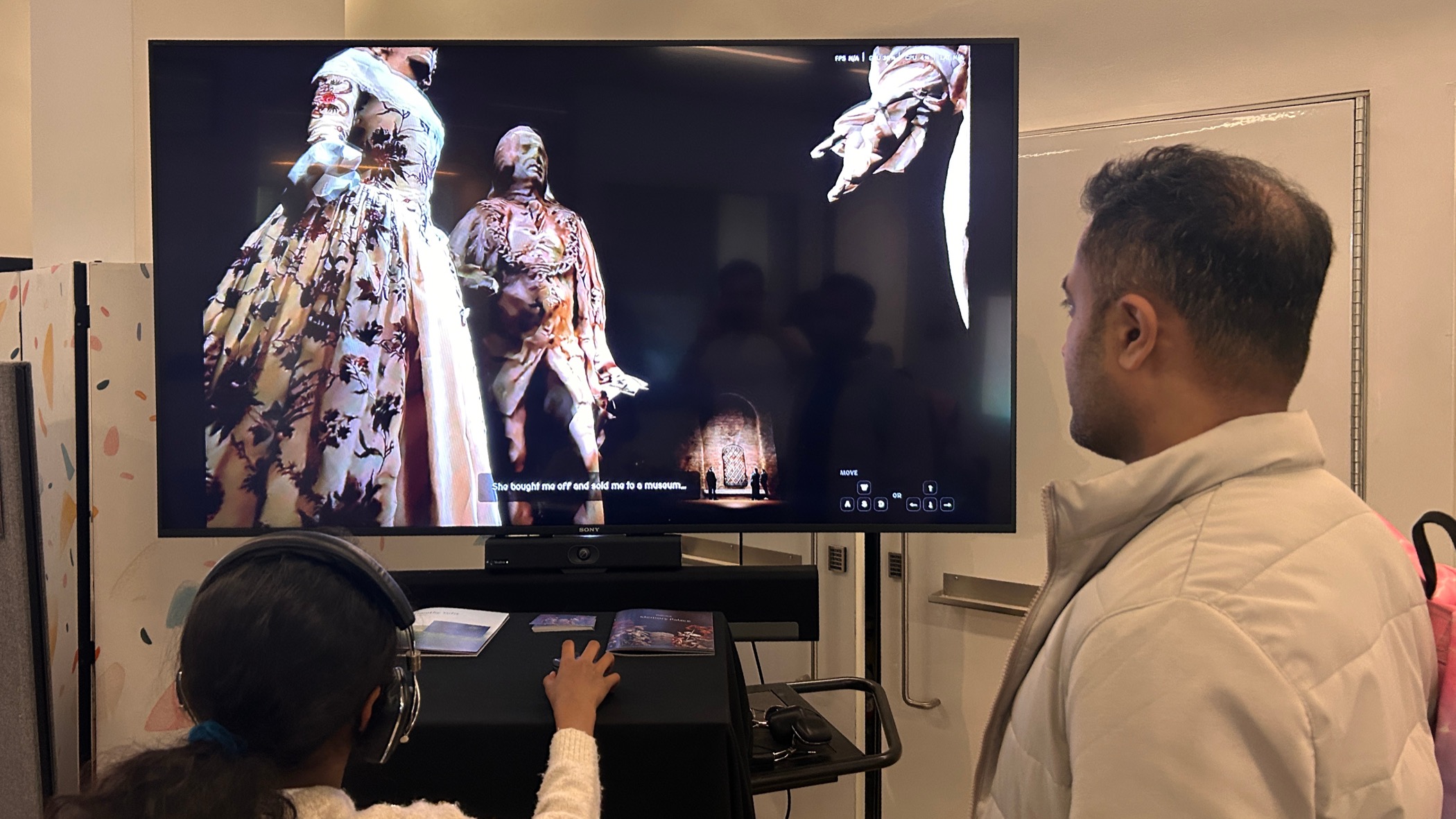
메모리 팰리스(Memory Palace)는 숨겨진 서사, 간과된 오브제, 그리고 디지털 시스템에 대한 저의 폭넓은 관심에서 비롯된 작업입니다. 이 작품은 기술이 역사적 자료를 단순화하지 않으면서도 생생하게 현재로 불러올 수 있는지를 탐구합니다. 인터랙션, 공간 디자인, 포토그래메트리, AI 내레이션, 그리고 섬세한 분위기 연출을 통해 박물관 데이터를 감각적인 경험으로 변환시킵니다. 이 프로젝트는 V&A 퍼포먼스 페스티벌 기간 중 열린 V&A PORTALS 전시의 일환으로 공개되었으며, 저는 전시 설치와 관람객 안내를 포함해 코호트 전시 전반에 참여했습니다.
Memory Palace는 Three.js와 JavaScript를 기반으로 제작된 브라우저 기반 인터랙티브 3D 환경입니다. 포토그래메트리로 스캔한 박물관 소장품, 사운드, 애니메이션, 공간적 인터랙션이 하나로 결합된 이 작품은 약 5,000줄의 코드로 완성되었습니다. 오브젝트 로딩, 카메라 무브먼트, 조명, 애니메이션 시스템, 오디오 트리거, 대기 효과, 사용자 인터랙션 — 이 모든 요소가 하나의 탐색 가능한 디지털 공간 안에 녹아 있습니다.
작품의 토대가 된 것은 V&A 컬렉션 소장품 약 300점의 포토그래메트리 스캔 데이터입니다. 기술 및 리서치 과정에서 가장 공을 들인 부분은 컬렉션을 뒤지며 완전한 형태의 오브젝트뿐만 아니라 아주 특정한 시각적 파편들을 찾아내는 작업이었습니다. 대형 조각 안에 숨겨진 작은 인물상, 장식적 디테일, 몸짓, 건축적 요소, 상징적인 동물, 무기, 종교적 형상, 얼굴, 신체, 질감, 장식의 파편들을 하나하나 포착했습니다. 저는 V&A 컬렉션을 하나의 소재 데이터베이스처럼 다루었습니다. 각 오브젝트를 독립된 박물관 전시품으로 보는 대신, 새로운 역사적 환경 속에서 재조합할 수 있는 캐릭터, 소품, 표면, 구도의 재료로서 바라보았습니다.
역사적 장면들은 일종의 디지털 콜라주로 구성되었습니다. 박물관 컬렉션에서 가져온 아날로그 자료들 — 저마다의 세월과 질감, 출처, 역사적 무게를 지닌 오브제들 — 을 디지털 도구와 프로그래밍을 통해 새롭게 조합했습니다. 이 과정은 기술적으로도, 개념적으로도 중요한 의미를 가집니다. 저는 중세 세계를 허구로 창조한 것이 아니라, 실제 박물관 자료를 바탕으로 그것을 재구성했습니다. 스캔된 오브제들은 파편화된 기억 시스템의 원재료가 되었습니다.
이 경험은 선형적이지 않고 인터랙티브합니다. 관람객은 15세기 문을 통해 작품 안으로 들어섭니다. 이 문은 그 자체로 하나의 포털이자 기억의 입구입니다. 그 안에서 디지털 공간을 자유롭게 이동하며, 시선을 어디로 향할지, 어떤 오브제나 장면에 다가갈지 스스로 선택하고 자신만의 경로를 만들어갑니다. 빛, 사운드, 음악, 애니메이션, 분위기 효과가 공간에 반응하며, 마치 무너진 아카이브나 붕괴된 기억 속으로 걸어 들어가는 듯한 느낌을 만들어냅니다.
AI 기반 도구는 전체 리서치와 프로토타이핑 과정의 일부로만 활용되었습니다. 언어, 구조, 분위기를 검토하는 데 도움을 받은 정도입니다. 최종적인 시각 세계는 박물관 스캔 데이터, 수작업 선별, 코딩, 구성, 인터랙션 디자인으로 완성되었습니다. 이 프로젝트에서 디지털 기술은 역사적 자료를 대체하는 것이 아니라 다시 살려내는 수단입니다. 스캔된 오브제, 박물관 데이터, 아카이브의 파편들을 누구나 경험할 수 있는 몰입형 공간으로 전환하는 것이 바로 이 작업의 핵심입니다.
이 프로젝트는 2026년 V&A 퍼포먼스 페스티벌과 메이크 앤 밋 페스티벌(Make and Meet Festival)에서 공개적으로 선보였습니다.
Memory Palace is an interactive digital experience I developed through the V&A " PORTALS " design programme. The project began with a 15th-century domestic door from the V&A collection. What interested me was that this ordinary household object carried two political symbols: the eagle of the Holy Roman Empire and the lion of Bohemia. These two symbols were displayed together on the door as a statement of unity, alliance and confidence. For me, this was the origin of the project: the political system was so certain of itself that it embedded its power into something as intimate and functional as a domestic door. The story I created is speculative, but it is based on real historical tensions in 15th-century Central Europe, especially religious disputes and the Hussite Wars. What makes the object powerful is that the unity represented by the eagle and the lion was not permanent. The symbols suggested political connection, but a few years later the forces they represented would become unstable and increasingly hostile to each other. Because the door visibly carried both symbols, I imagined her as an object at risk: a domestic artefact that could have been damaged, removed or destroyed because she held the signs of a collapsing alliance. I became interested in the door as a carrier of a system that believed in its own permanence, while already standing close to fracture. The symbols suggested political connection, but a few years later the forces they represented would become unstable and increasingly hostile to each other. One of the key objectives and challenges of the project was how to communicate complex historical material to a general audience who may have limited knowledge of 15th-century Central Europe, religious disputes or the Hussite Wars. I did not want the experience to feel like an academic history lesson filled with names, dates and political explanations. The answer was to tell the story from the perspective of a ground-level narrator: a simple domestic object that had lived through the atmosphere of the period without fully understanding its wider political structure. This is why I humanised the door. I approached her almost as a witness, survivor or commoner of that time: not a king, scholar or historian, but an object placed inside daily life. The door does not explain the conflict through official history. She remembers voices, fear, rumours, footsteps, religious tension, violence, symbols, fragments of speech and changes in the atmosphere around her. She does not need to know every name or event to carry the emotional truth of what happened. This allowed the work to make difficult historical material more accessible, while still keeping its complexity and uncertainty. The narration in the experience is voiced using AI, allowing the door to speak back as a speculative historical presence. This is why I humanised the door. I approached her almost as a witness, survivor or commoner of that time: not a king, scholar or historian, but an object placed inside daily life. The door does not explain the conflict through official history. She remembers voices, fear, rumours, footsteps, religious tension, violence, symbols, fragments of speech and changes in the atmosphere around her. The central creative decision was to use the door as a threshold. Rather than presenting it as a static museum artefact, I turned it into an entrance into its own memory. The audience moves through a digital world where the object becomes a portal into fragmented scenes, atmospheres and historical traces. The historical scenes were inspired by compositions of 14th and 15th-century medieval art: crowded spatial arrangements, symbolic gestures, compressed perspectives, ritualised figures and dramatic religious or political imagery. I wanted the world to feel as if it had been built from the visual logic of medieval images, but reprocessed through contemporary digital technology. The project was built using Three.js , photogrammetry and interactive web technologies. I worked with around 300 scanned objects from the V&A collection to construct the world inside the door’s memory. This process of combining analogue material from the museum collection with digital tools and programming became one of the most important parts of the project. I was not inventing history from nothing; I was taking existing objects, textures, figures and fragments from the collection and reorganising them into a new interactive system. The result was a digital environment that felt archival, unstable and emotionally charged at the same time. These objects were not arranged as a conventional historical display, but as fragments within a broken digital environment, creating the feeling of entering an archive that is alive and partially remembered. The user is not forced through one linear story. Instead, they navigate the space, encounter objects, sounds, AI-voiced narration and visual fragments, and build their own relationship with the material. These objects were not arranged as a conventional historical display, but as fragments within a broken digital environment, creating the feeling of entering an archive that is alive and partially remembered. Memory Palace reflects my wider interest in hidden narratives, overlooked objects and digital systems. The work asks how technology can make historical material feel present without simplifying it. It uses interaction, spatial design, photogrammetry, AI narration and atmosphere to transform museum data into an emotional experience. The project was presented publicly as part of the V&A PORTALS exhibition during the V&A Performance Festival, where I also helped install and present the wider cohort exhibition to visitors. Memory Palace was built as a browser-based interactive 3D environment using Three.js , JavaScript , photogrammetry , scanned museum objects, sound, animation and spatial interaction. The final build was developed through approximately 5,000 lines of code, combining object loading, camera movement, lighting, animation systems, audio triggers, atmospheric effects and user interaction into one navigable digital space. The project was constructed from around 300 photogrammetry scans of objects from the V&A collection. A major part of the technical and research process was looking through the museum collection not only for full objects, but for very specific visual fragments: small figures hidden inside larger sculptures, decorative details, gestures, architectural elements, symbolic animals, weapons, religious forms, faces, bodies, textures and fragments of ornament. I treated the V&A collection almost like a material database. Instead of using the objects as isolated museum items, I searched for characters, props, surfaces, and compositions that could be extracted and reorganised into a new historical environment. The historical scenes were built as a kind of digital collage. I used analogue material from the museum collection — objects with their own age, texture, provenance and historical weight — and reassembled them through digital tools and programming. This process was technically and conceptually important: I was not creating a fictional medieval world from nothing, but building it out of existing museum material. The scanned objects became the raw components of a fragmented memory system. The experience is interactive rather than linear. The user enters the work through the 15th-century door, which functions as a portal into its own memory. From there, they can move through the digital space, choose where to look, decide which object or scene to approach, and build their own route through the material. Lights, sound, music, animations and atmospheric effects respond to the space and help create the feeling of entering a broken archive or collapsed memory system. AI-assisted tools were used only as part of the wider research and prototyping process, helping test language, structure and atmosphere. The final visual world was built from museum scans, manual selection, coding, composition and interaction design. The project uses digital technology not to replace historical material, but to reactivate it: turning scanned objects, museum data and archival fragments into an immersive public-facing experience. Project Page | Timothy Yufit | Instagram | LinkedIn The project was presented publicly at the V&A Performance Festival and Make and Meet Festival in 2026.