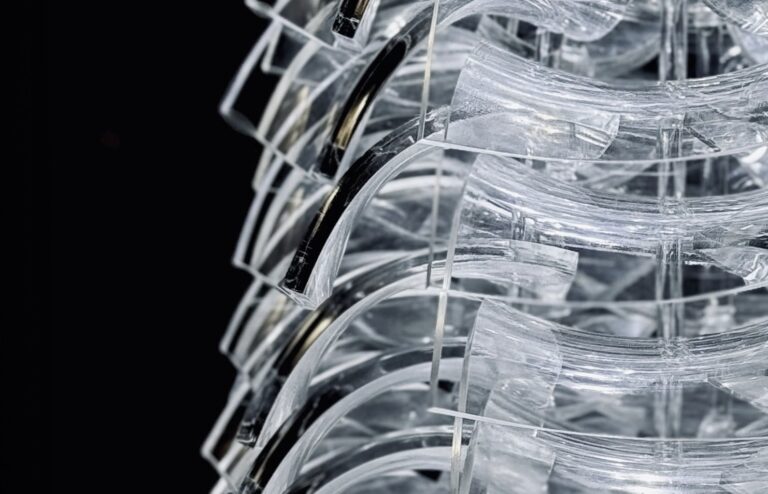
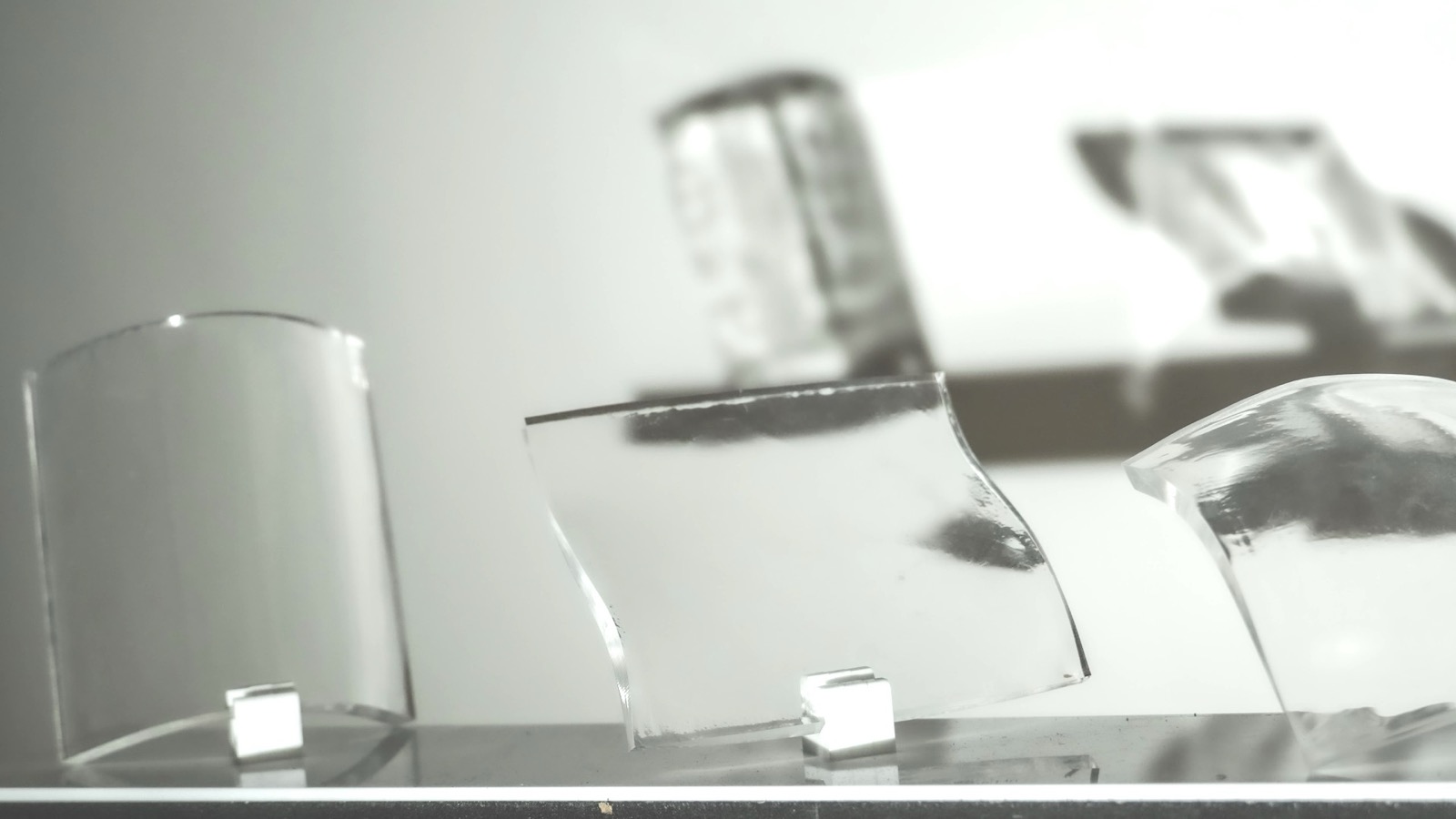
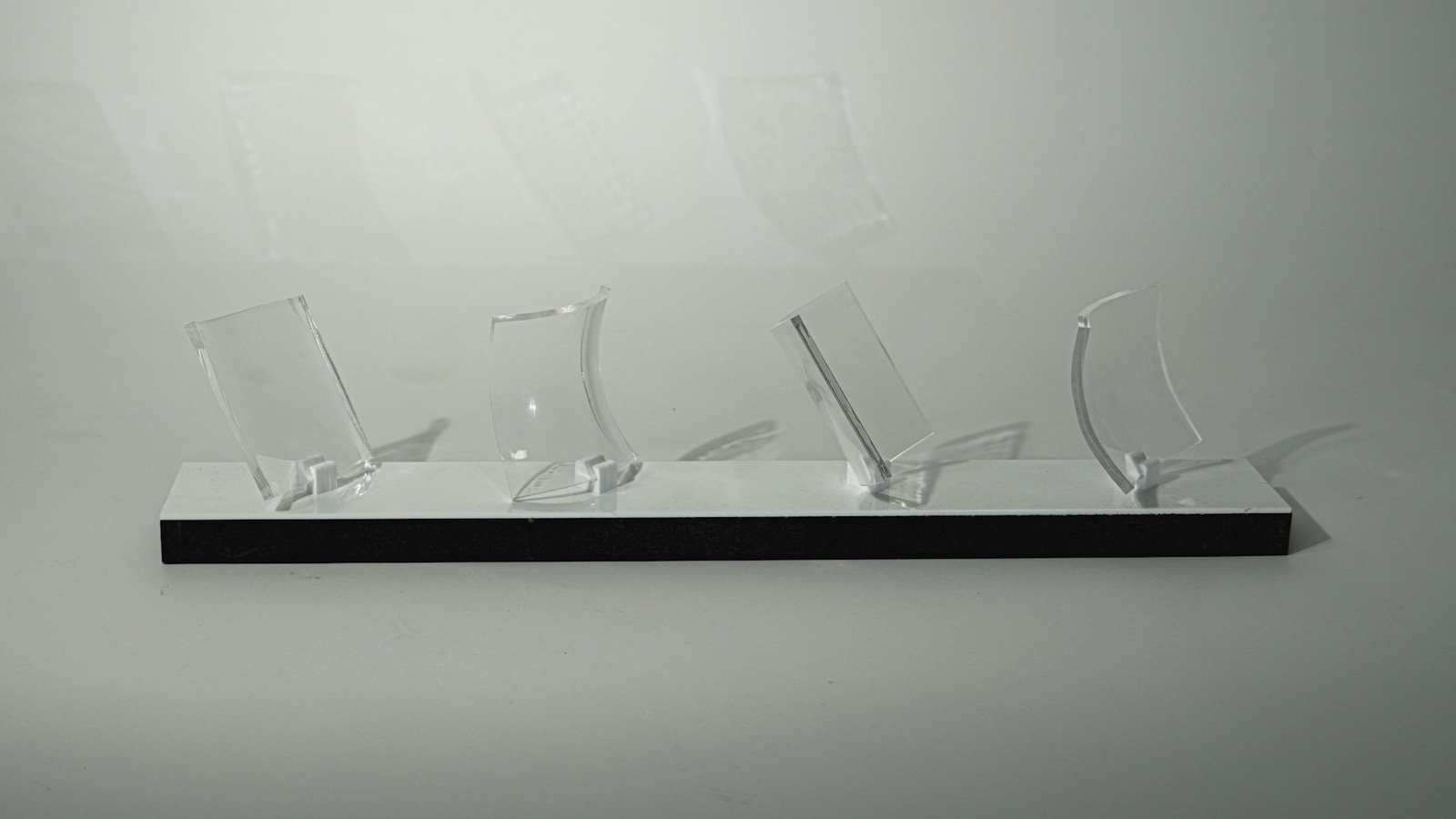
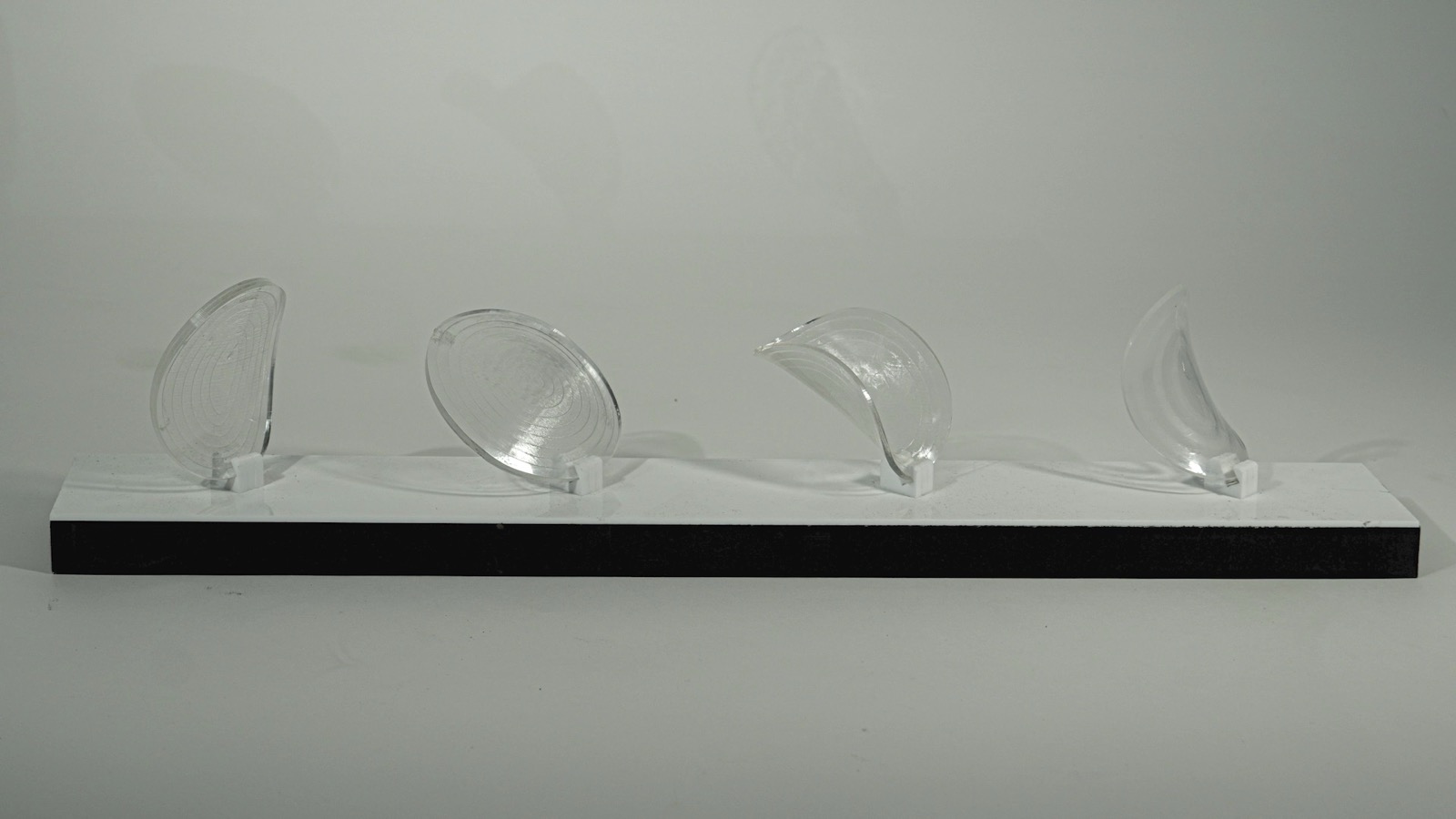
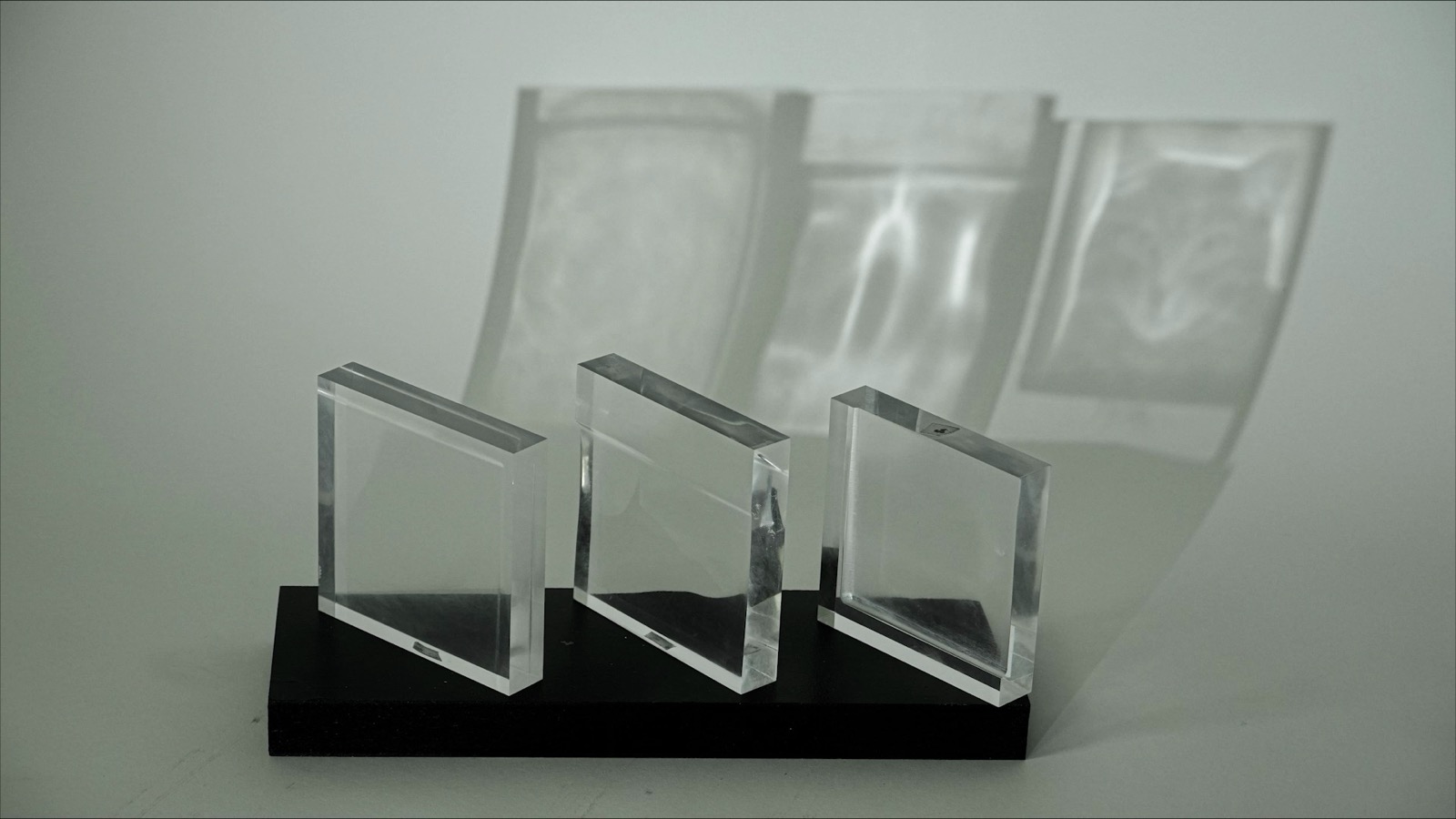
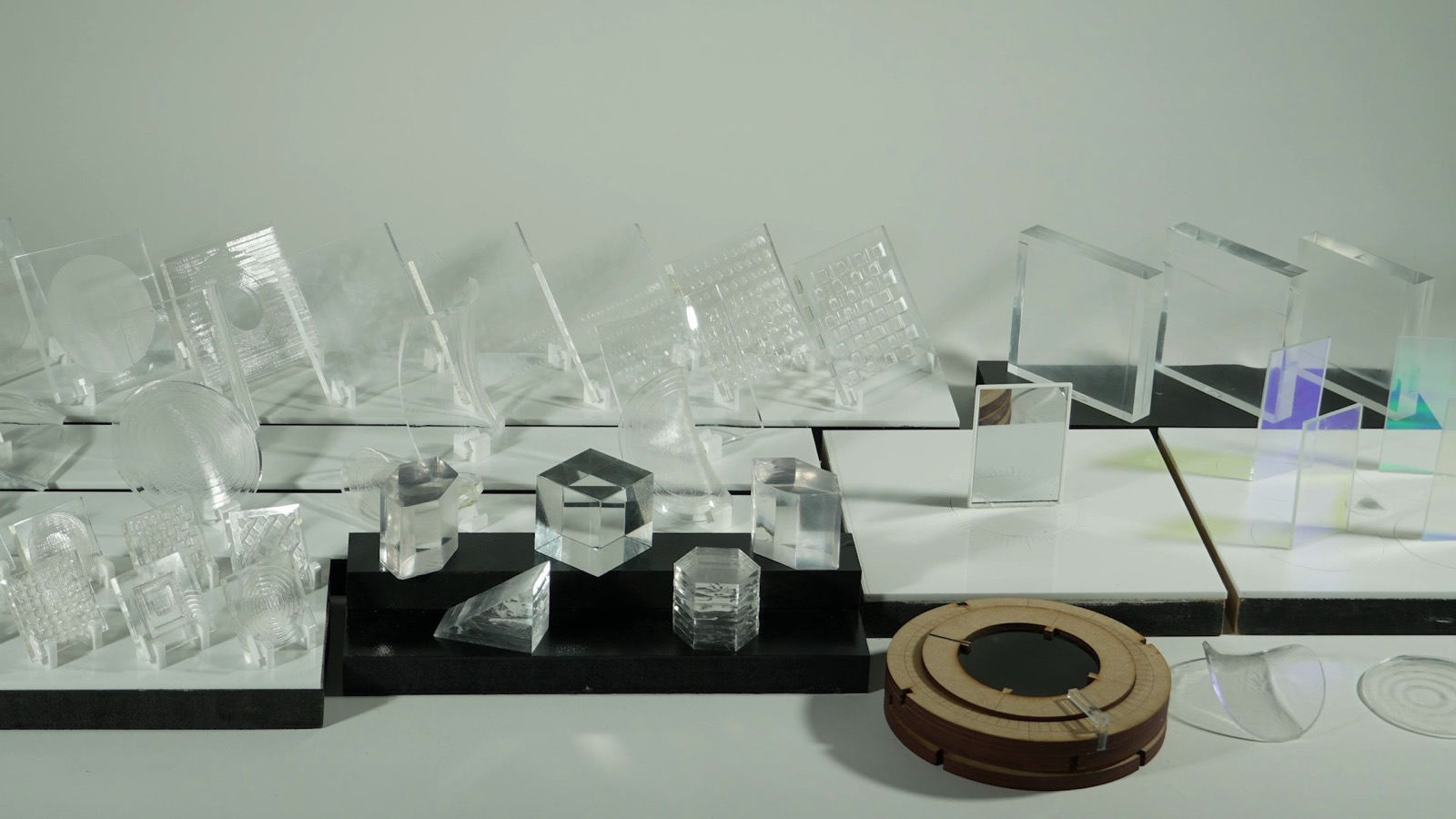
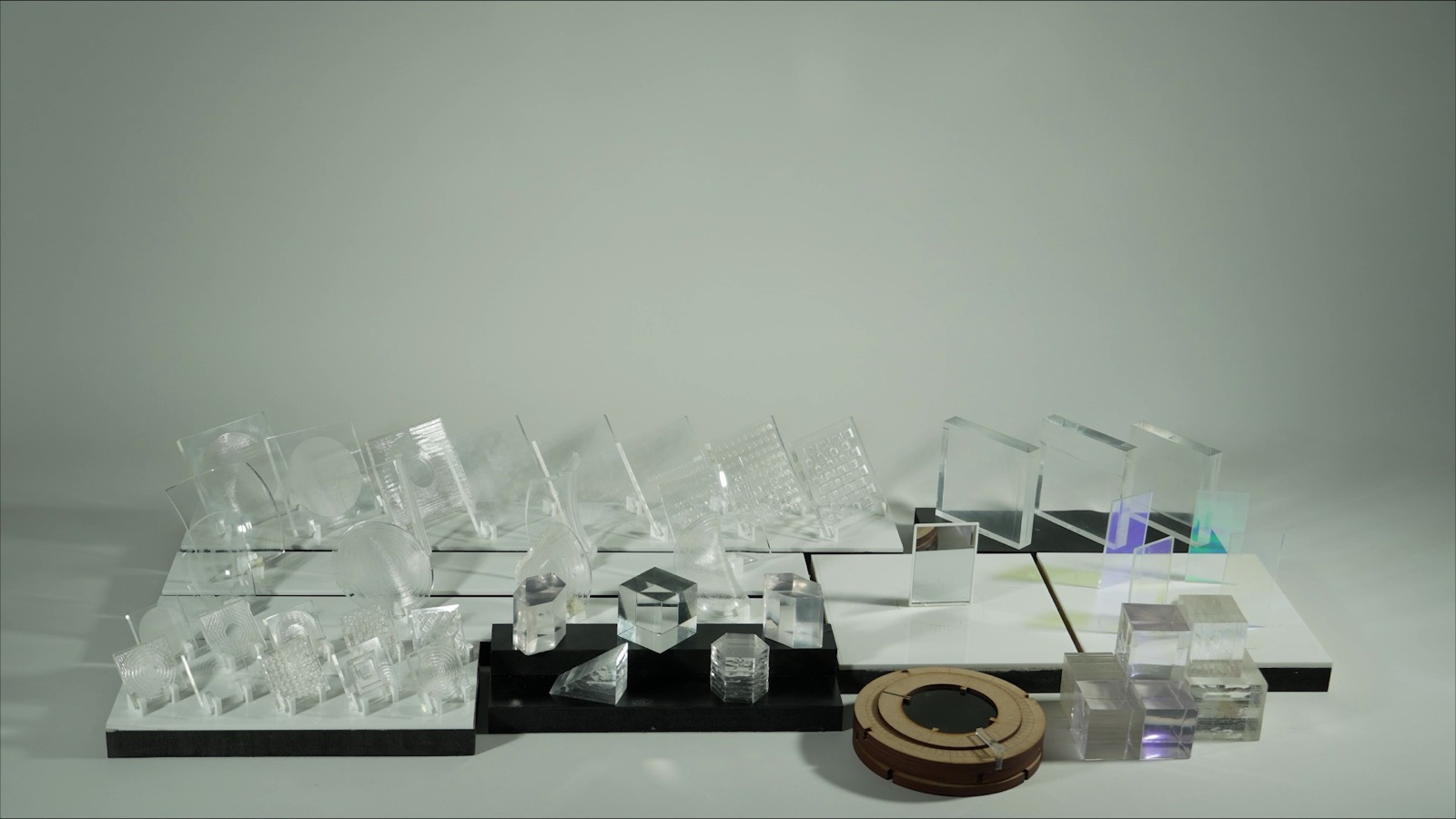
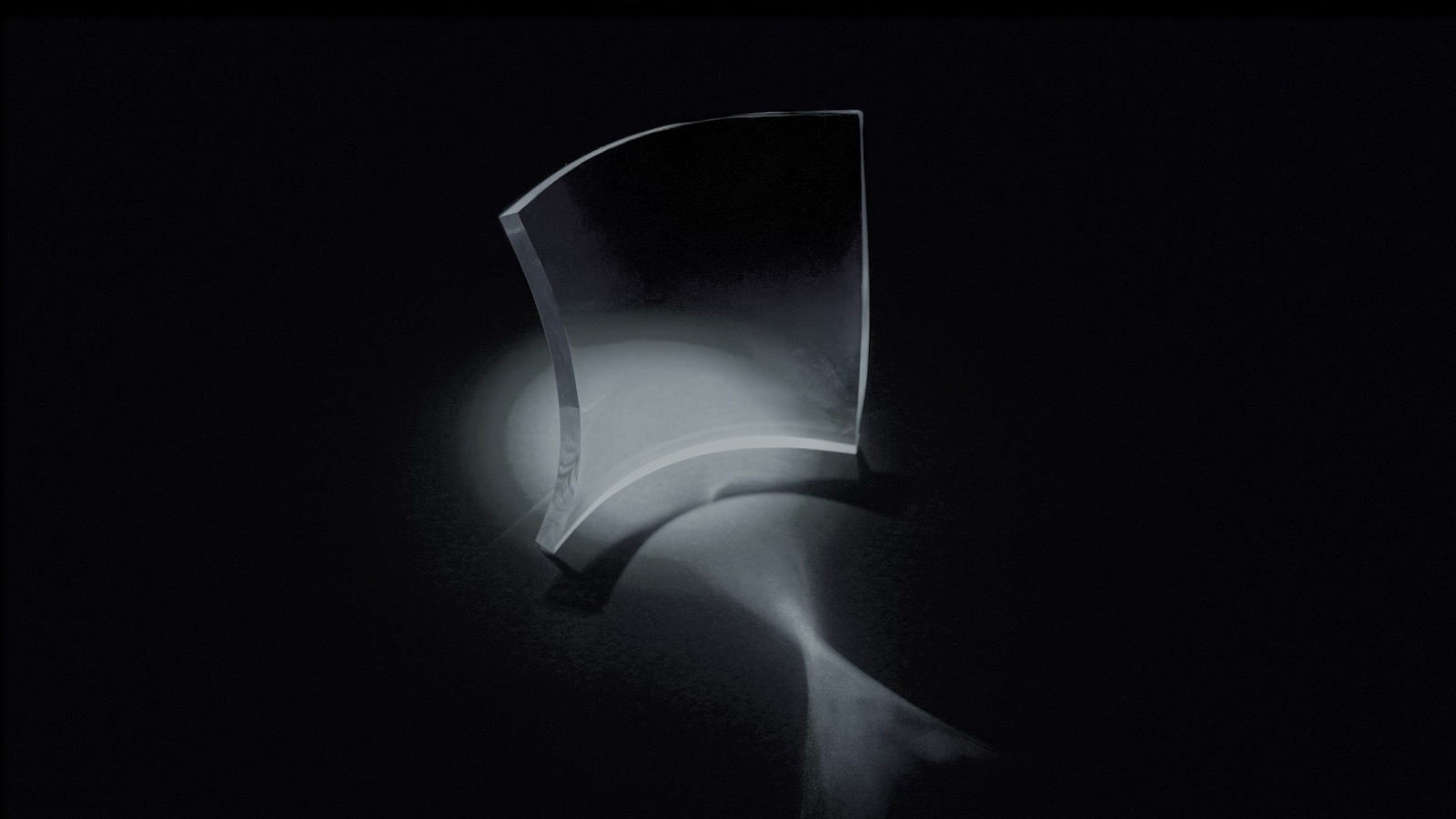
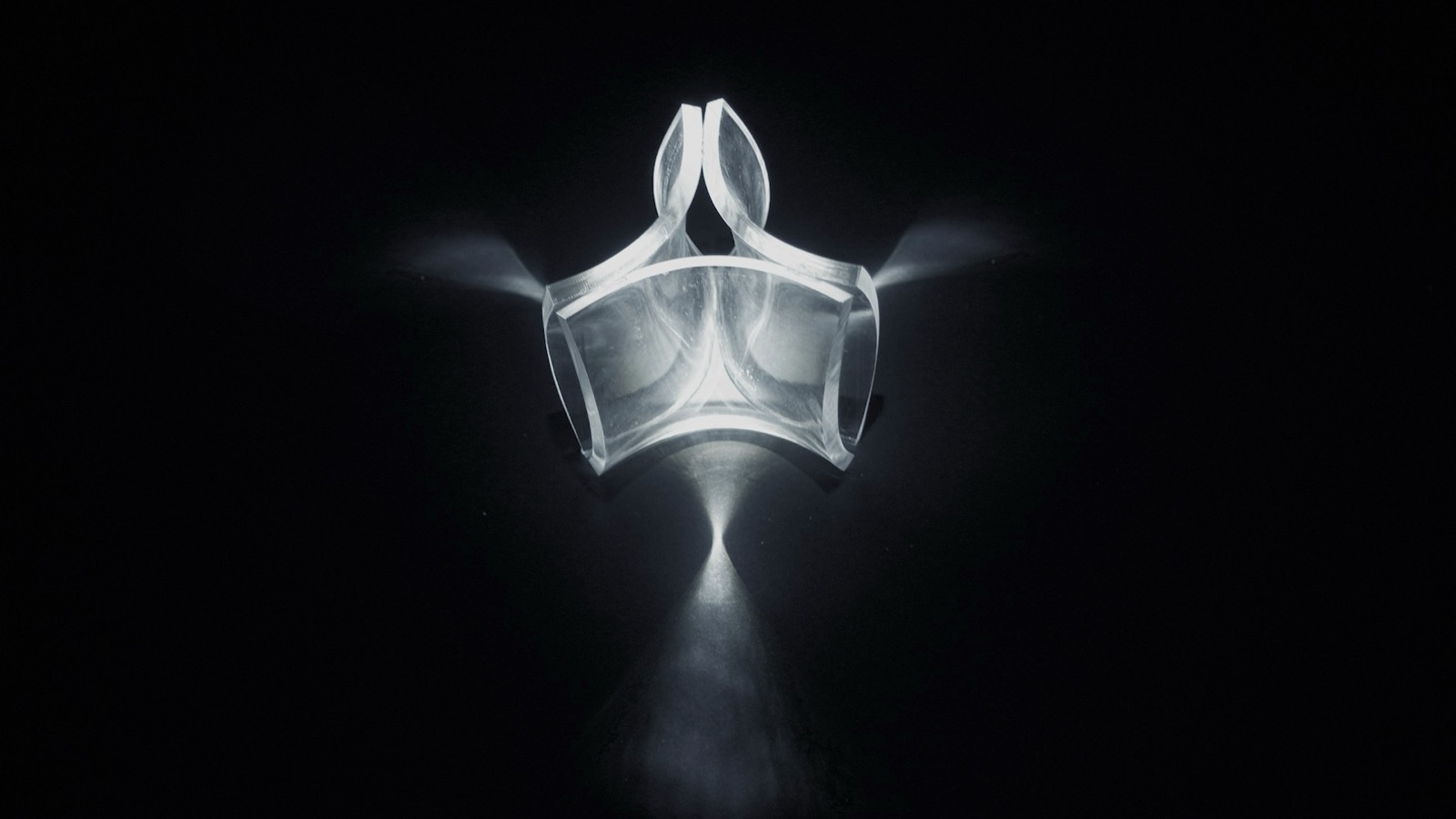
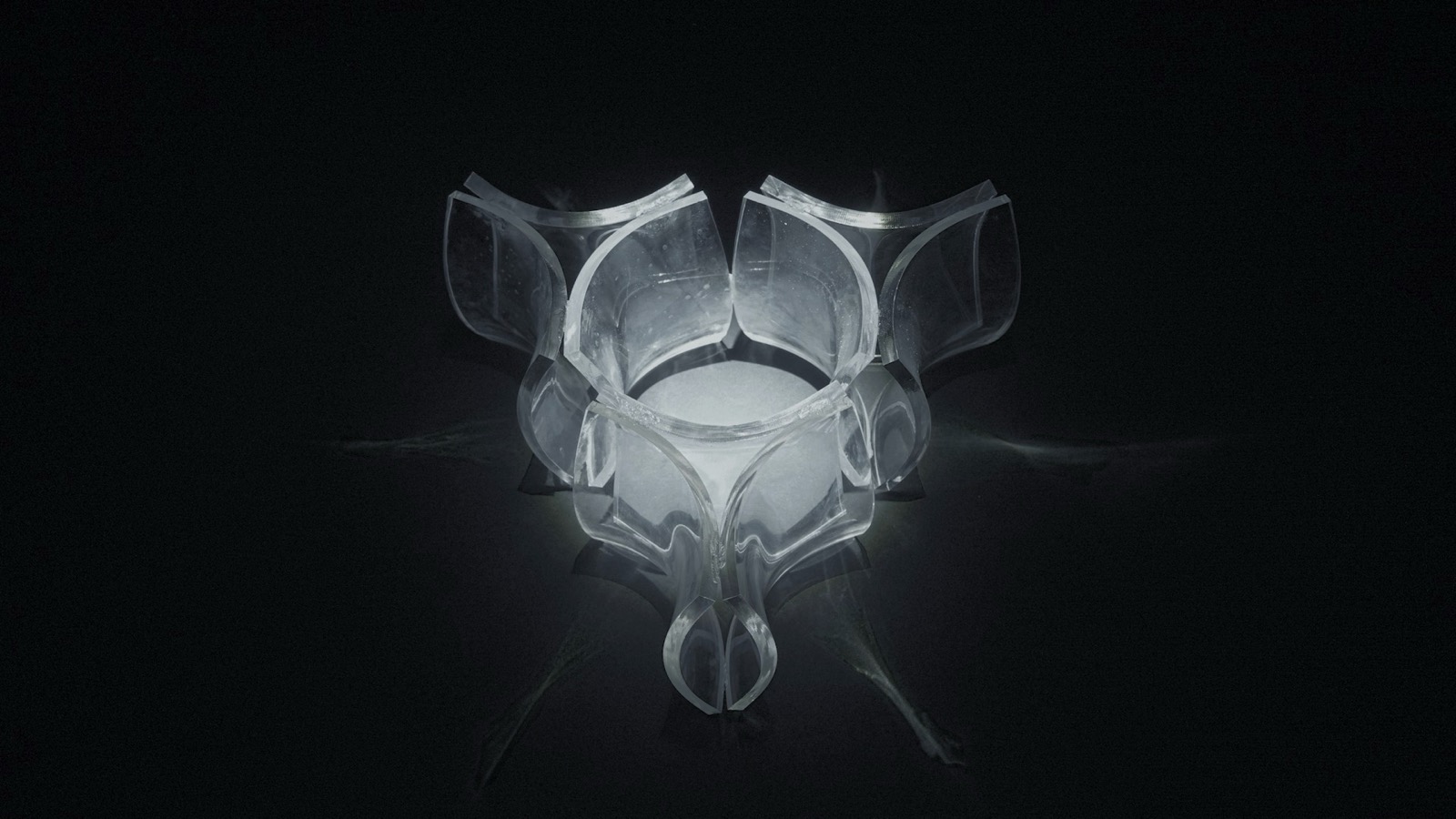
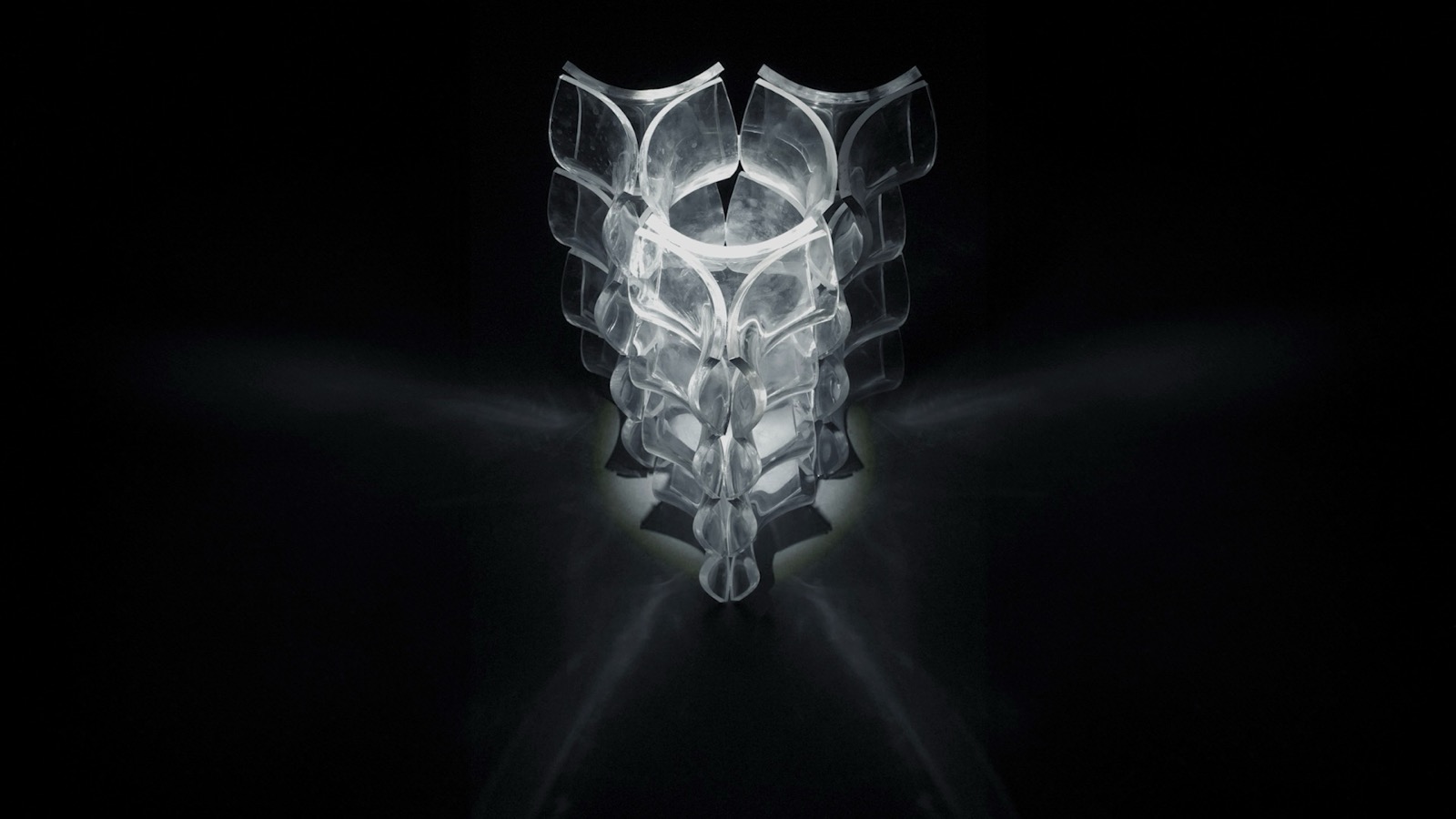
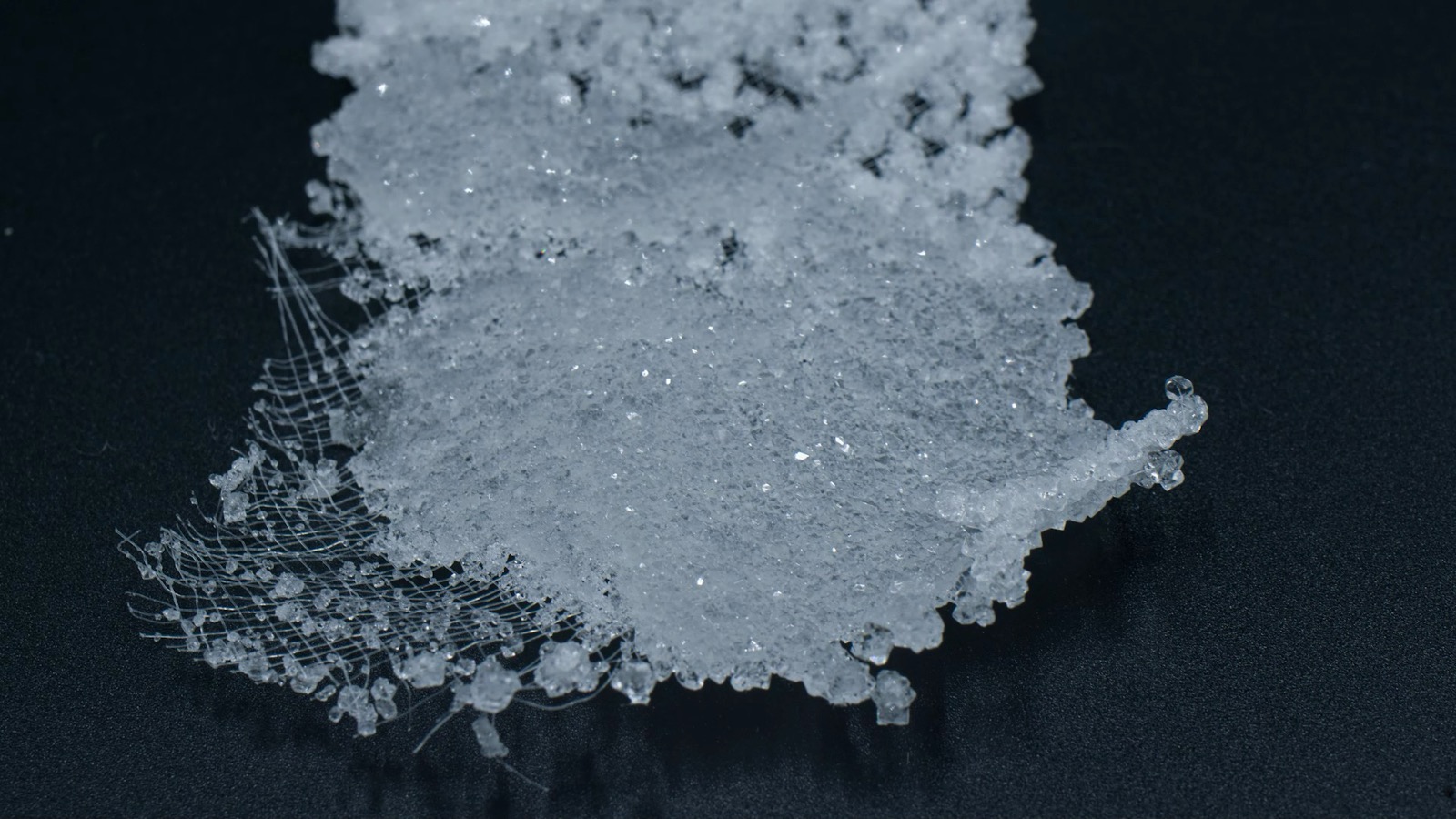
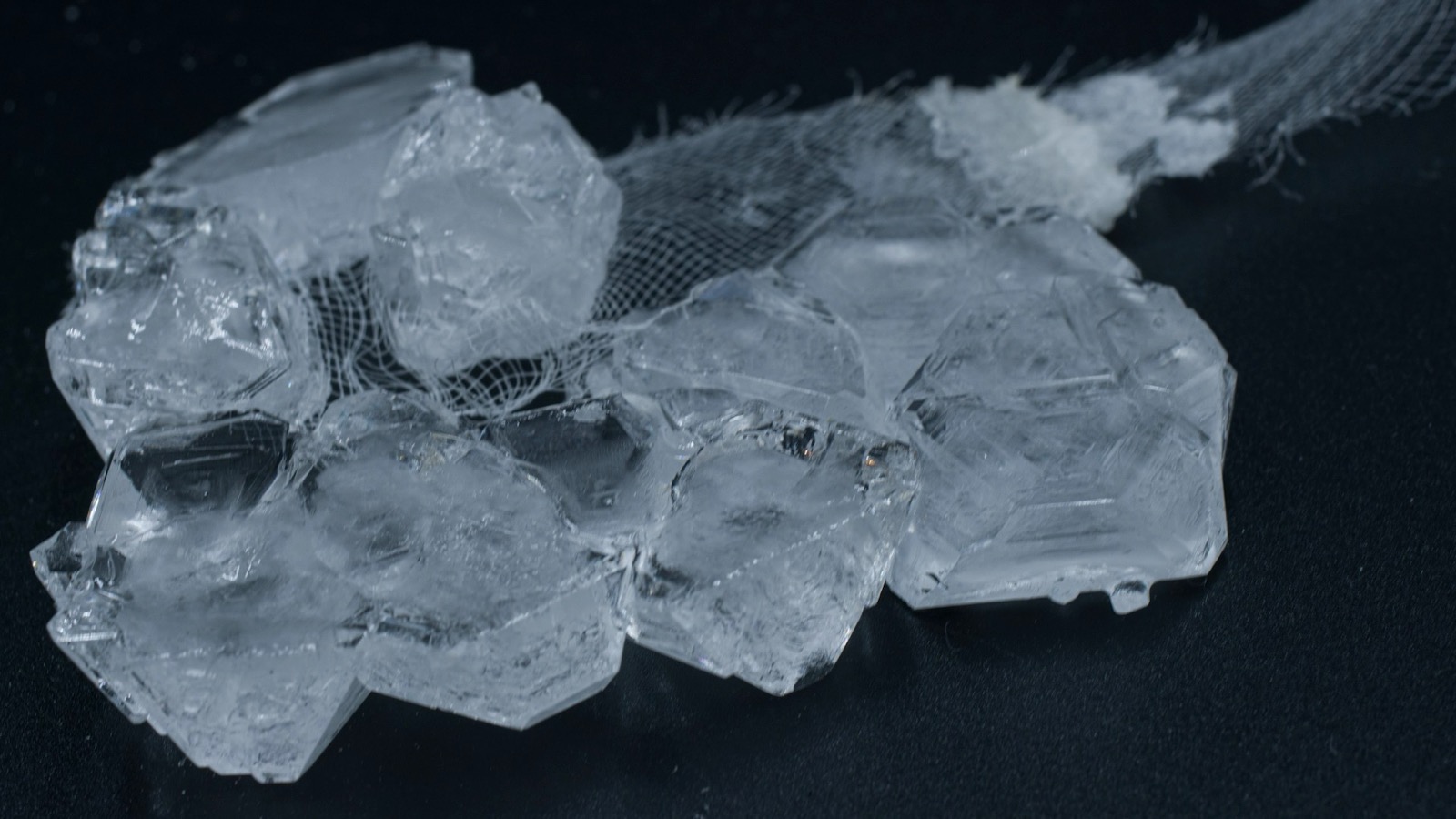
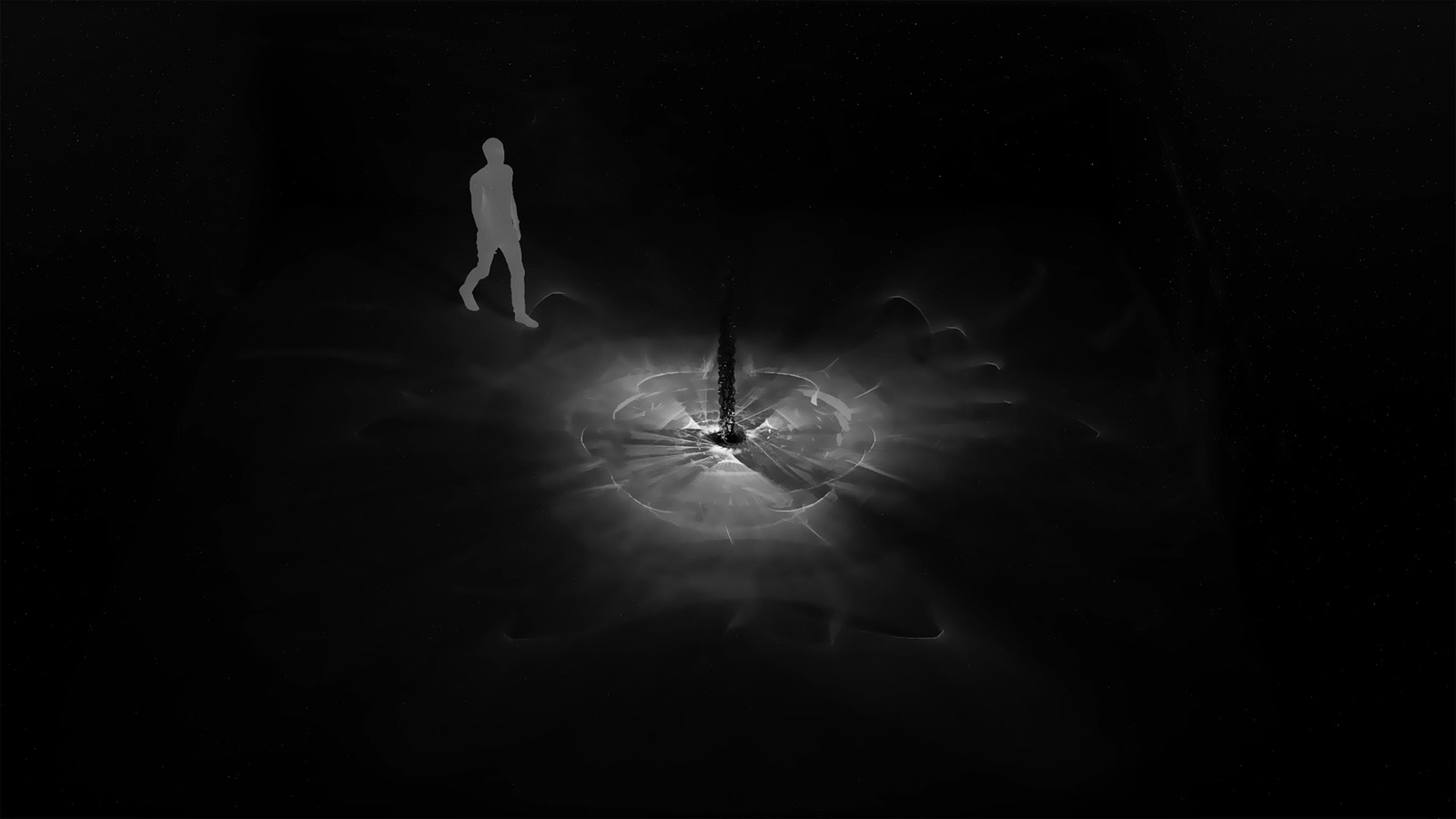
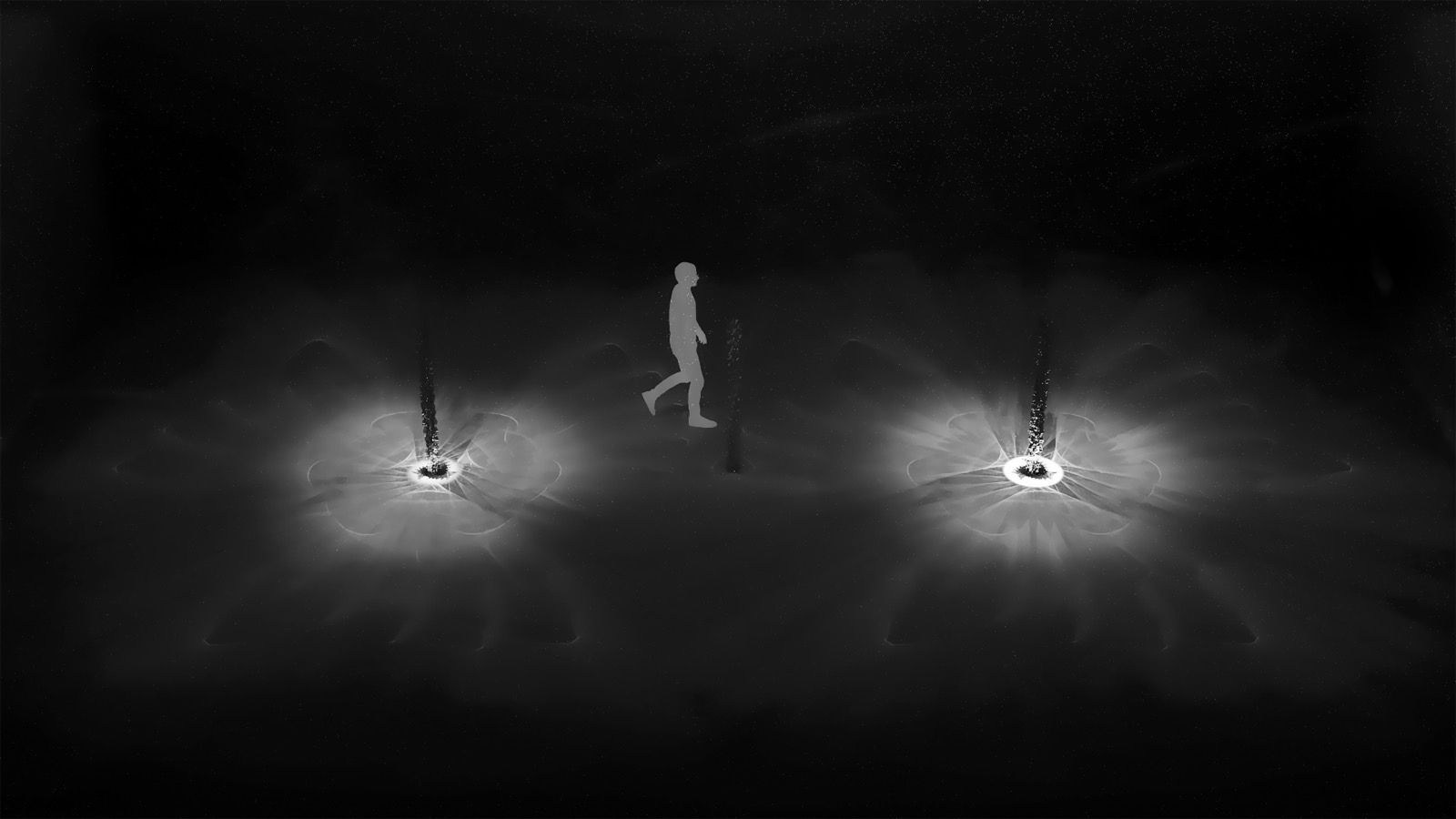
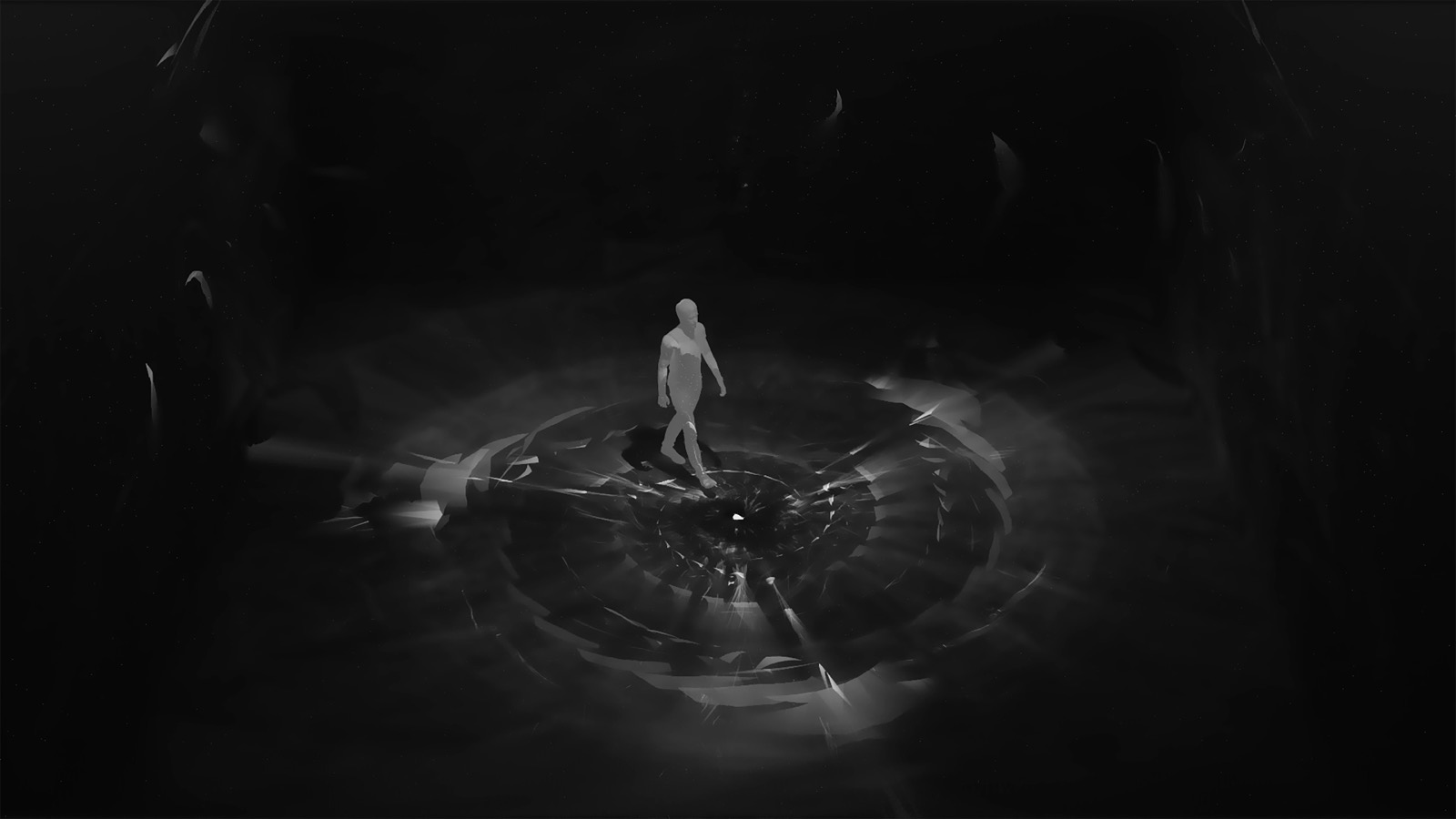
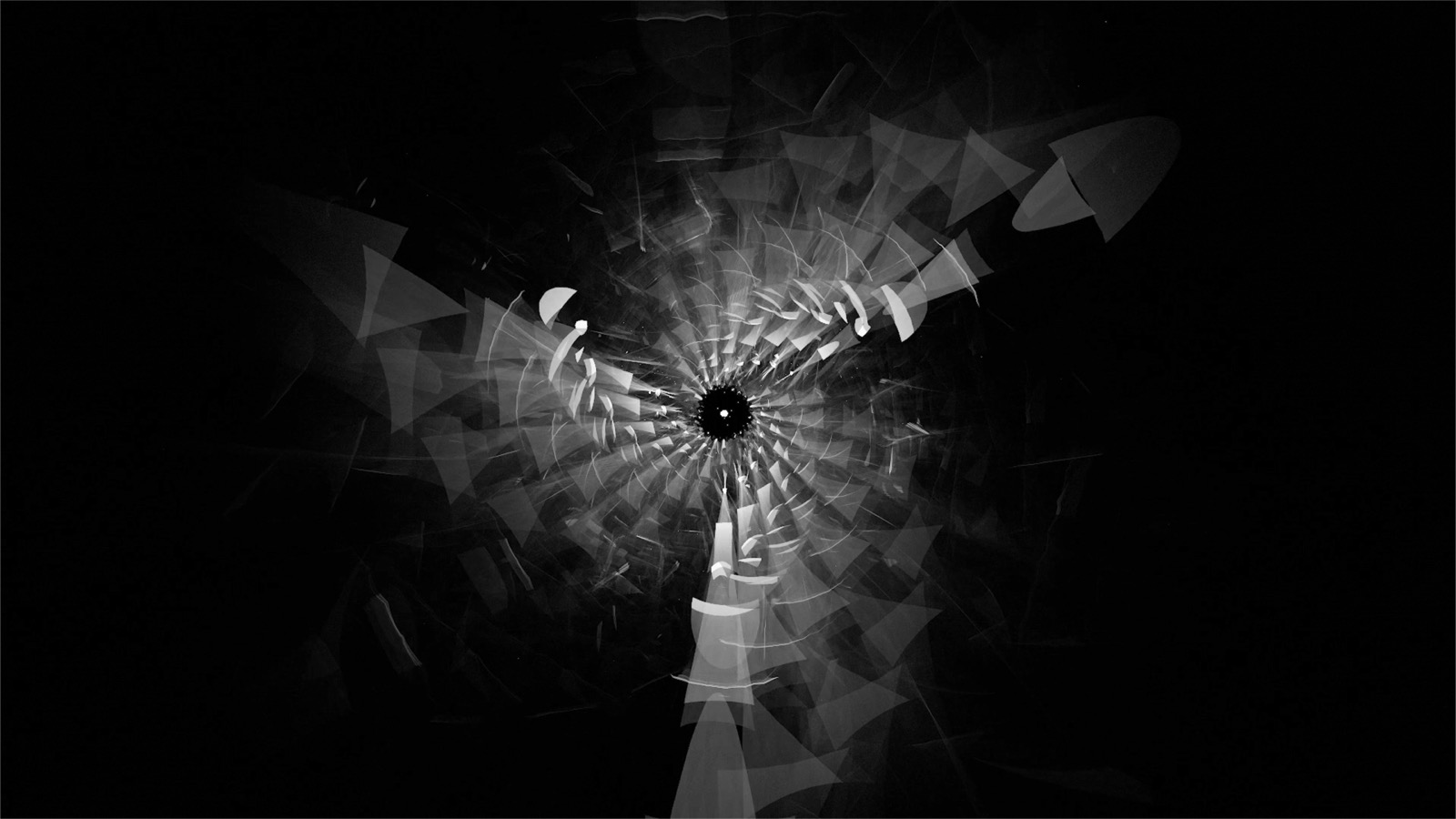
컨스트럭티드 애트머스피어(Constructed Atmosphere)는 빛을 하나의 현상으로 탐구하는 작품입니다. 출발점은 광주(光柱, light pillars)에 대한 탐구였습니다. 광주는 광원 위아래로 수직의 빛 기둥이 솟아오르는 대기 광학 현상으로, 공간의 경계를 빛으로 그려냅니다. 이 현상은 조명 인프라와 대기 중 빙정(氷晶)이 서로 맞물리며 만들어내는 것으로, 시간에 따라 변하고, 덧없이 사라지며, 주변 환경과 함께 호흡하는 대기를 형성합니다. 이 작품 역시 같은 맥락에서, 빛이 지닌 덧없는 속성을 매체로 삼아 적극적으로 활용합니다.
빛에 대한 일반적인 시각은 표면을 밝히는 도구로 그 역할을 한정짓곤 합니다. 그러나 그렇게 되면 빛이 지닌 대기적·공간적 힘은 간과되고, 오직 표면만이 정의될 뿐입니다. 이 프로젝트는 다른 접근을 택합니다. 빛을 단순한 조명 수단이 아닌, 공간과 분위기, 그리고 지각(知覺) 자체를 형성하는 매체로 다루는 것입니다.
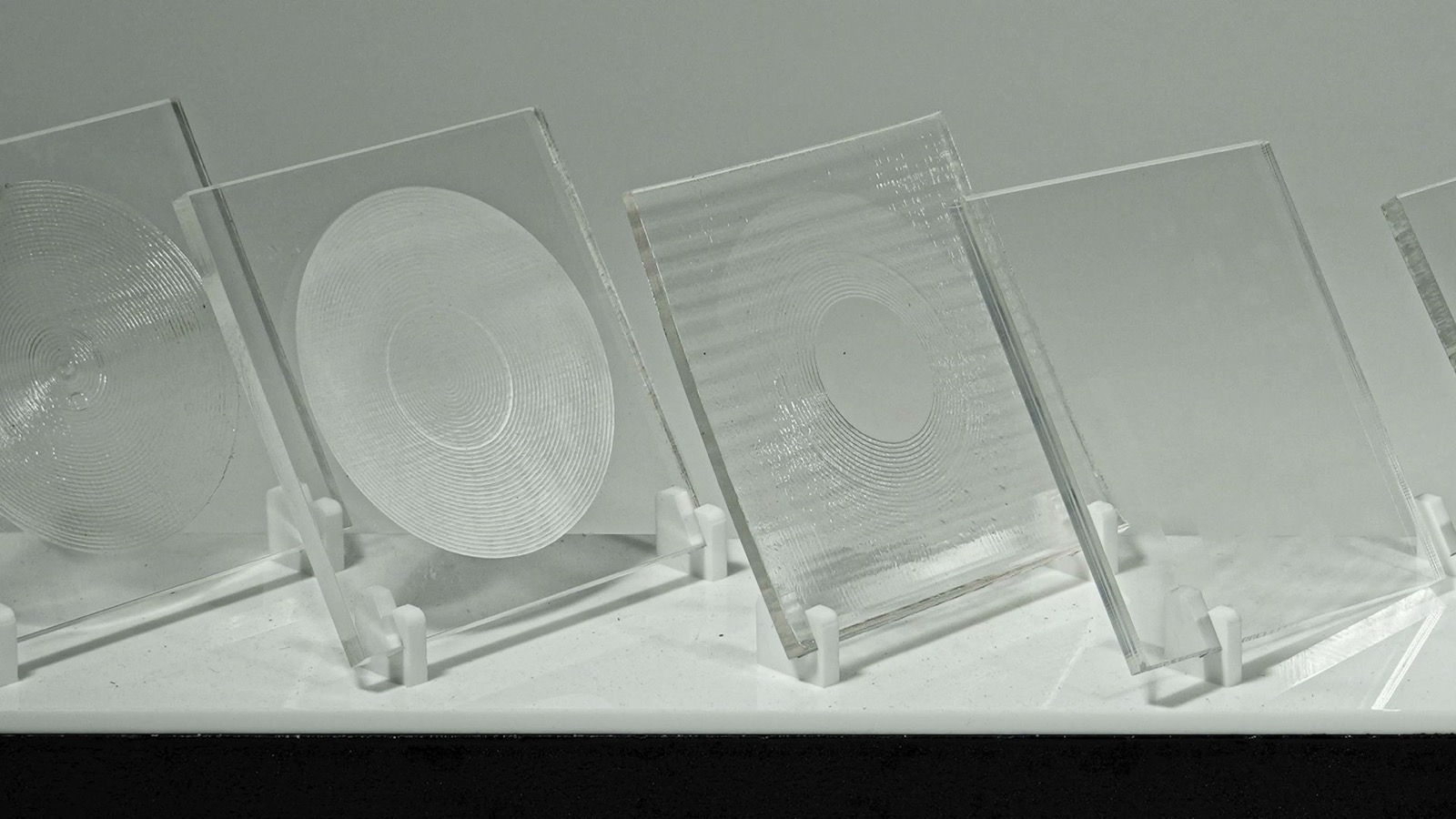
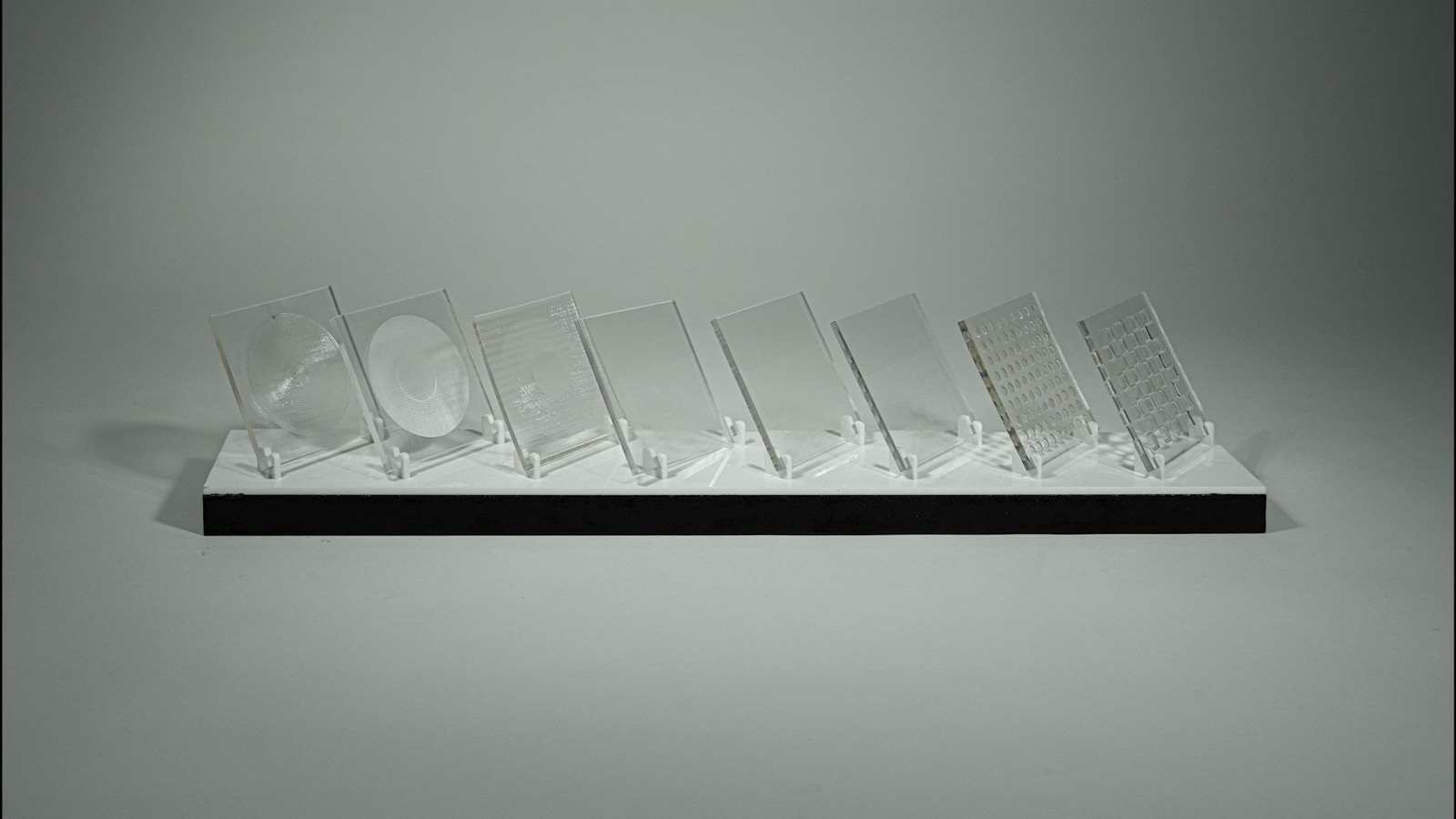
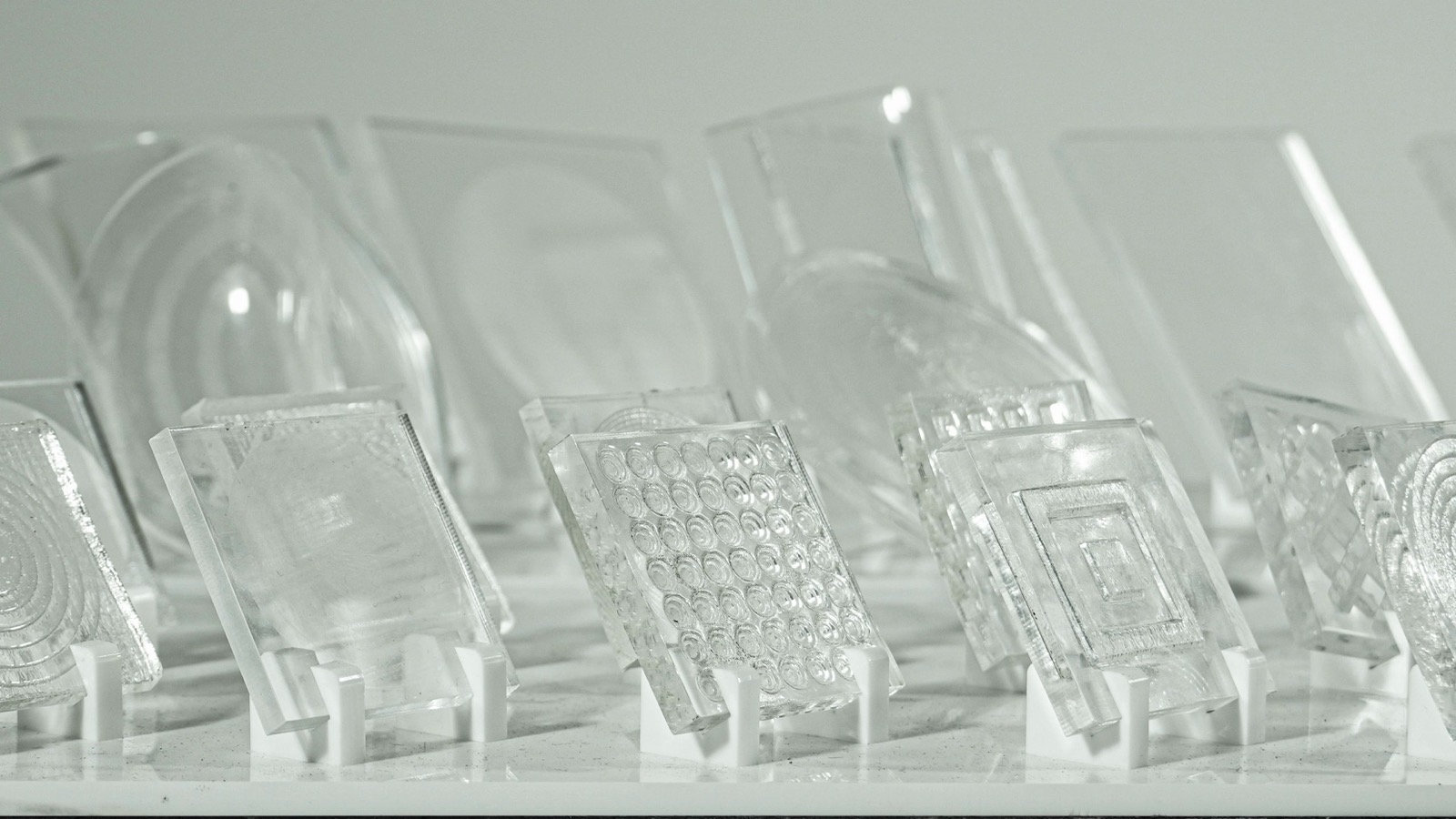
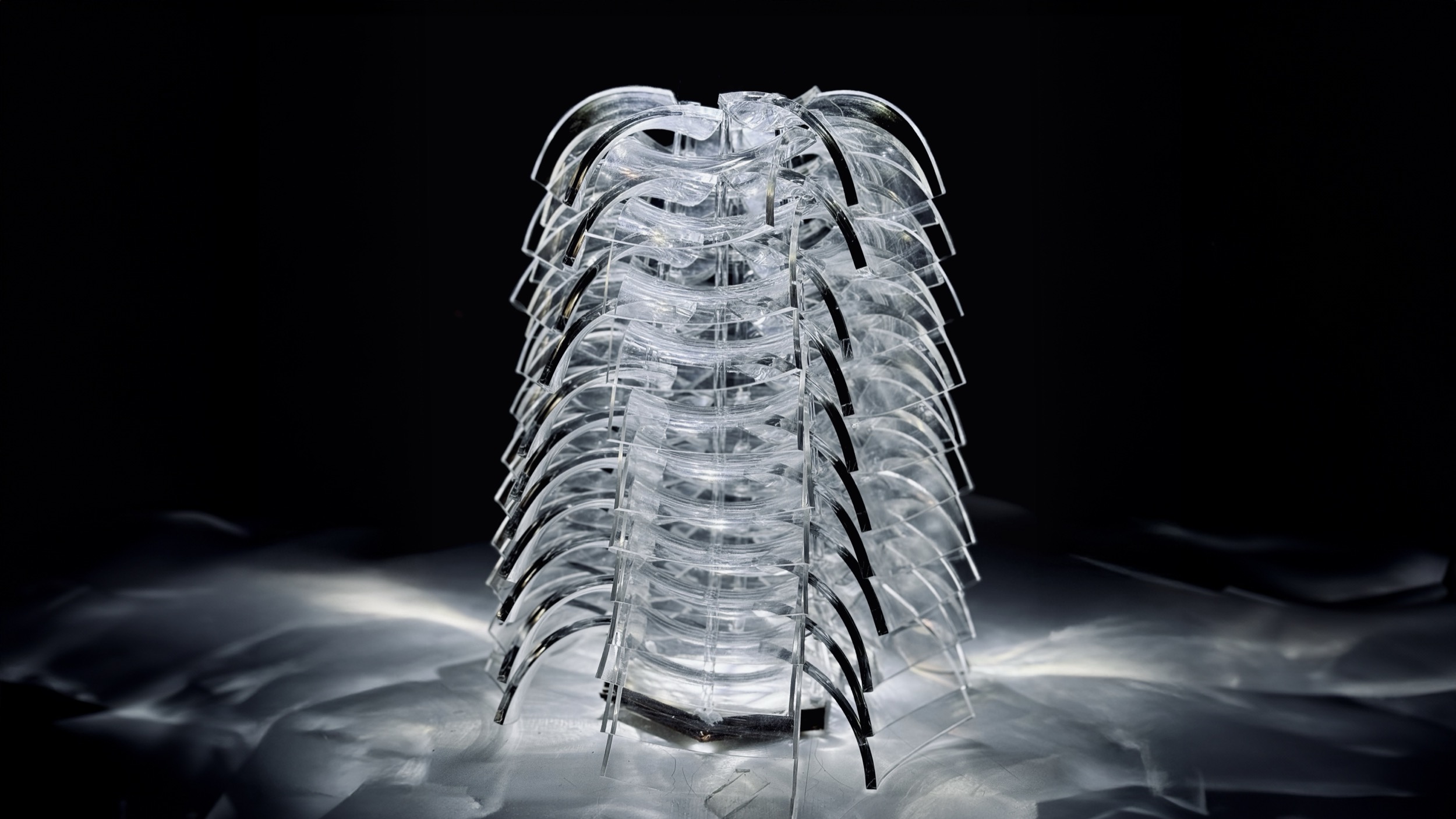
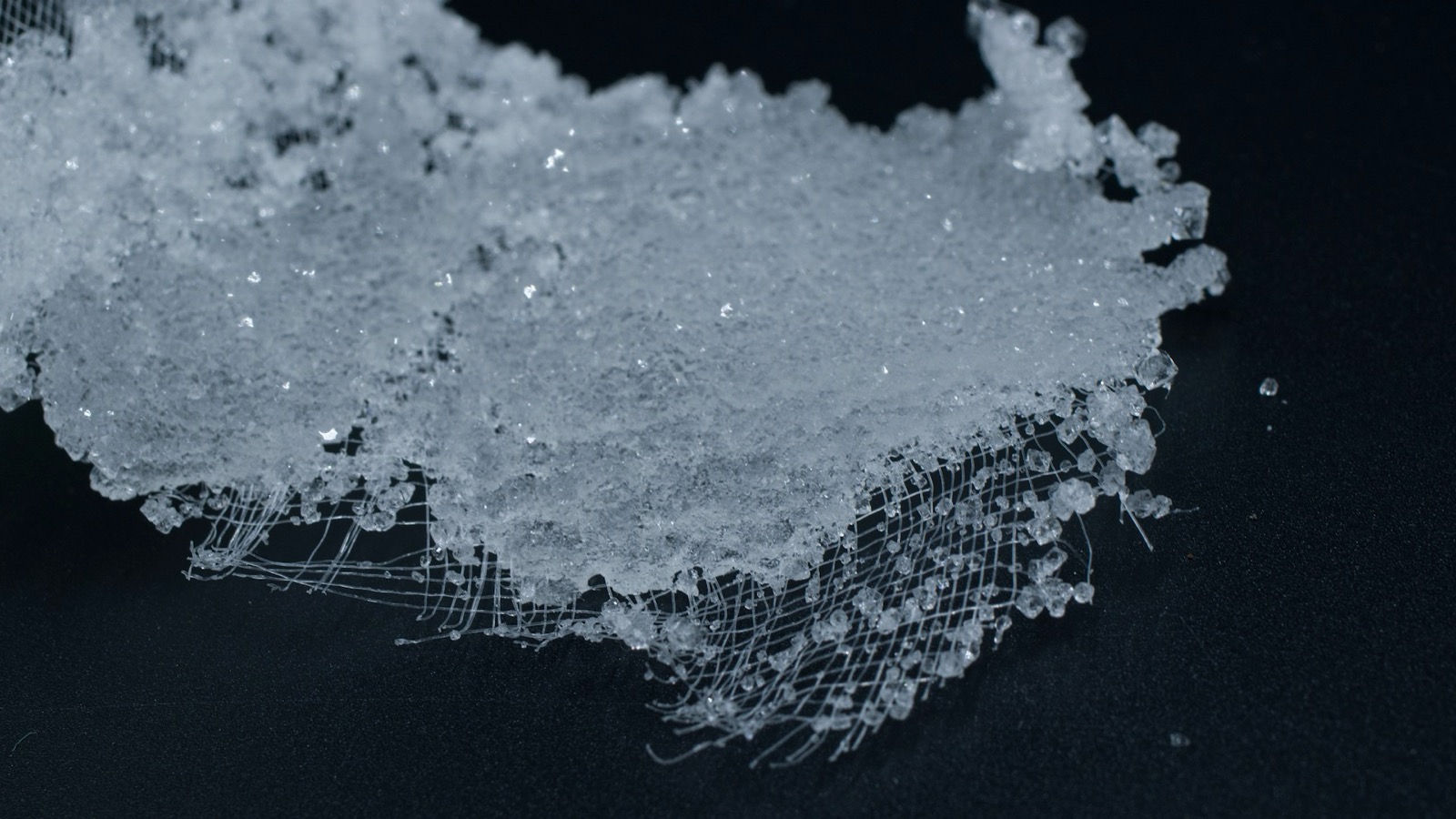
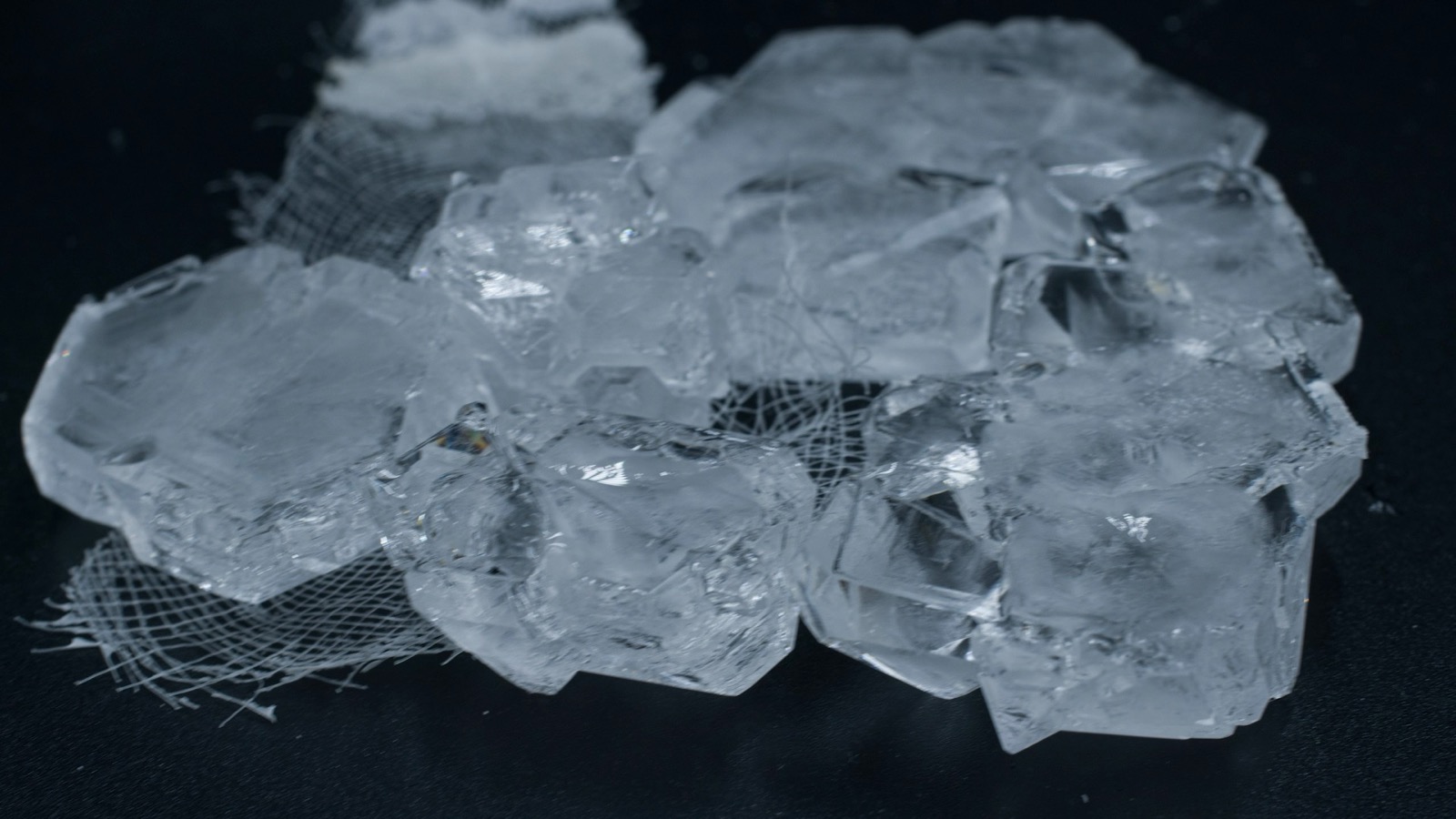
빛을 매체로 정의하면, 공간 안에 순간적이고 무형의 경계를 만들어낼 수 있습니다. 이 개념은 구조물과 소재의 물성을 넘어, 지각과 환경적 조건을 통해 강렬한 공간적 경험을 이끌어냅니다. 이러한 맥락에서 공간은 밝음과 어둠의 질감과 색채, 그림자와 차폐, 확산과 부드러움, 리듬과 움직임이 다양하게 조율된 결과로 이해됩니다. 빛이 있을 때도, 없을 때도, 우리가 공간을 인식하는 방식은 끊임없이 달라집니다. 모든 공간은 빛이고, 모든 빛은 공간입니다. 팀은 빛의 거동을 탐구하기 위해 일련의 물성 실험을 진행했습니다. 프리즘 캐스팅, 적층, 조각, 열성형을 비롯해 그라데이션 기법과 다양한 헤이즈 환경을 활용해, 각기 다른 매체 속에서 빛이 공간을 어떻게 분절하는지 기록했습니다. 여기서 소재의 형태는 단순한 배경이 아닙니다. 빛이 반사되고, 굴절되고, 확산되고, 조직되는 방식에 직접적인 영향을 미치는 능동적인 조건입니다.
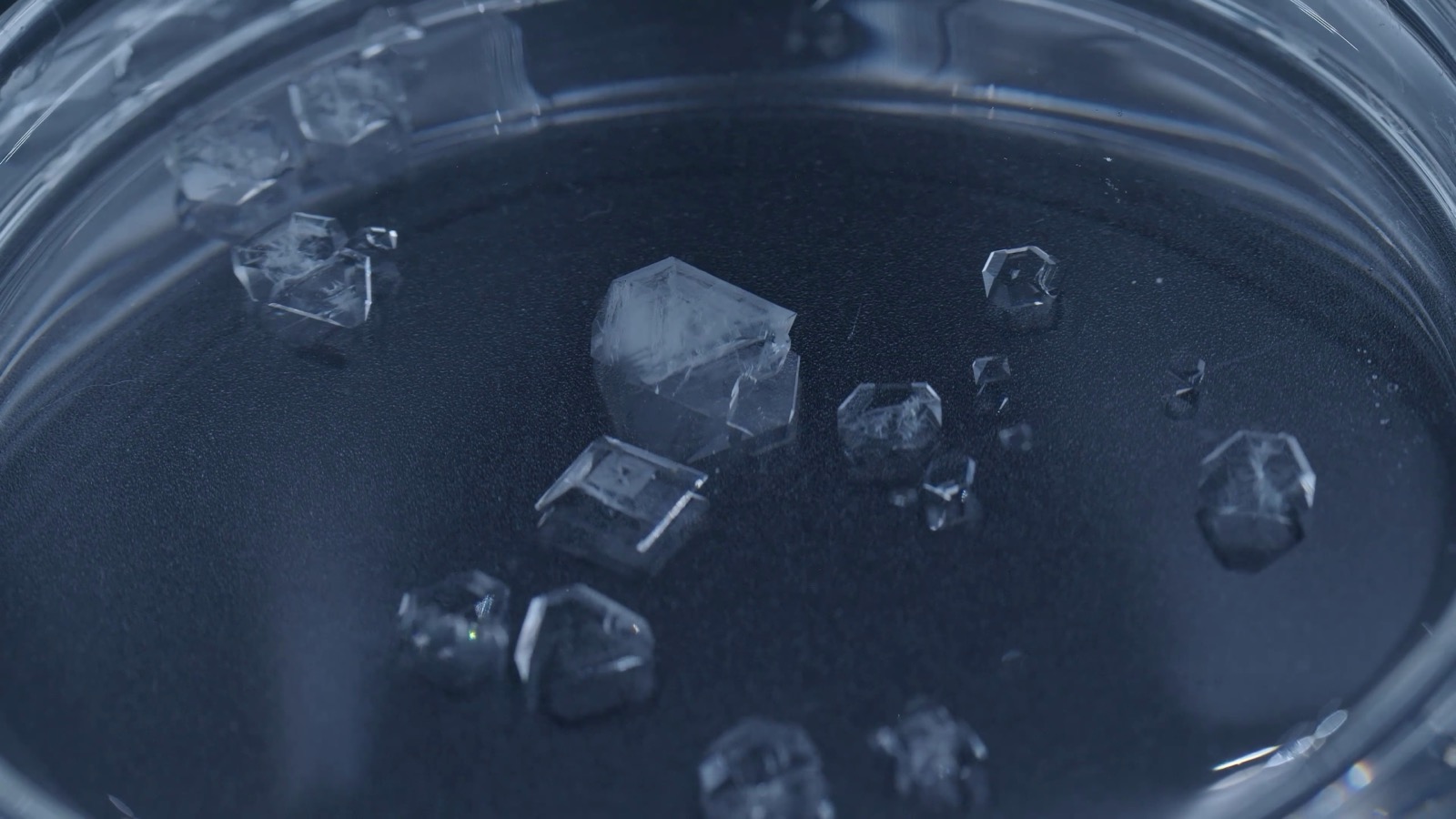
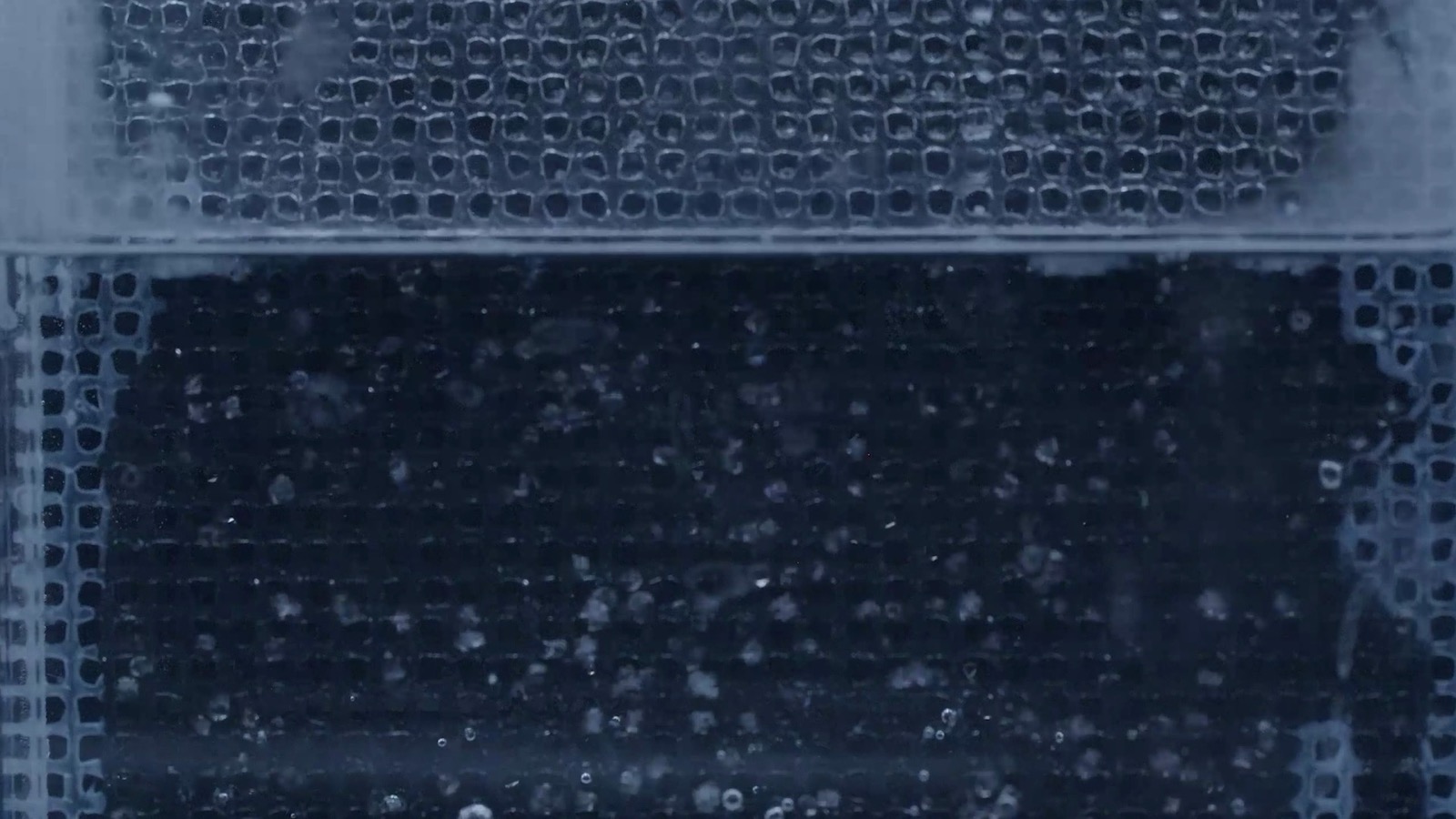
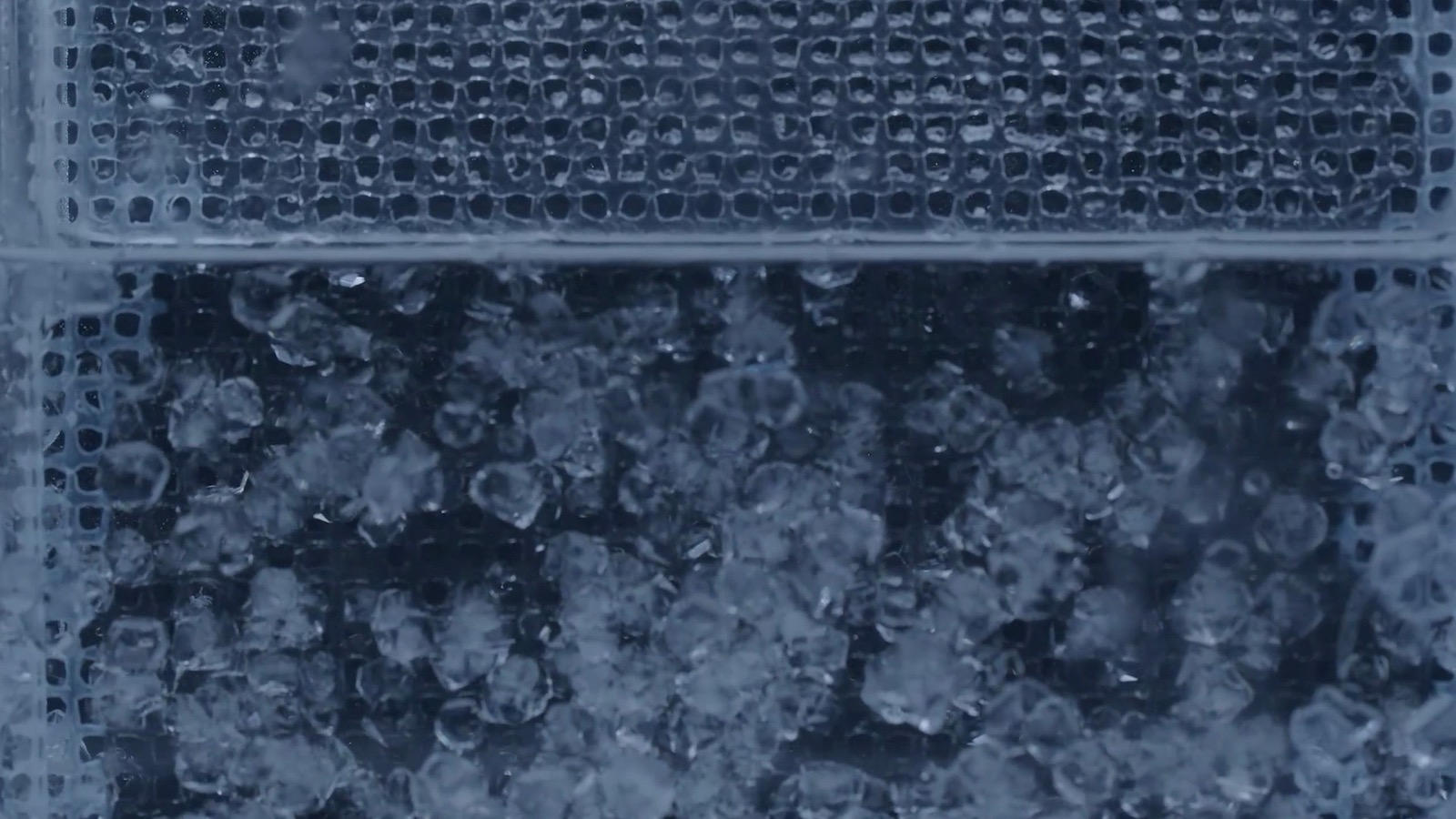
이 초기 탐구 과정은 체계적인 조명 기구 시스템의 개발로 이어졌습니다. 연구는 세 가지 방식으로 진행되었습니다. 2D 타일링, 3D 공간 배열, 그리고 4D 시간 기반 접근법이 그것입니다. 각 방식은 자연 결정(結晶) 구조와 빛을 대기 중에 산란시키는 그 특성에서 영감을 받았습니다. 이와 병행하여, 대기 속 빛과 결정의 관계를 컴퓨터로 시뮬레이션했습니다. 결정 형태의 파라메트릭 변형을 통해 빛은 환경에 반응하는 시스템으로 모델링되었고, 그 결과물은 "인공 자연"을 구축된 대기 시스템으로 제안하는 공간 조작 카탈로그로 완성되었습니다.
맷 페라로(Matt Ferraro)의 오픈소스 소프트웨어(Julia 언어 기반, MIT 라이선스) – 타깃 이미지 기반의 코스틱스 엔지니어링을 이해하고 실험하기 위해 활용했습니다. 이 소프트웨어는 푸아송 방정식을 풀어 입력 이미지의 밝고 어두운 영역을 매핑하고, 이를 표면의 굴곡으로 변환합니다. 원하는 빛의 패턴을 어떻게 표면 형상으로 구현할 수 있는지 탐구하는 데 큰 도움이 됐습니다.
디자인과 컴퓨테이셔널 접근법
이 프로젝트의 워크플로우는 목표 기반(target-based) 방식과 상향식(bottom-up) 방식을 함께 활용했습니다. 매트 페라로(Matt Ferraro)의 소프트웨어를 활용한 작업은 목표 기반 접근법에 해당합니다. 원하는 빛의 패턴(목표값)을 먼저 설정하고, 이를 구현하는 데 필요한 표면 형상을 역산해 도출하는 방식입니다. 반면 나머지 워크플로우는 상향식 반복 프로세스를 따랐습니다. 시뮬레이션과 계산 실험을 먼저 수행하고, 그 결과를 분석한 뒤, 얻은 인사이트를 바탕으로 다음 설계 방향을 결정하는 식으로 진행했습니다. 처음부터 최종 결과물을 규정하는 대신, 각 단계에서 도출된 결과를 토대로 지속적인 테스트, 평가, 정제를 거치며 작업이 발전해 나갔습니다.
빛 시뮬레이션 방법론 - 패스 트레이싱(Path Tracing)
패스 트레이싱은 레이 트레이싱(ray tracing)의 고급 기법으로, 몬테 카를로 적분(Monte Carlo integration)이라는 통계적 방법을 활용해 장면 속 빛의 산란을 정밀하게 시뮬레이션합니다. 수많은 광선 경로를 추적하며 빛이 여러 표면을 거쳐 반사·굴절되는 과정을 계산함으로써, 간접 조명과 전역 조명 효과까지 포착해냅니다. 몬테 카를로 방식은 적절한 수의 경로를 샘플링하고 결과를 평균화하여 렌더링 방정식을 효율적으로 근사할 수 있게 해주며, 이를 통해 사실적인 이미지를 만들어냅니다. 패스 트레이싱은 높은 정확도와 포토리얼리스틱한 결과물을 자랑하지만, 수많은 광선의 상호작용을 계산하는 과정이 워낙 복잡해 연산 비용이 상당합니다. 최근에는 GPU 기술의 발전과 알고리즘 최적화 덕분에 패스 트레이싱이 실시간 렌더링 영역으로 빠르게 진입하고 있으며, 인터랙티브 그래픽스 분야에서도 충분히 활용 가능한 기술로 자리잡아가고 있습니다.
Constructed Atmosphere explores light as a phenomenon, threaded from an initial investigation of the light pillars , an atmospheric optical phenomenon where vertical beams of light act to delineate space extending above and below a light source. The phenomenon demonstrates an interrelationship between lighting infrastructure and ice crystals present in the air, constructing an atmosphere which is durational, ephemeral, and participatory. In the same vein, this project exploits the ephemeral qualities of light instrumentalised as a medium. Conventional interpretations of light tend to reduce it to an instrument for illuminating surfaces, overlooking its atmospheric and spatial agency. Understood in this way, only the surface is truly defined. An alternative approach is adopted here, as light is instrumentalised not merely as a tool for illumination, but as the medium through which space, atmosphere, and perception are articulated. Defining light as the medium allows for ephemeral structuring and to create transient and intangible boundaries within a space. This concept moves beyond the physicality of structures and materials and emphasizes perception and environmental conditions to define powerful spatial experiences. In this context, space is understood as the varying modulations of lightness and darkness in texture and colour, shadow and occlusion, diffusion and softness, rhythm and movement. In its presence and absence, our spatial perceptions continue to be altered. All space is light, and all light is space. A series of material investigations served as instruments through which the behaviour of light was observed including prism casting, stacking, engraving, and thermoforming, as well as gradient solutions and varying haze environments to catalogue spatial articulation in varying media through light. Here, material formation is an active condition, directly influencing how light is reflected, refracted, diffused and organised. Geometry + Light Experiments Tiling Strategy Space Filling Strategy This initial process led to the development of a systematic set of light instruments, through three modes of investigation a 2D tiling, 3D spatial array, and 4D time-based approach, informed by natural crystalline formations and their ability to scatter light in the atmosphere. In parallel, we computationally simulated light and crystal relationships in the atmosphere, and by parametric variations in crystalline geometry, light is modelled as a responsive environmental system. The results are a catalogue of spatial operations that propose an “artificial nature” as a constructed atmospheric system. Software and Computational Workflow Used Blender – Used for caustic light simulation. Houdini – Used for: Particle simulation. Extraction of dichroic particles. Light simulation, particularly to study light behaviour relevant to the project. Rhino + Grasshopper – Used for parametric modelling and computational design workflows. Matt Ferraro’s open-source software (written in Julia, MIT) – Used to understand and experiment with caustics engineering through a target-based approach. The software solves the Poisson equation to generate surface undulations by mapping the dark and light regions of an input image. This enabled us to explore how desired light patterns can be translated into surface geometry. Design and Computational Approach Our workflow combined both target-based and bottom-up approaches. The work with Matt Ferraro’s software represented a target-based approach, where a desired light pattern (the target) informed the generation of the required surface geometry. In contrast, the remainder of the workflow followed a bottom-up, iterative process. Simulations and computational experiments were performed first, the resulting behaviour was analysed, and those observations informed the next design decisions. Rather than prescribing a final outcome from the beginning, the process evolved through continuous testing, evaluation, and refinement based on the results obtained at each stage. Methodology for Light Simulation - Path Tracing Path tracing is an advanced form of ray tracing that uses statistical techniques, specifically Monte Carlo integration, to accurately simulate the scattering of light throughout a scene. It traces multiple light paths, calculating how light interacts with surfaces over multiple bounces to capture indirect illumination and global lighting effects. The Monte Carlo method allows for an efficient approximation of the rendering equation by sampling a manageable number of paths and averaging their results to create realistic images. Path tracing, while highly accurate and capable of producing photorealistic images, is computationally expensive due to the complexity of solving light interactions across numerous rays. Recent advancements in GPU technology and algorithm optimization have pushed path tracing toward real-time rendering applications, making it increasingly viable for interactive graphics. Project Page | AADRL | Linkedin: Archana Prasad , Oluwapelumi Johnson , Rohan Thakker PROJECT CREDITS Project Team Archana Prasad, Oluwapelumi Johnson, Rohan Thakker Studio Head & Mentor Dr. Theodore Spyropoulos Tutors Hanjun Kim, Octavian Mihai Gheorghiu, Apostolos Despotidis School AADRL