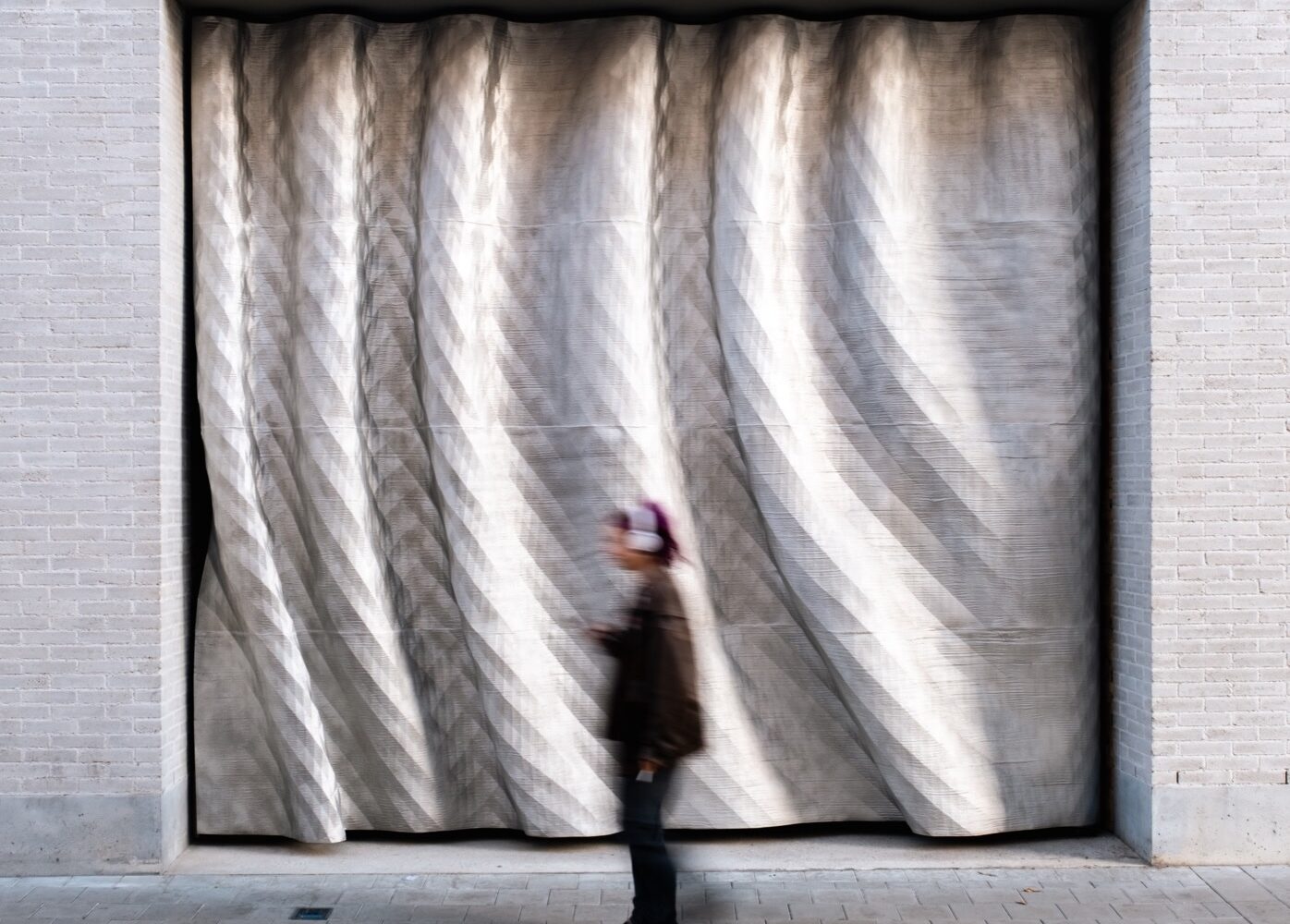
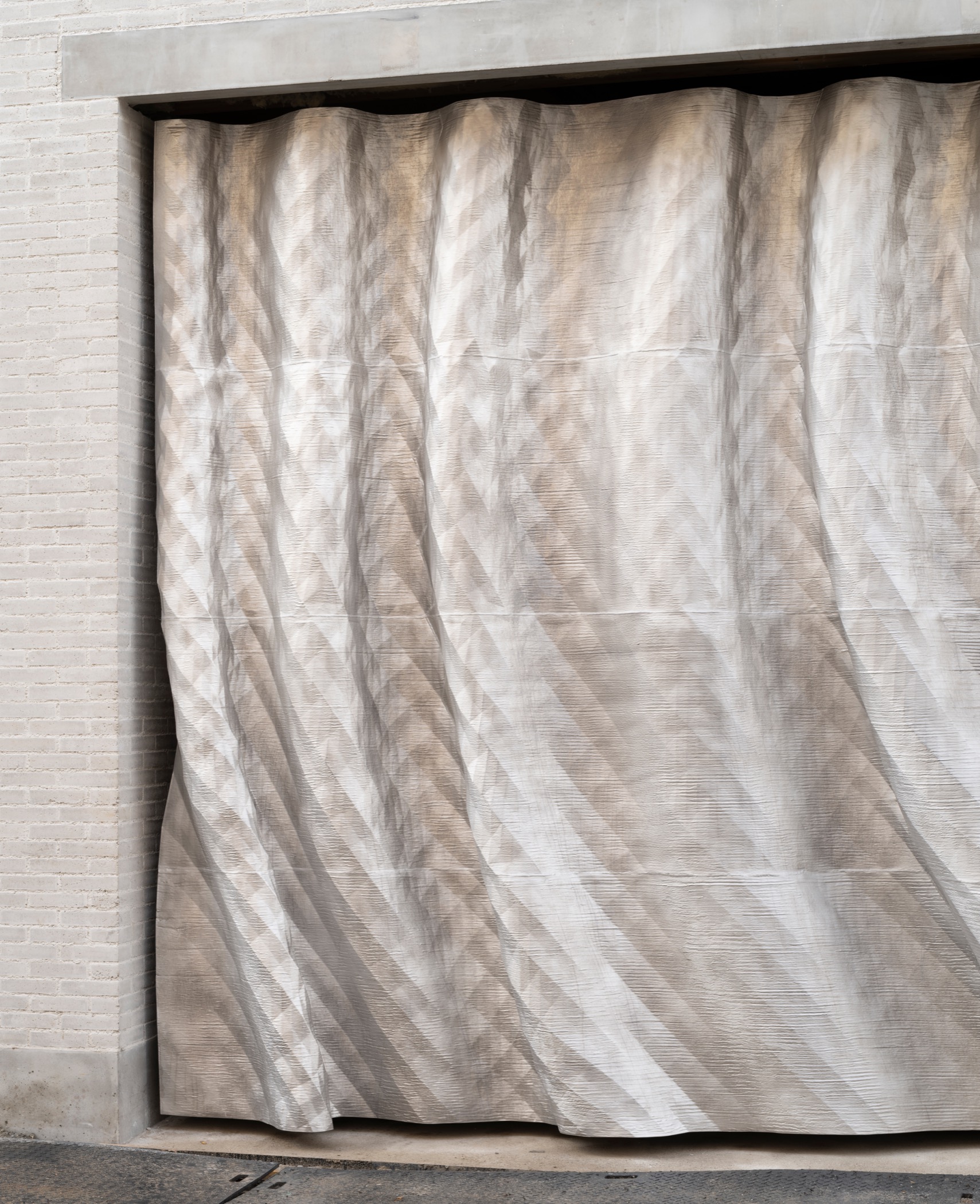
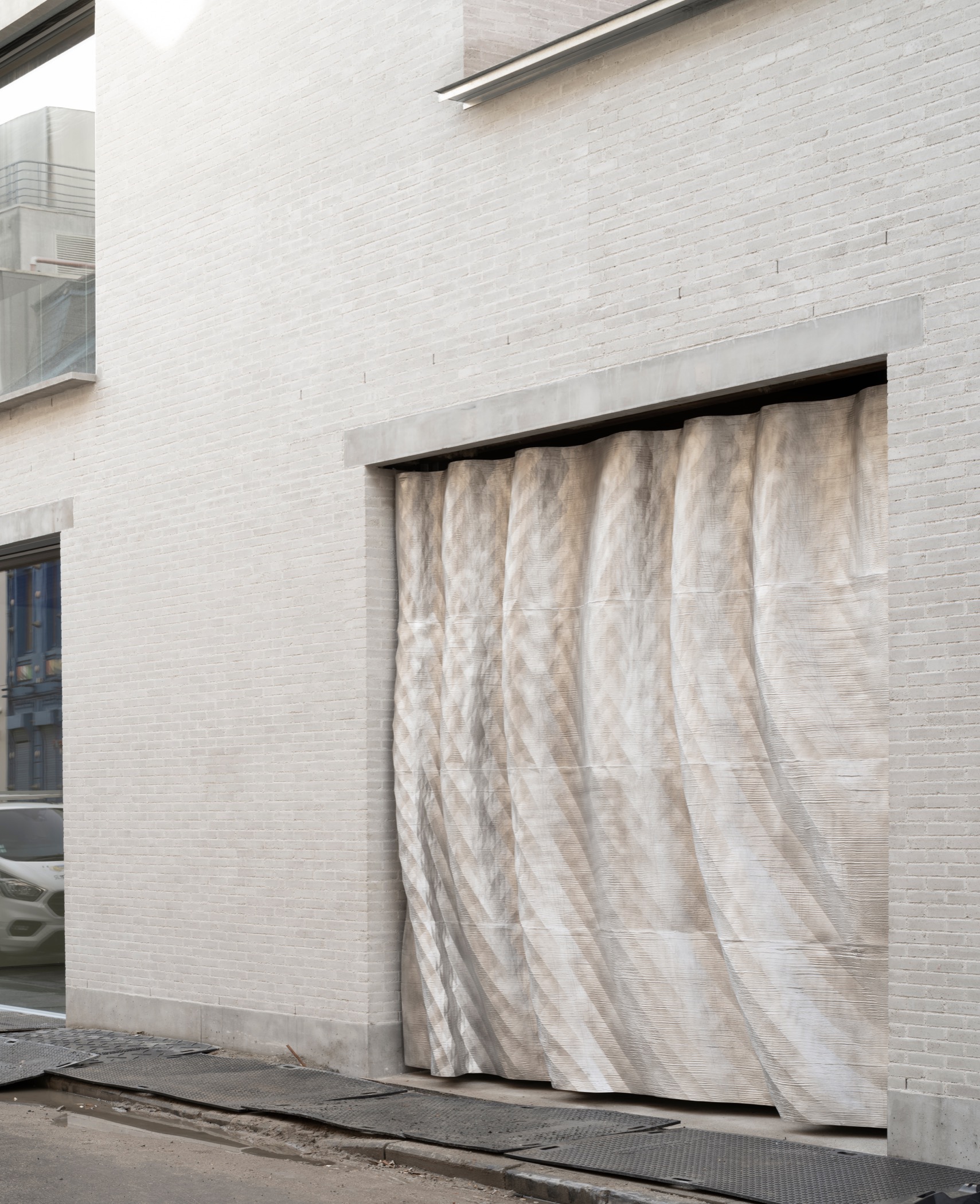
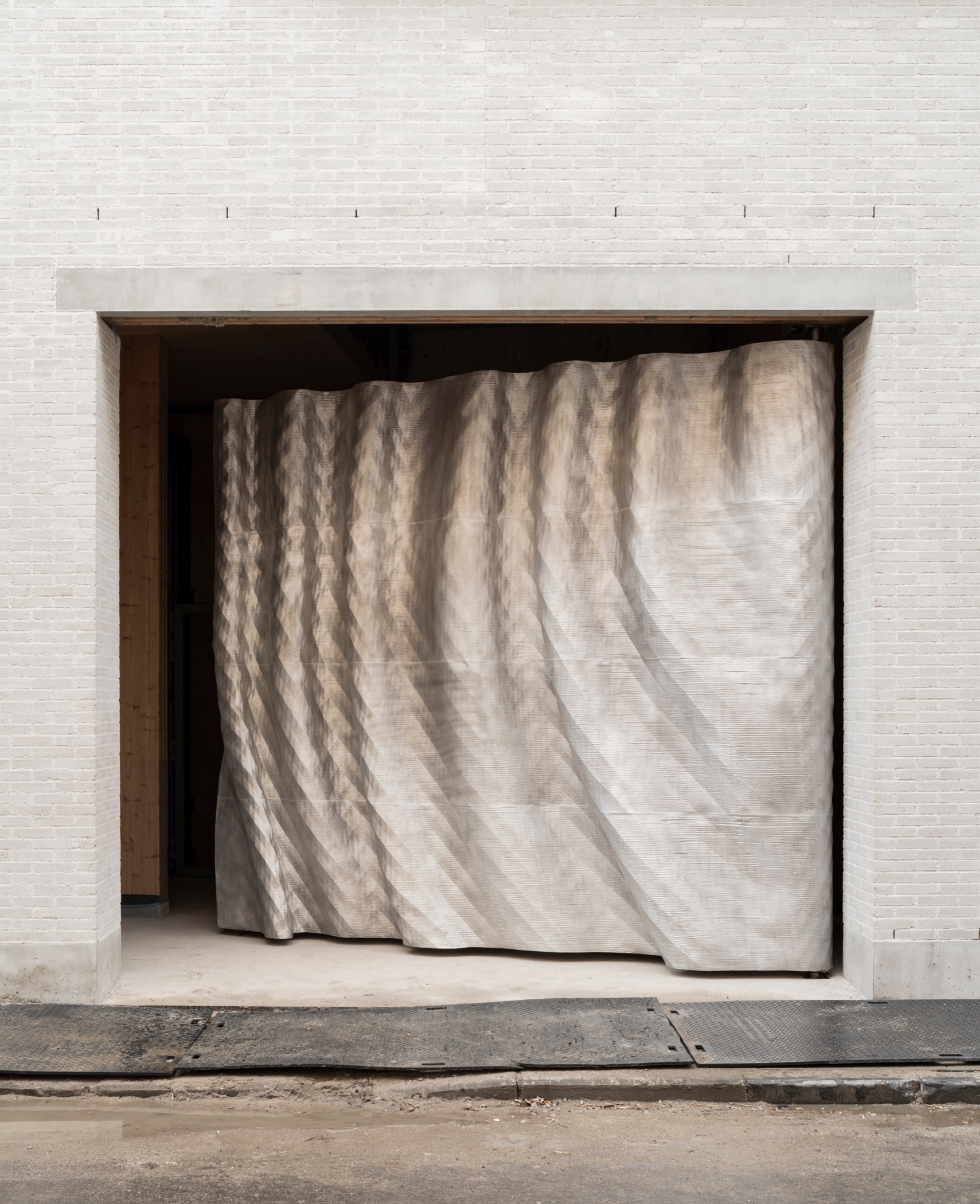
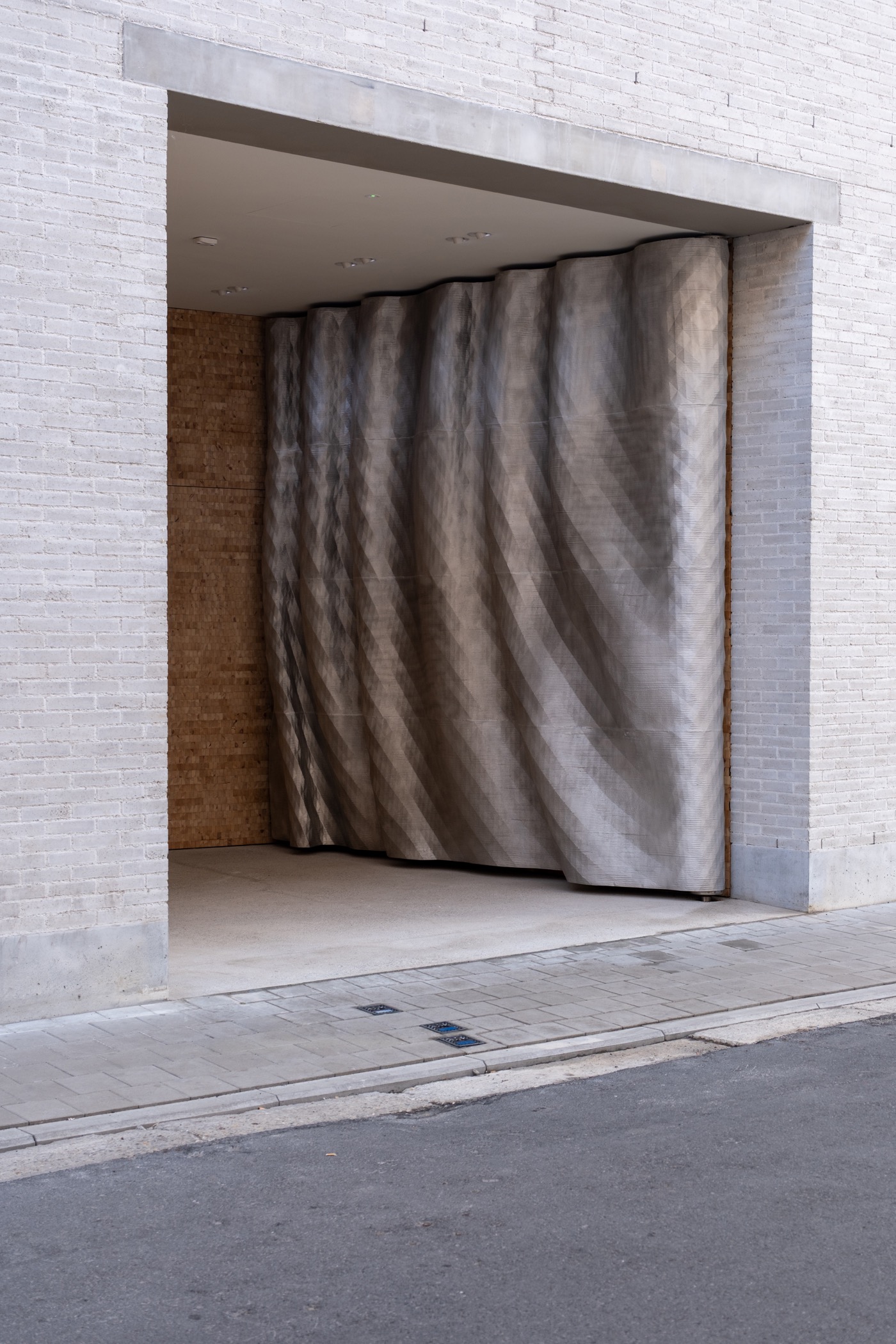
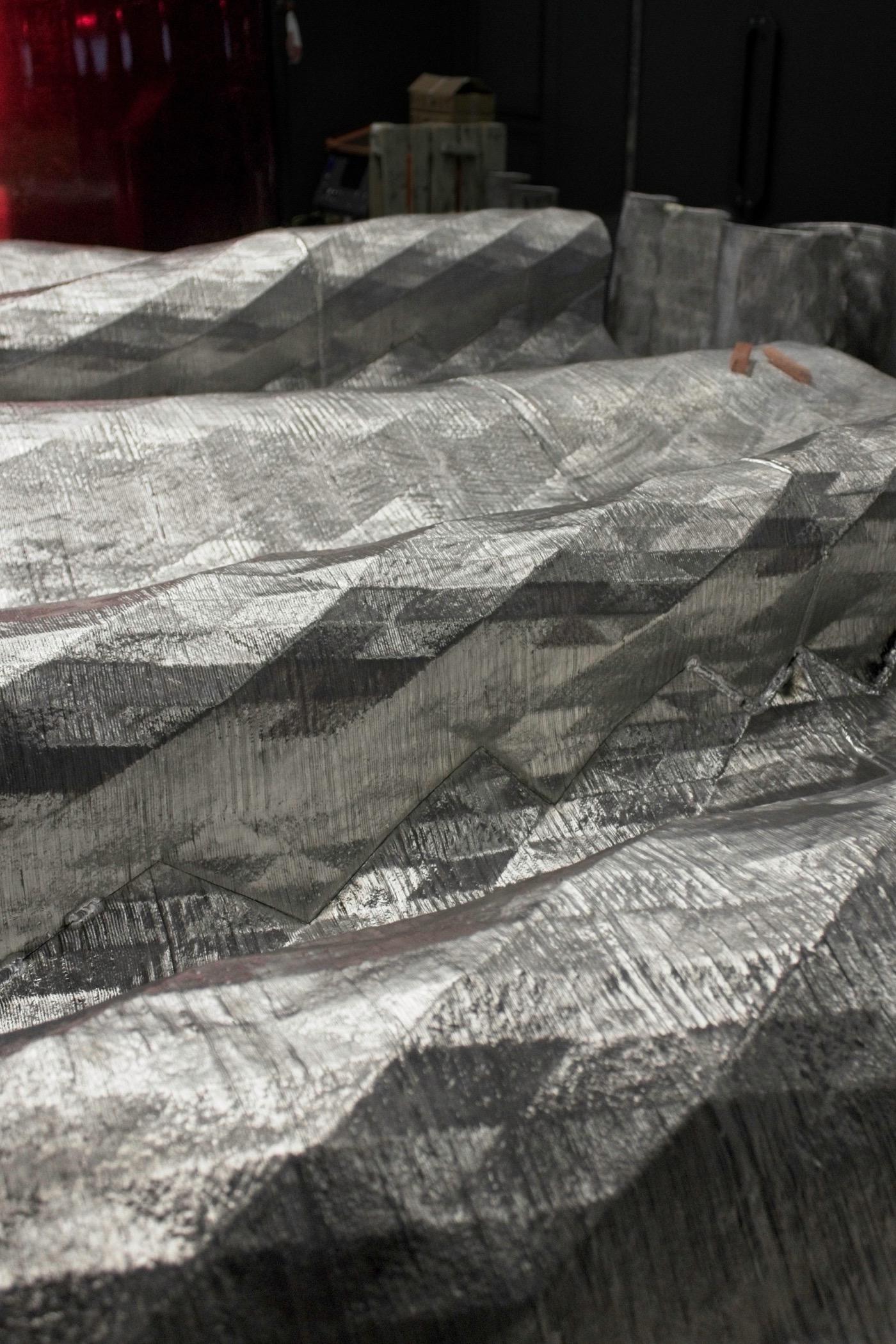
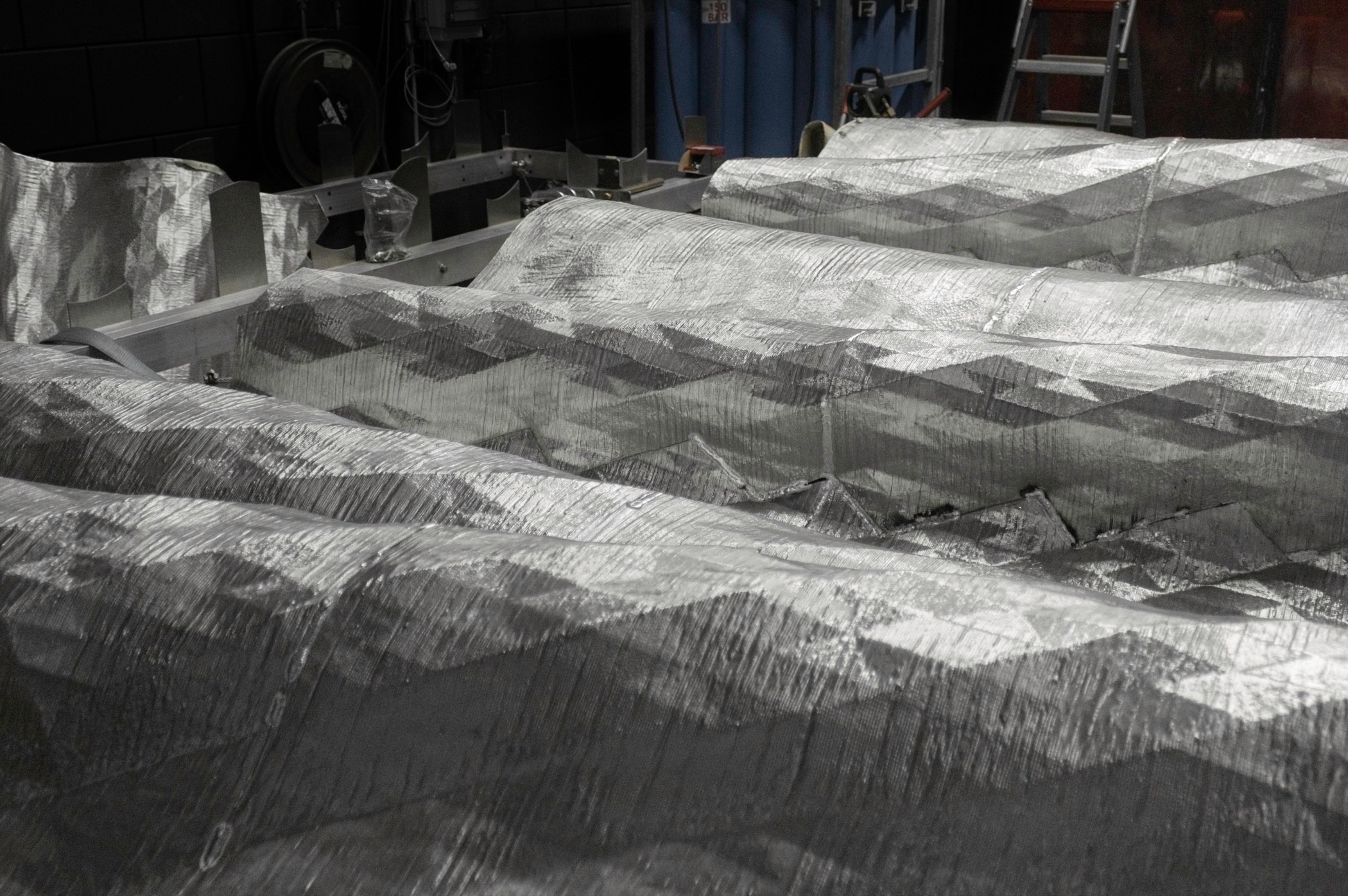
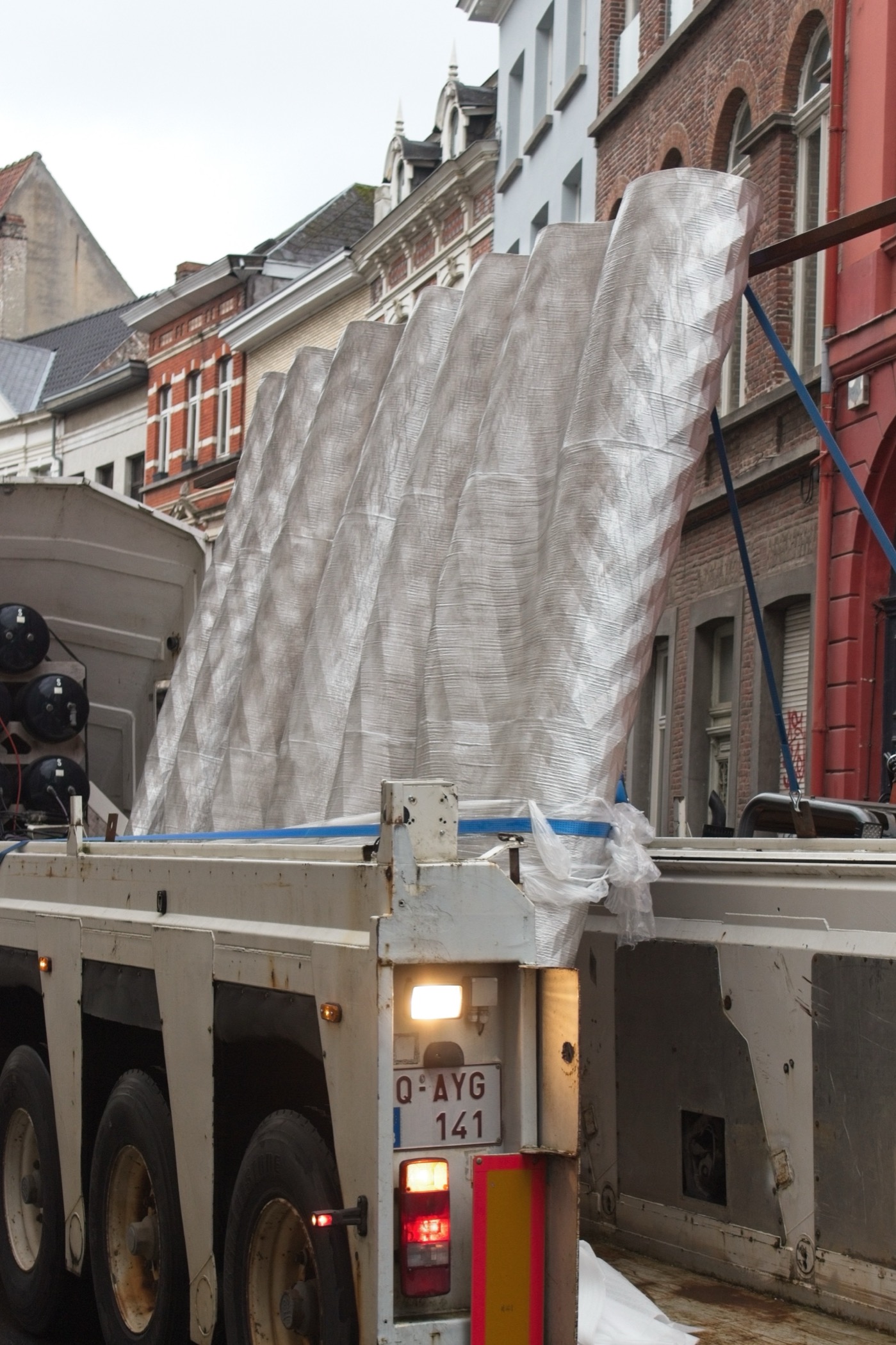
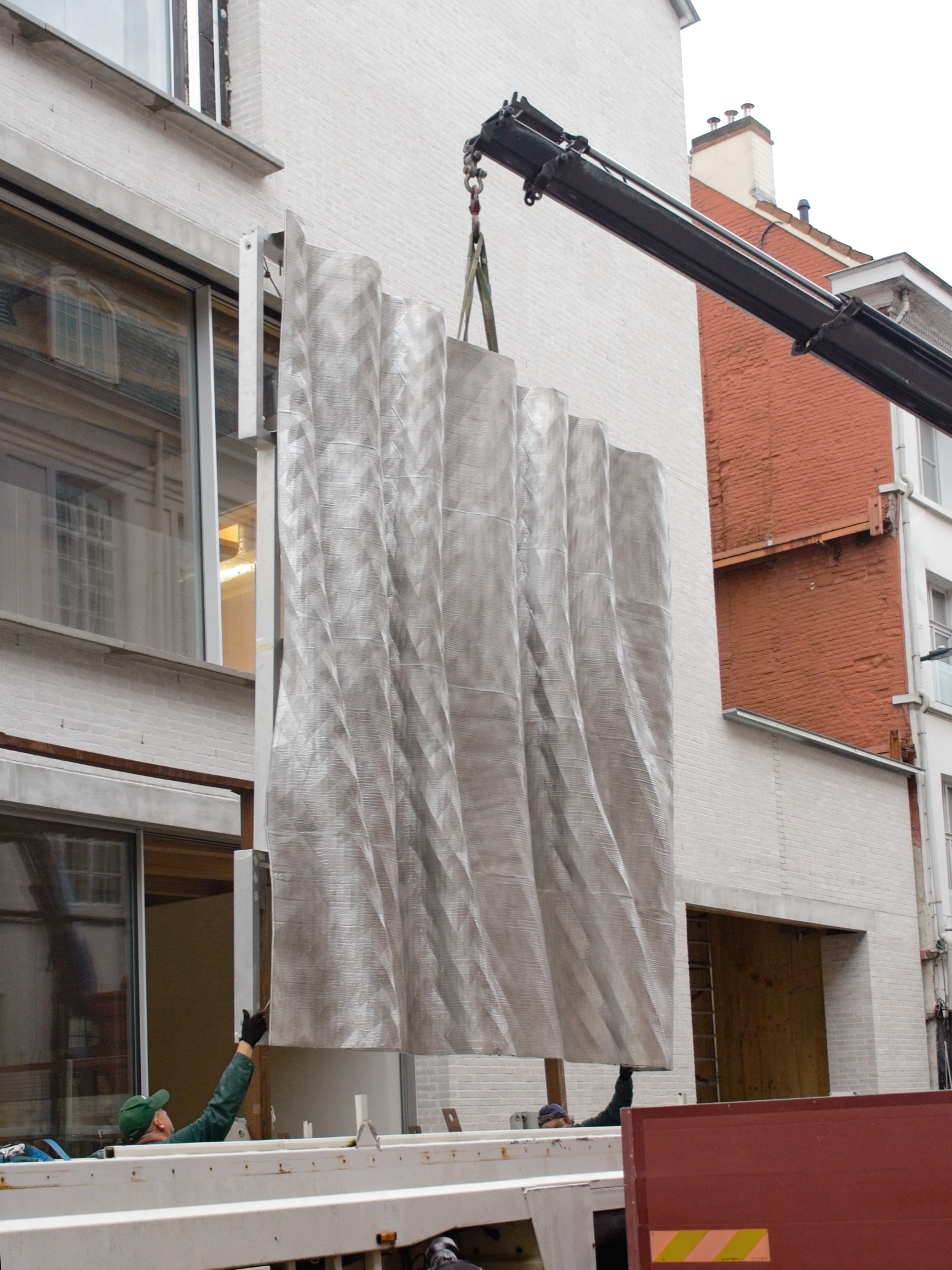
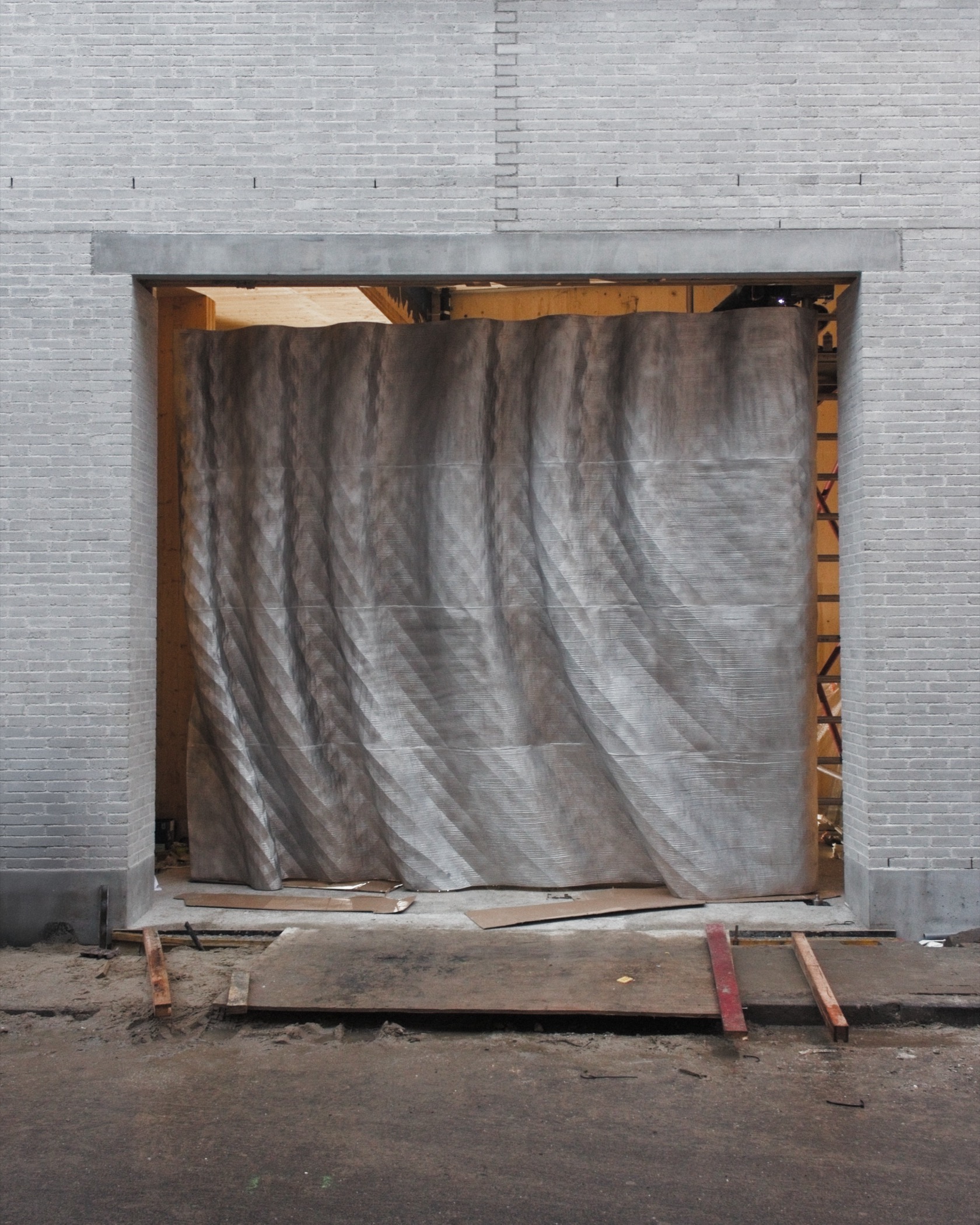
프리즈 프레임 82.2(Freeze Frame 82.2)는 3D 프린팅 알루미늄으로 제작한 커튼 조형물입니다. 금방이라도 움직일 듯하지만, 커튼이 열리기 직전의 팽팽한 순간—바로 82.2번 프레임—에 정확히 멈춰 있습니다. 미술관 입구에 자리한 이 작품은 부드럽고 반투명한 경계를 이루며 통로의 역할도 함께 합니다. 낮에는 내부를 드러내고, 밤에는 조용히 가려주는 이중적인 존재입니다.
프리즈 프레임 82.2는 우리가 살아가는 이 순간을 비춥니다. 움직임과 변화가 교차하는 지금, 디자인은 단순히 질문을 던지는 것을 넘어 아직 오지 않은 미래를 함께 빚어가야 합니다
우리는 새로운 시대의 문턱에 서 있습니다. 오래된 삶의 방식, 일하는 방식, 만드는 방식이 저물고, 인간 너머의 관점을 바탕으로 한 보다 지속 가능하고 공평한 대안이 그 자리를 채우고 있습니다.
겐트 디자인 뮤지엄(Design Museum Gent)의 새 증축 공간 DING은 처음부터 '더 많은 박물관'이 아닌 '박물관 그 이상'으로 기획되었습니다. 변화하는 세계를 탐색하는 토론, 강연, 워크숍, 소규모 전시를 위한 장소입니다. 과거 디자인 솔루션을 보관하는 아카이브가 아니라, 디자인이 살아서 작동하는 현장입니다. 우리 시대가 가장 절실히 필요로 하는 것에 대해 올바른 질문을 찾고, 상상력 있는 답을 모색하는 플랫폼입니다.
새로운 증축 공간의 입구에, 그리고 미술관 전체의 관문이 되는 자리에 작품을 만든다는 것은 어떤 의미일까요? 끊임없이 질문하고 아직 오지 않은 것을 함께 만들어가야 하는 디자인의 사명을 이 역동적인 전환의 시기에 어떻게 형상화할 수 있을까요?
민속학자 아놀드 반 헤넵(Arnold van Gennep)의 연구에서 출발해 라틴어 'limen(문지방)'에 뿌리를 둔 개념인 '리미널(liminal)'은, 통과의례에서 핵심적인 단계를 가리킵니다. 인류학자 빅터 터너(Victor Turner)는 1967년 에세이 「사이에서: 통과의례의 리미널 단계(Betwixt and Between: The Liminal Period in Rites of Passage)」에서 이 개념을 깊이 탐구했습니다. 리미널 단계란 낡은 자리는 이미 떠났지만 새로운 자리에는 아직 닿지 못한 '사이의 시간'입니다. 익숙했던 질서가 느슨해지고, 여러 가능성의 미래가 잠시 공존하는 공간이기도 하지요. 터너는 이 불확실성의 유예 상태야말로 변화를 가능하게 한다고 말하며, 여기서 '코뮤니타스(communitas)'의 가능성을 발견합니다. 사람들이 함께 문지방 위에 서는 순간, 순간적으로 피어오르는 집단적 개방감—바로 그것입니다.
이 '문턱'의 개념은 지금 우리가 통과하고 있는 전환의 시간과 깊이 맞닿아 있습니다. 우리는 새로운 시대의 경계 위에 서 있습니다 — 문턱 안에서(in limine) — 여기도 저기도 아닌, 그 사이 어딘가에. 이미 지나온 것에는 더 이상 닿지 않고, 아직 다가올 것에는 채 붙들리지 않은 자리. 어떤 예술 형식보다도 연극은 이 모호한 상태 속에 깊이 뿌리를 두고 있습니다. 무대 막이 바로 그 조건을 온몸으로 구현합니다. 막은 무언가를 숨기고, 또 드러냅니다. 단순한 장벽이 아니라 빛과 속삭임, 그리고 기대감이 스며드는 얇은 경계막으로서.
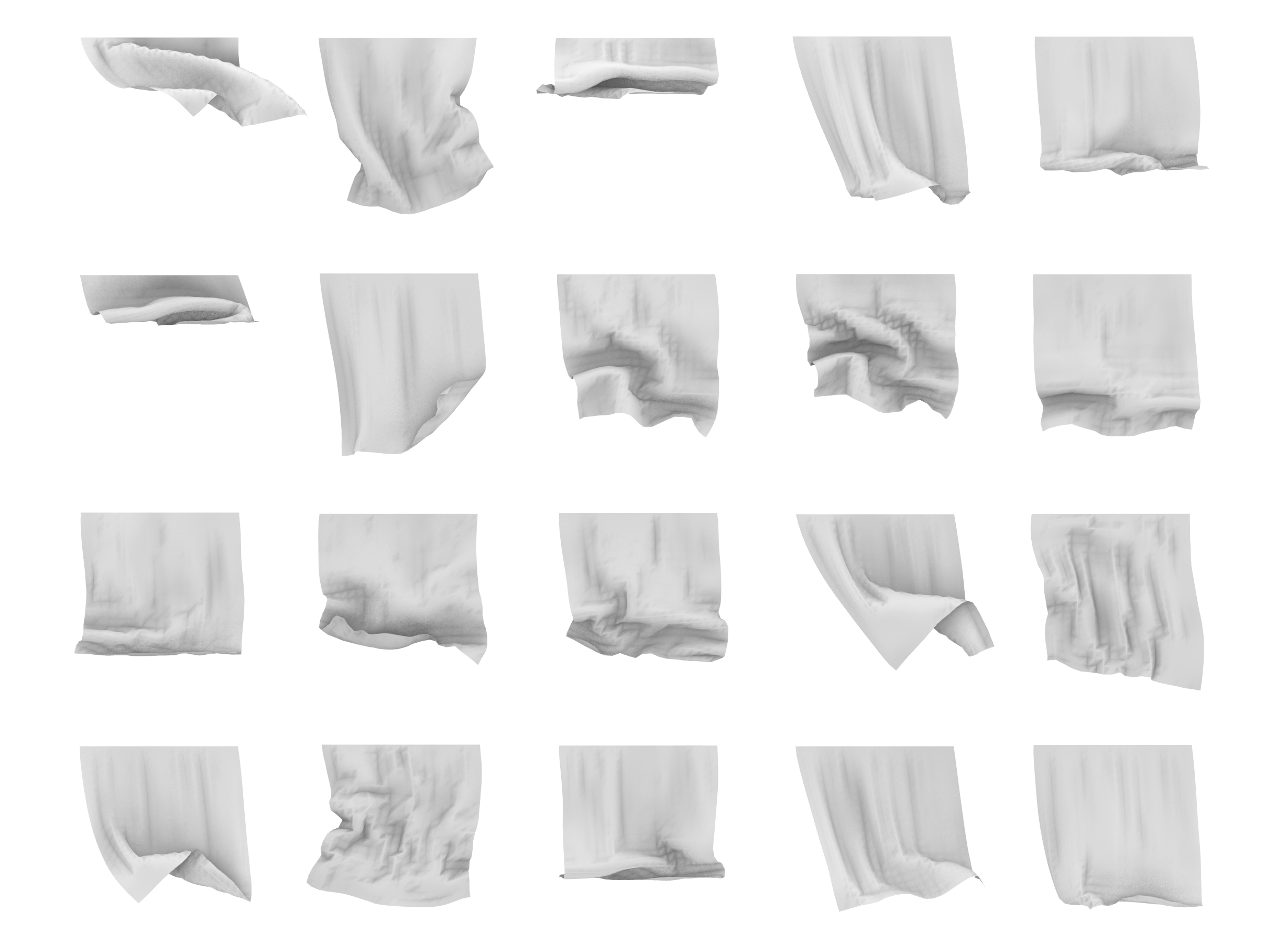
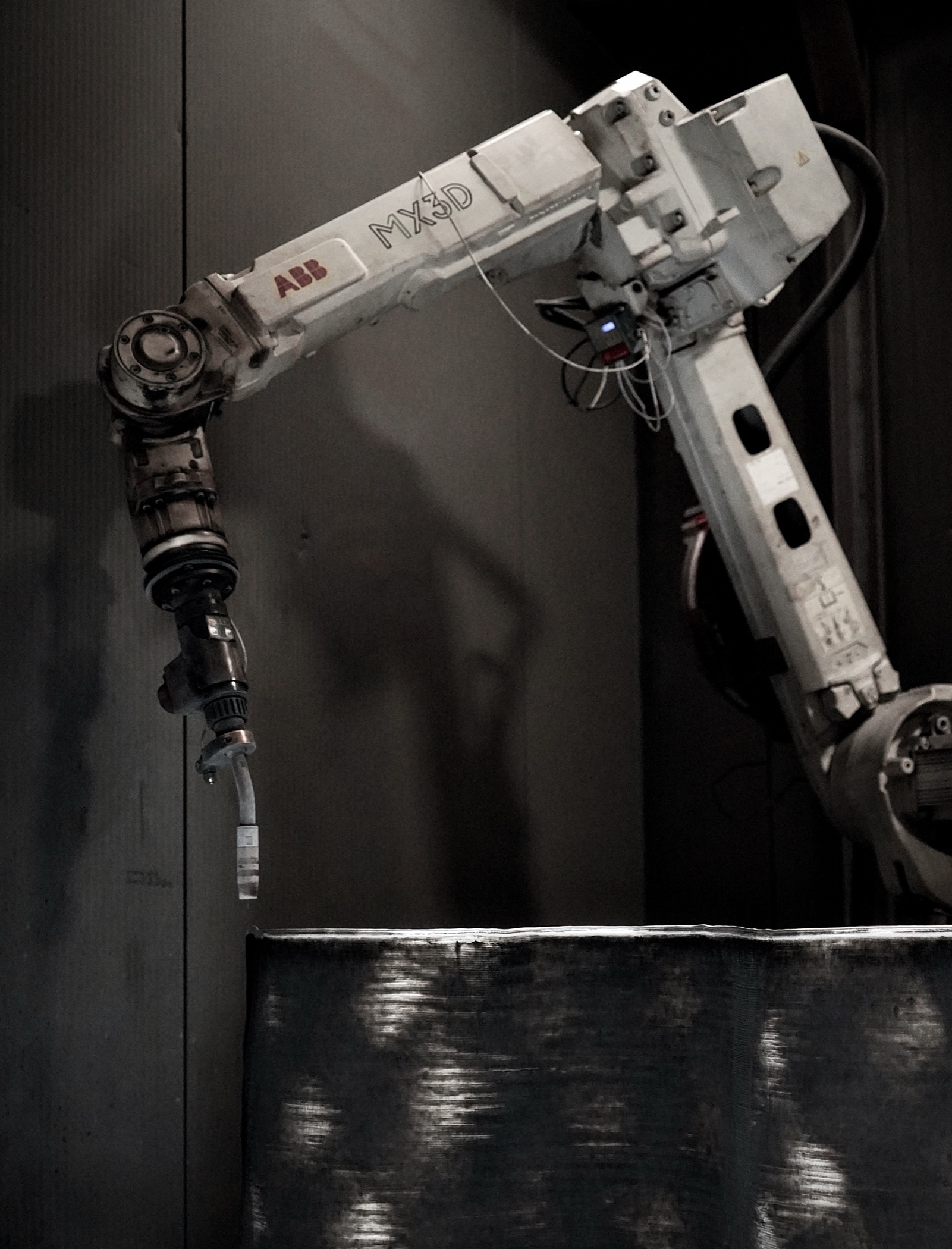
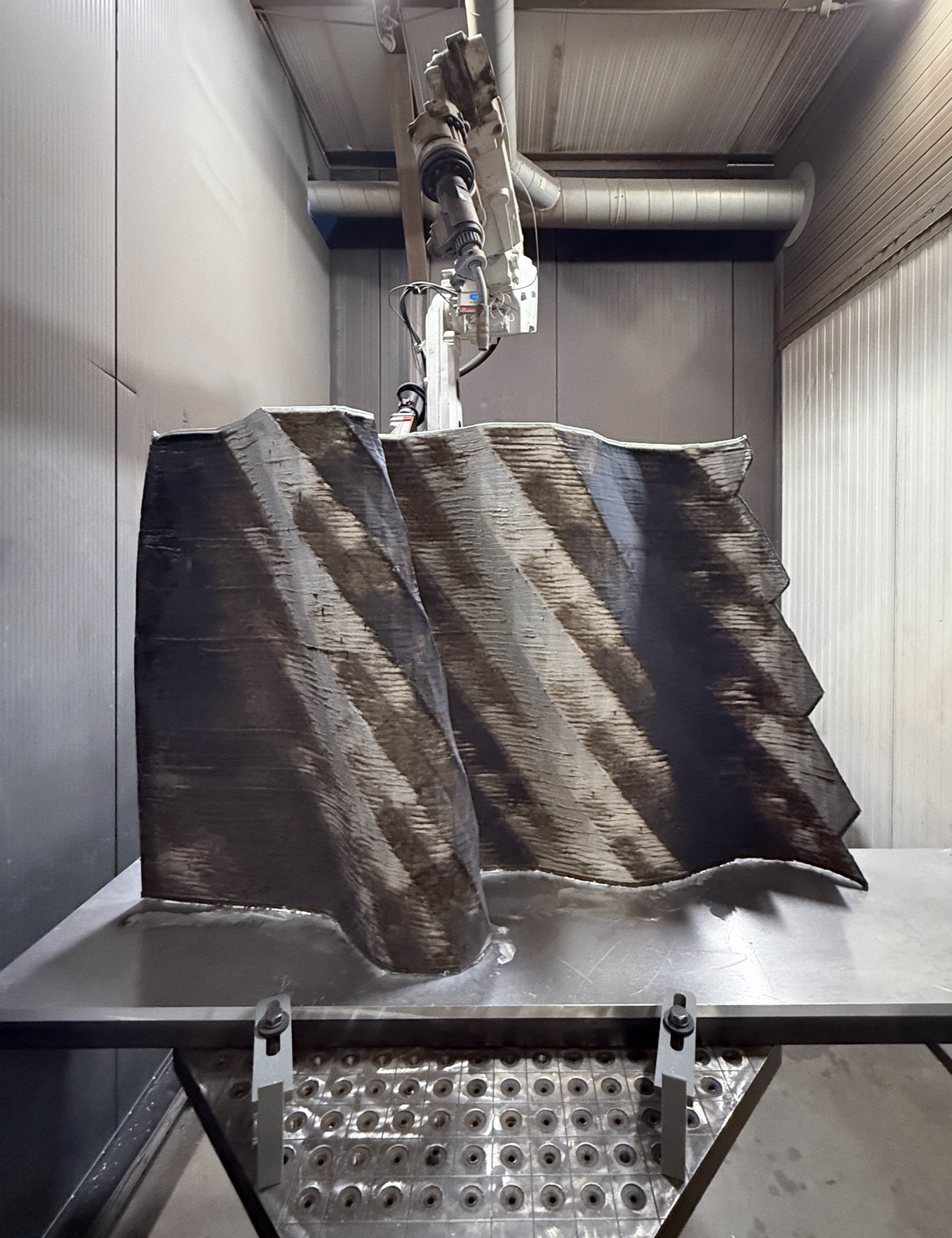
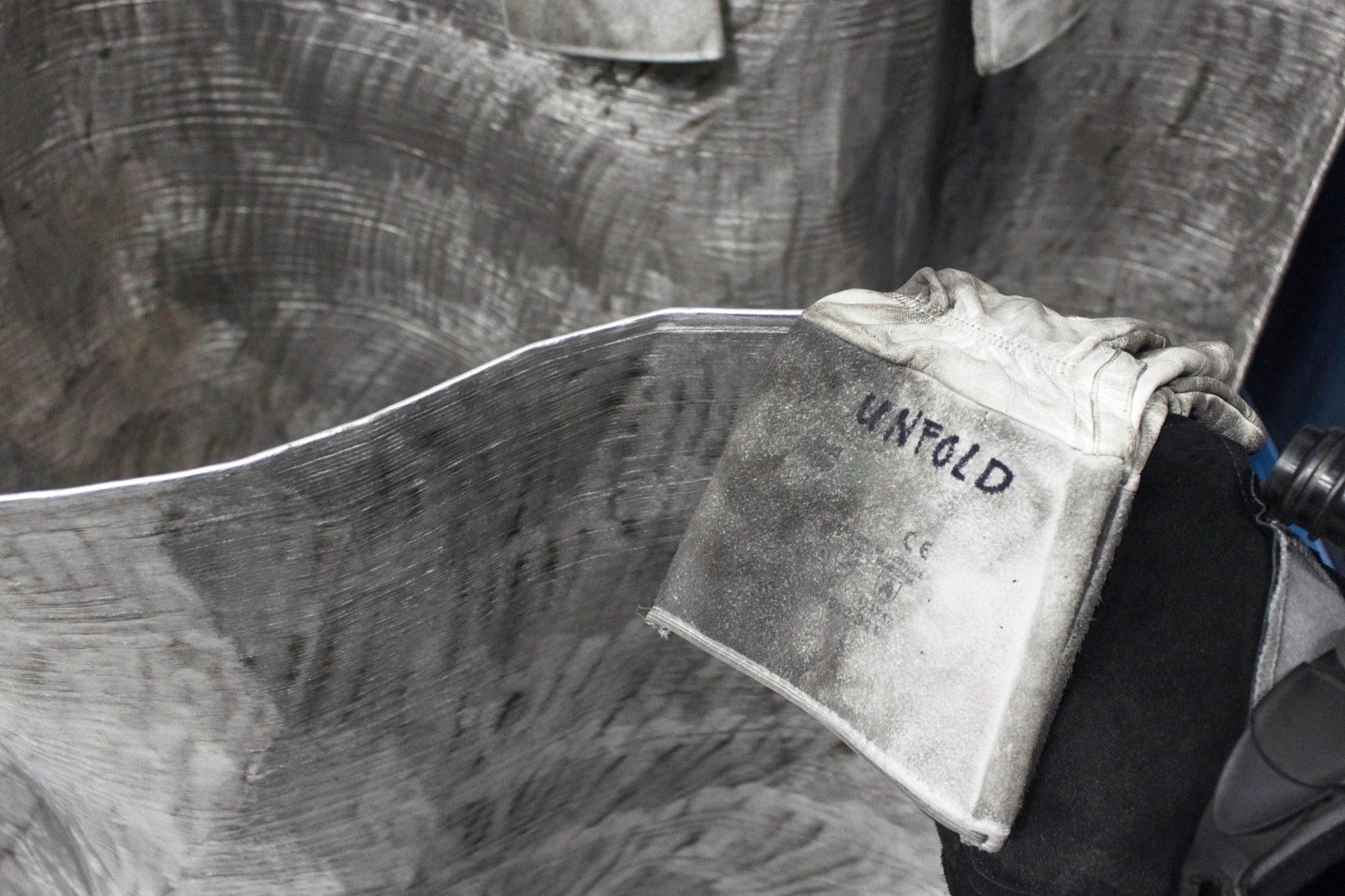
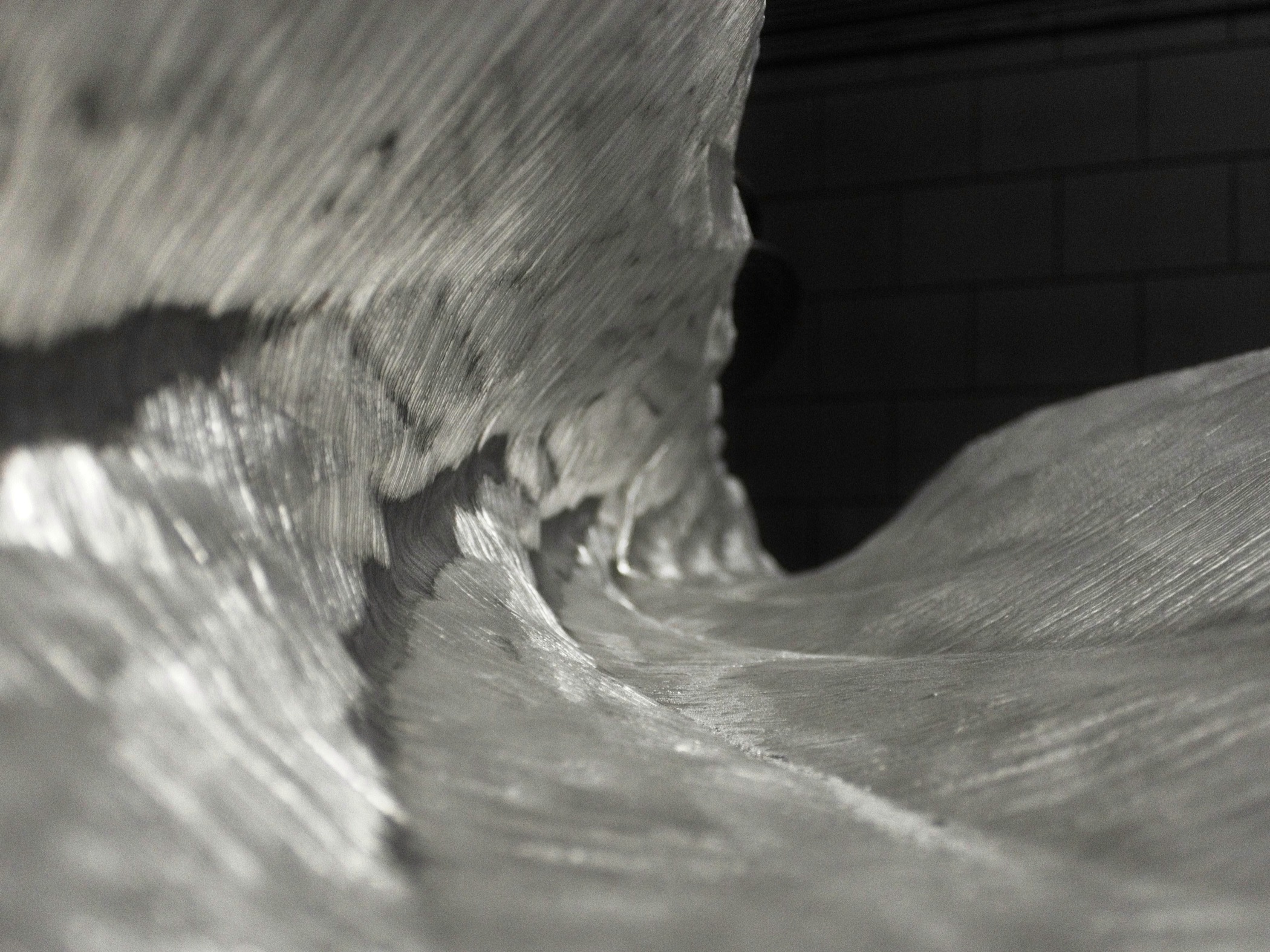
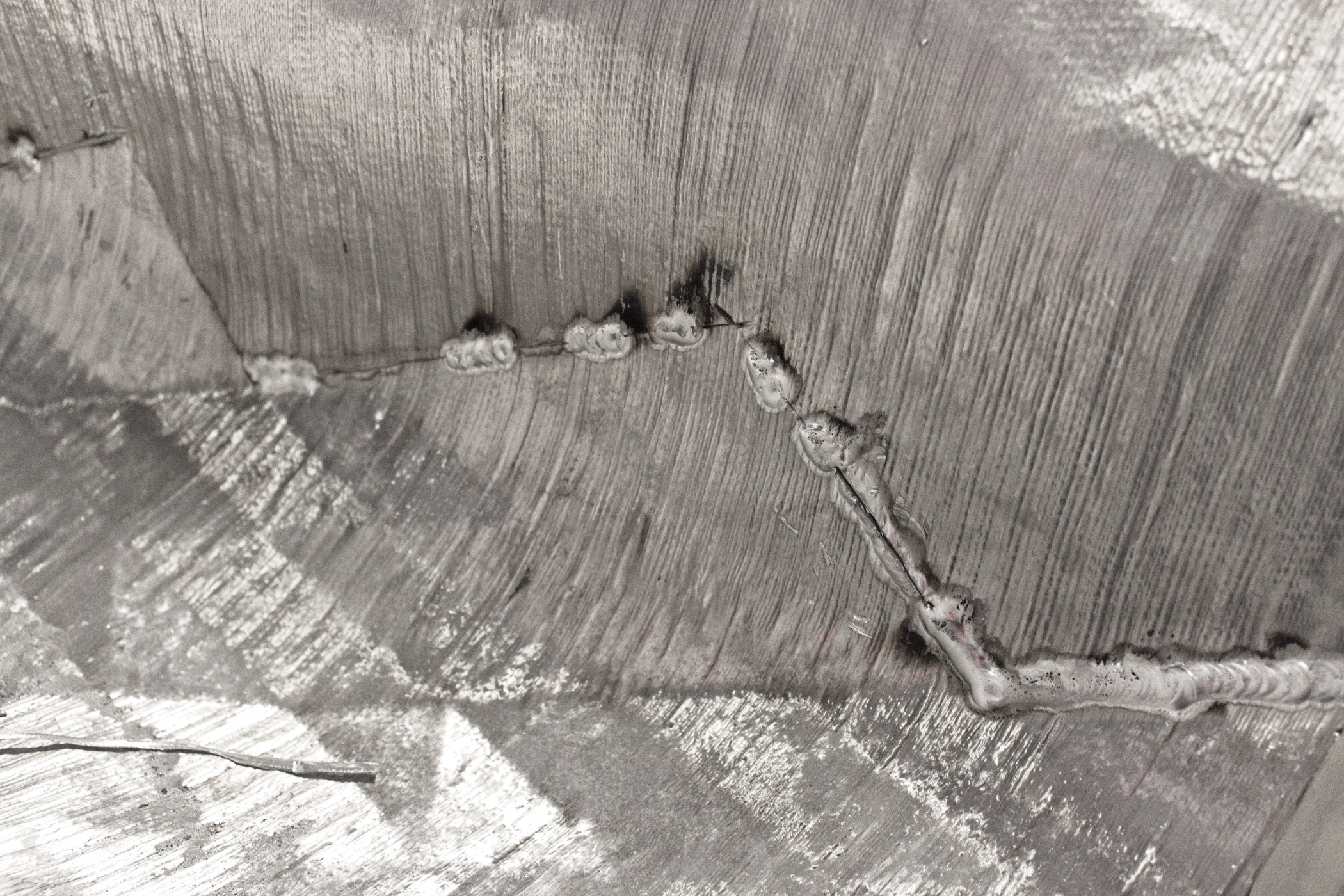
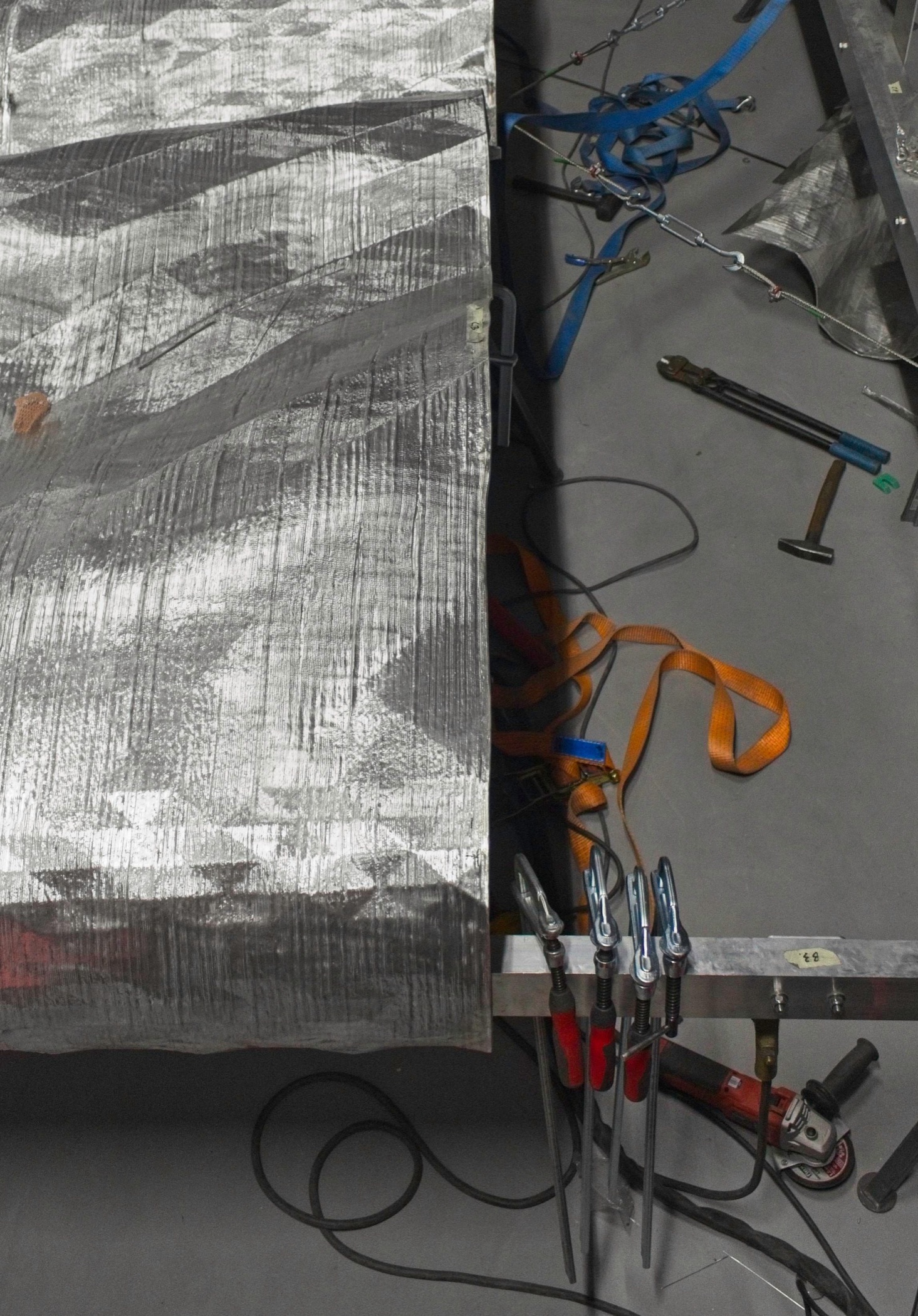
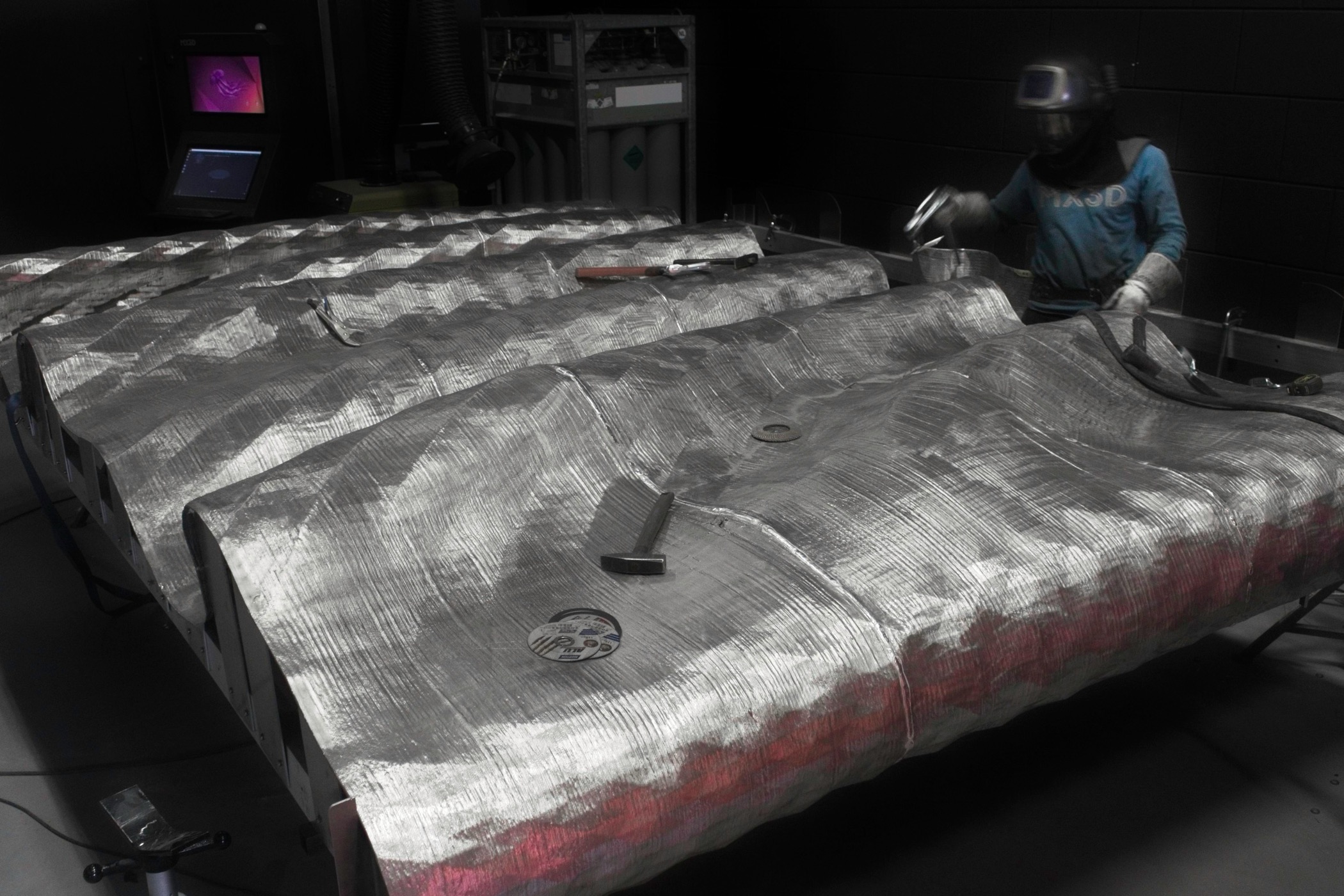
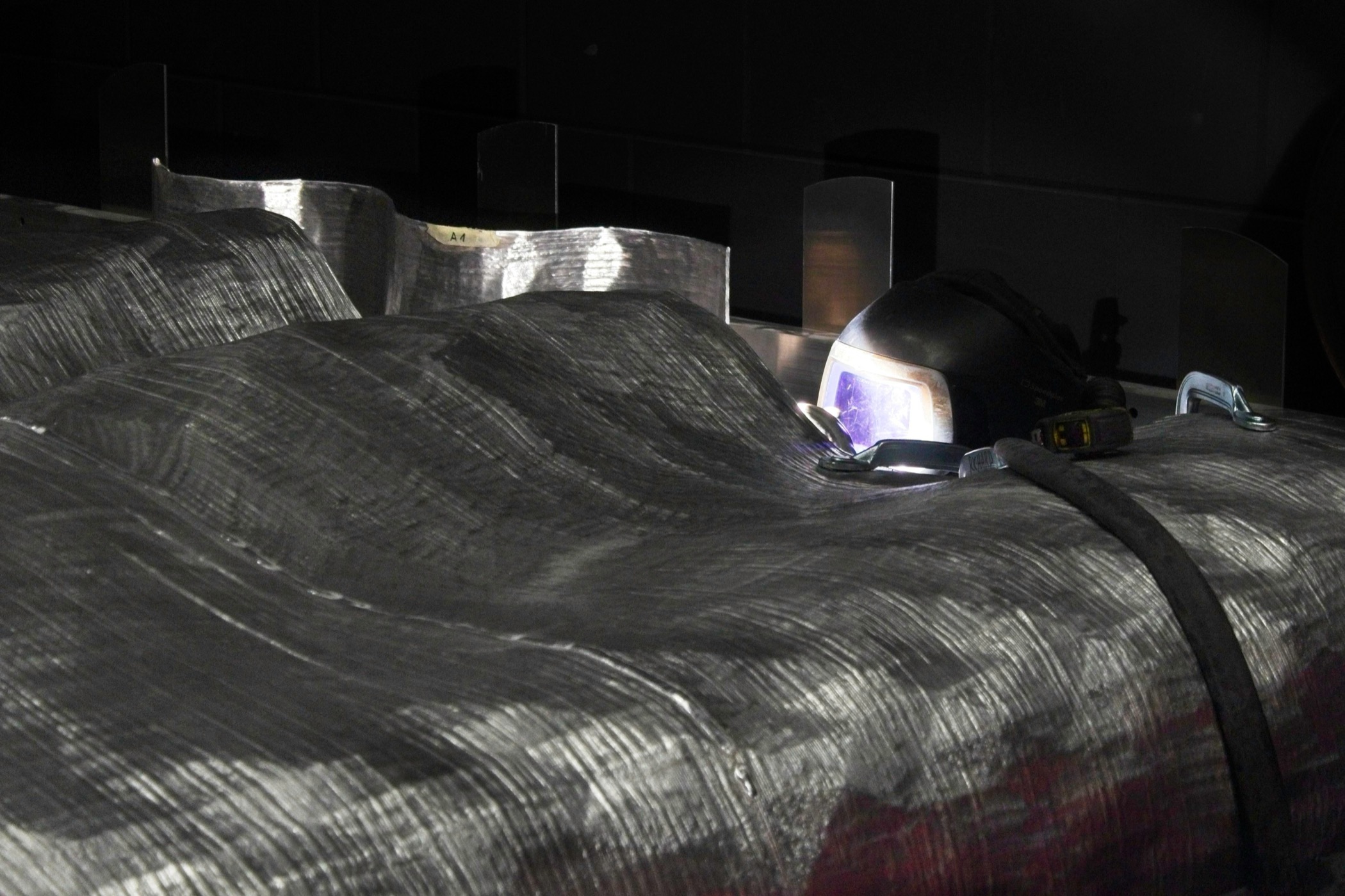
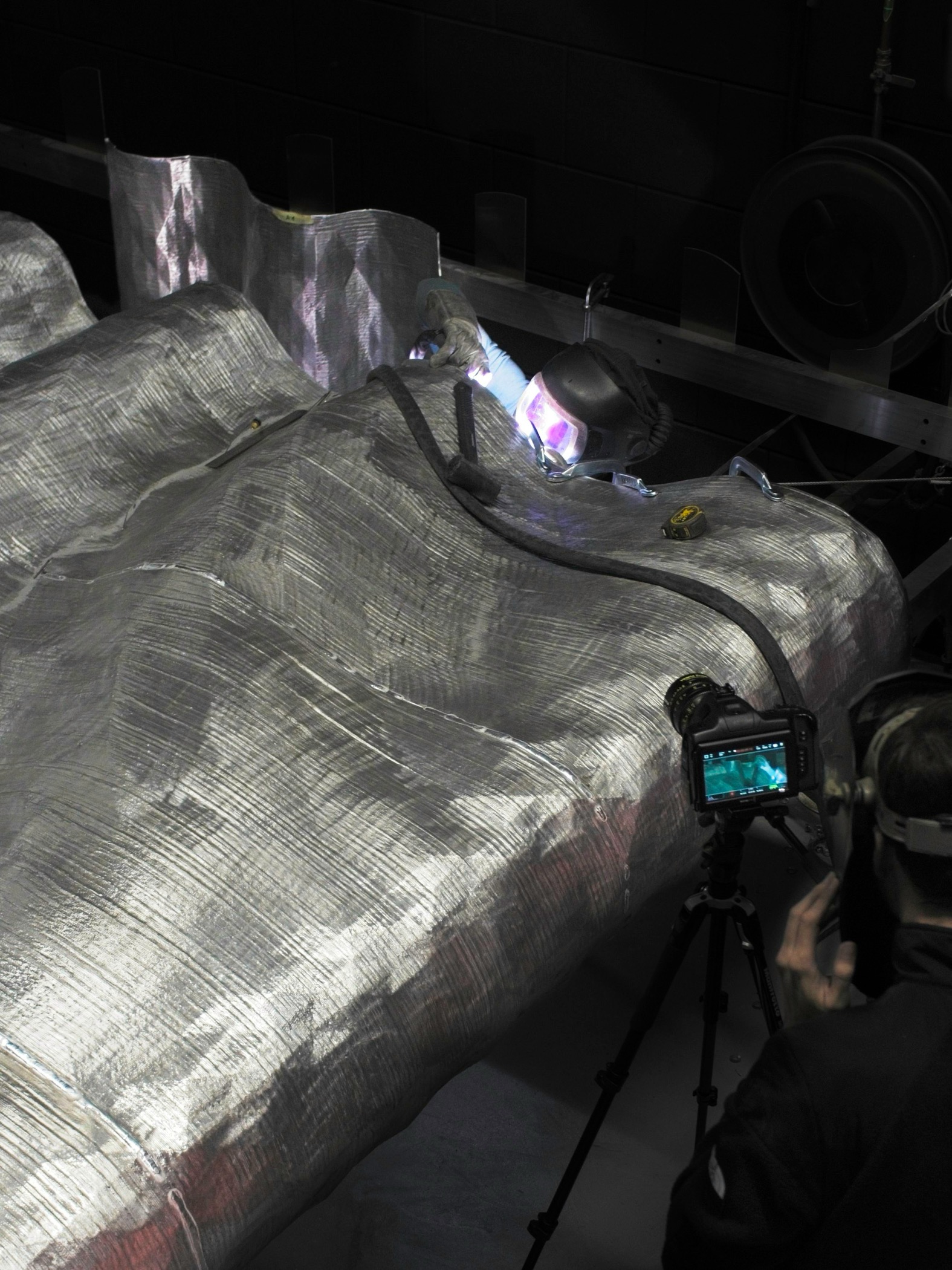
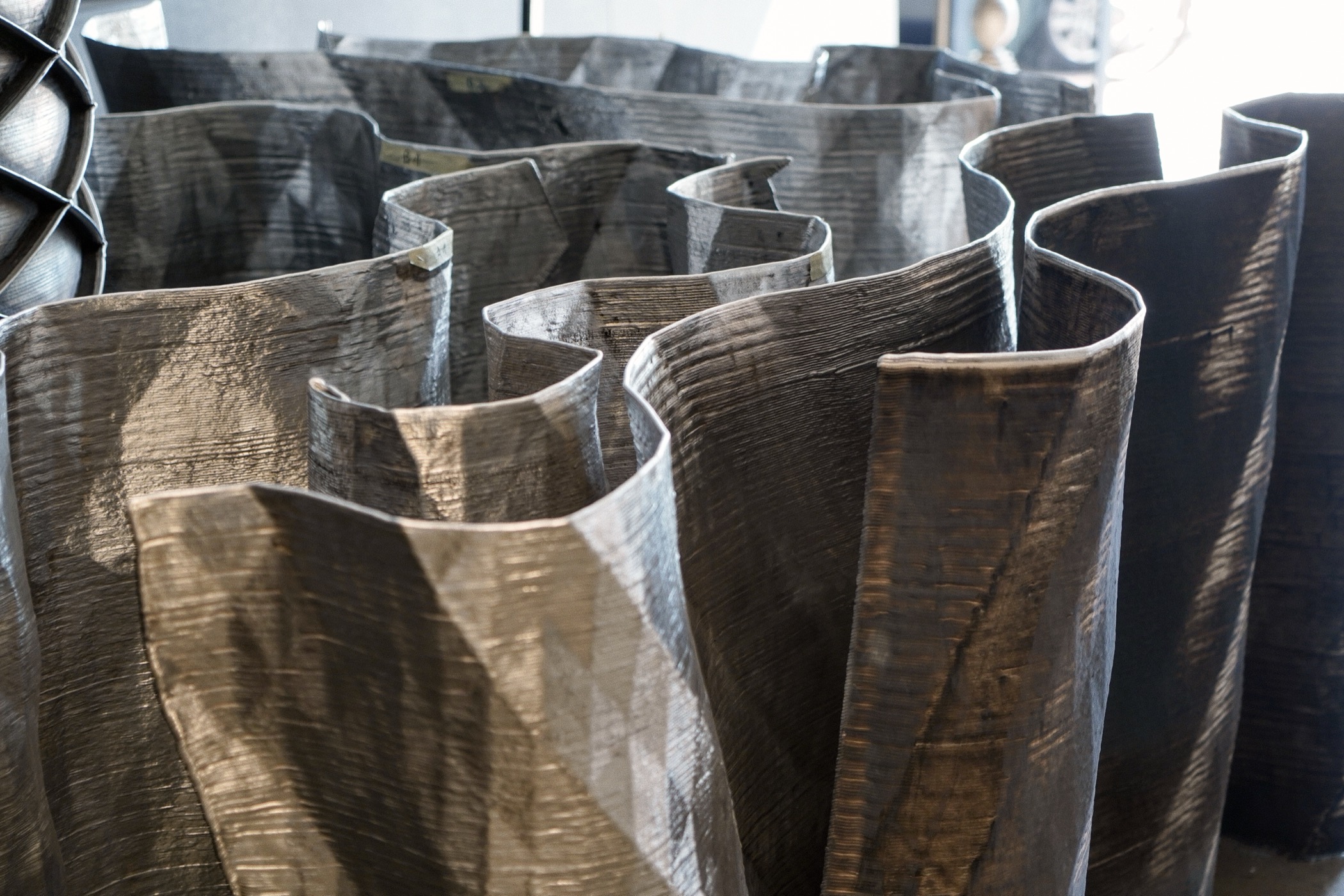
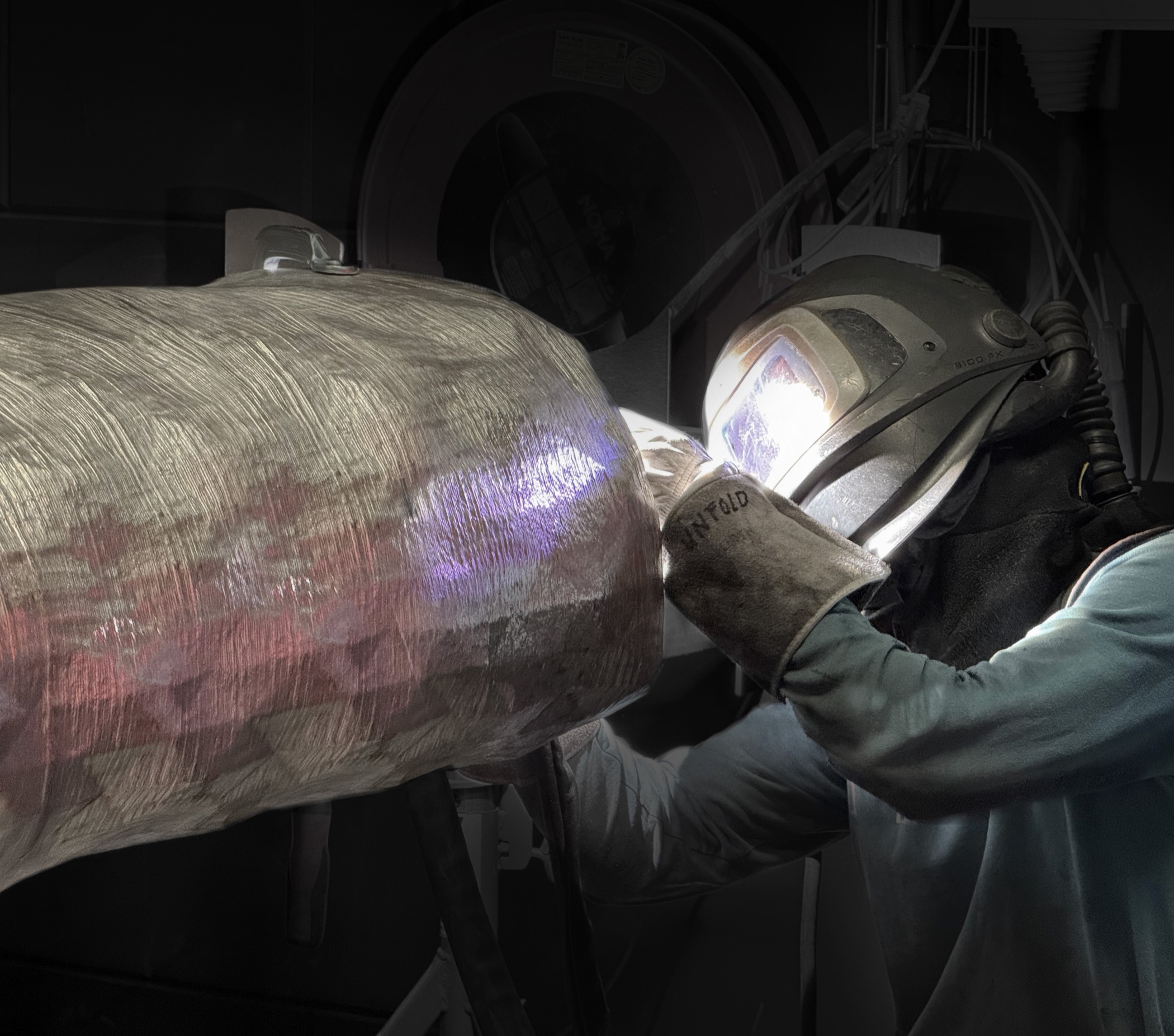
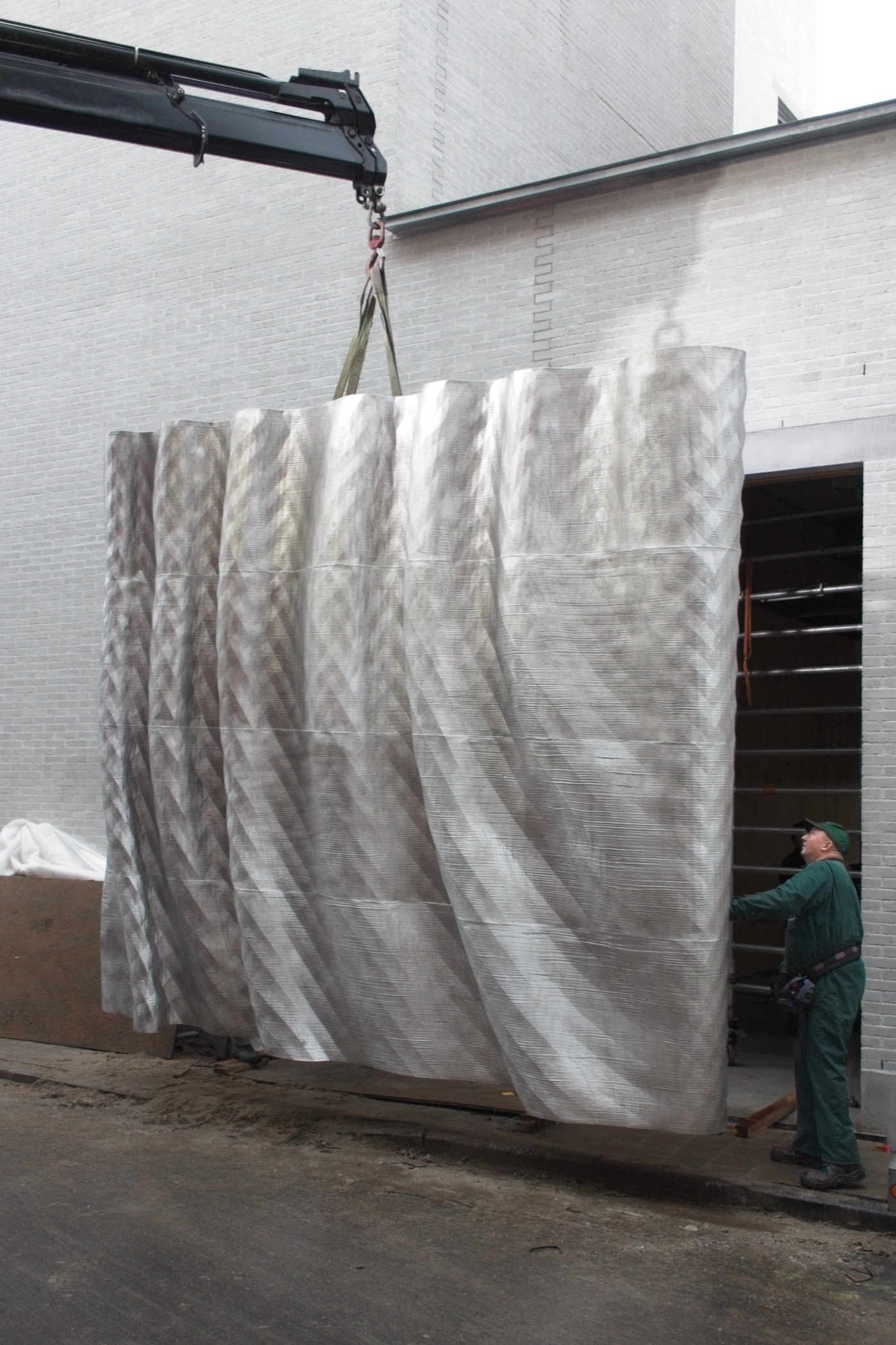
Freeze Frame 82.2는 컴퓨터 시뮬레이션에서 탄생한 작품입니다. 가상 물리 엔진을 활용해 장력이 걸린 스프링으로 이루어진 디지털 와이어프레임 천을 움직임 속으로 끌어들였고, 커튼의 다양한 움직임을 시뮬레이션했습니다. 그 애니메이션의 특정 순간이 우리의 눈길을 사로잡았습니다. 되감기, 재생, 일시정지. 바로 그 장면입니다. 82.2번째 프레임에 멈춰 선 커튼 — 마치 누군가 막이 오르기 직전, 살짝 커튼을 젖히고 관객석을 슬쩍 들여다보는 듯한 순간, 이른바 '쿠 되이(coup d'œil)'의 찰나입니다. 이후 치밀하게 조율된 과정이 이어졌습니다. 용접 건을 장착한 로봇 팔이 이 특정 순간, 82.2번 프레임을 층층이 쌓아 알루미늄 조각으로 옮겨냈습니다. 시뮬레이션 속 덧없는 물리적 움직임은 이제 가로세로 4미터가 넘는 묵직한 조각 문으로 거듭났습니다. MX3D의 고출력 WAAM 3D 프린팅 공정으로 쌓아 올린 하나하나의 용접 비드에는, 그 형태를 만들어낸 움직임의 에너지와 격동이 고스란히 담겨 있습니다.
허공에 멈춰 선 몸짓처럼, 프리즈 프레임 82.2(Freeze Frame 82.2)는 시작도 끝도 아닌 순간을 붙잡습니다. 열린 채로 유지되는 그 순간은 모호함을 품고, 우리를 그 경계 위에 잠시 머물게 합니다. 불확실함을 마비가 아닌 가능성으로 바라보게 하는 작품입니다. 디자인 뮤지엄 겐트(Design Museum Gent)의 개관을 알리는 이 작품은 하나의 선언처럼 서 있습니다. 디자인의 미래는 확고한 답에 있는 것이 아니라, 잠시 멈추고, 다시 바라보고, 아직 완전히 상상되지 않은 것들을 향해 함께 한 발 내딛으려는 의지 속에 있다고.
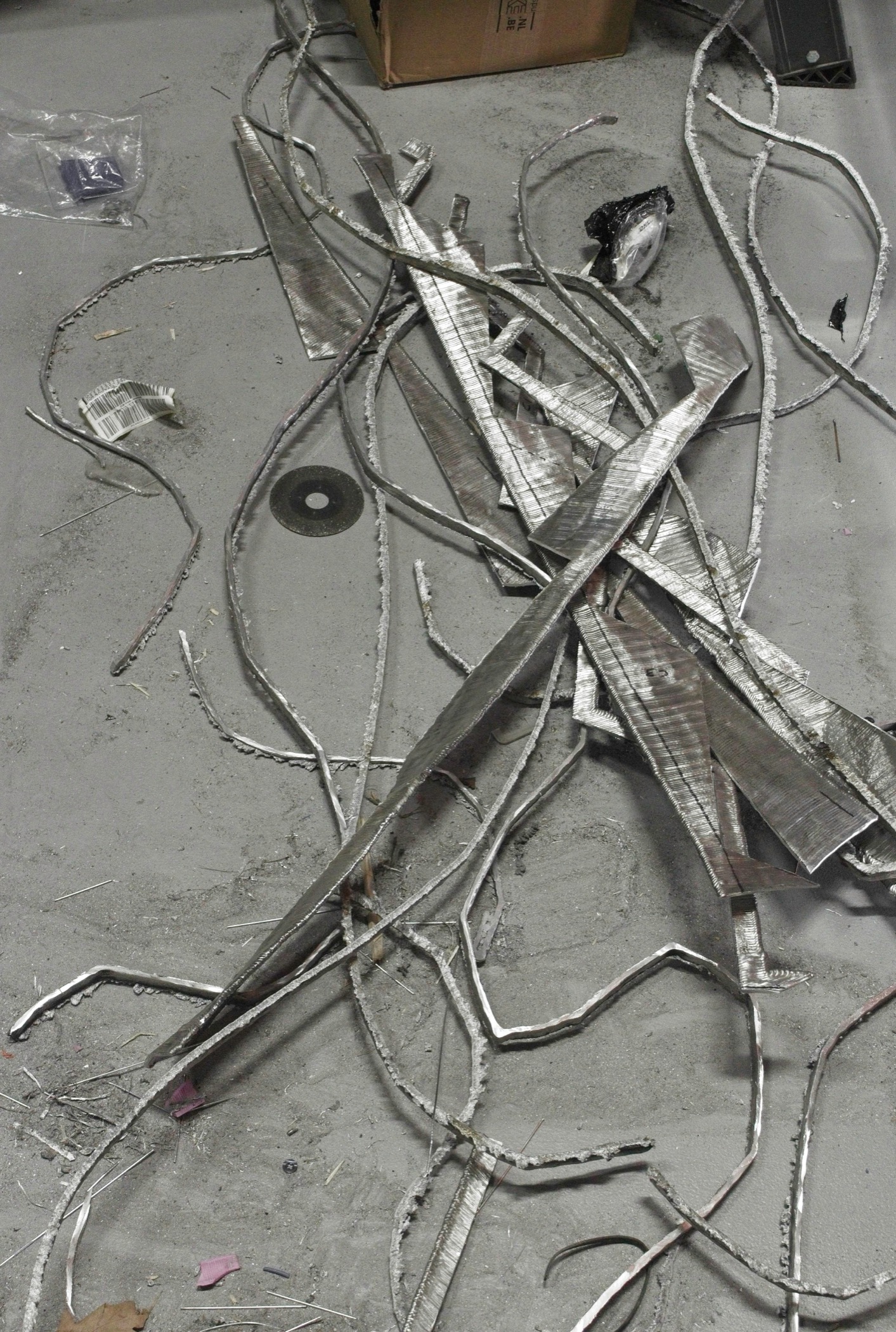
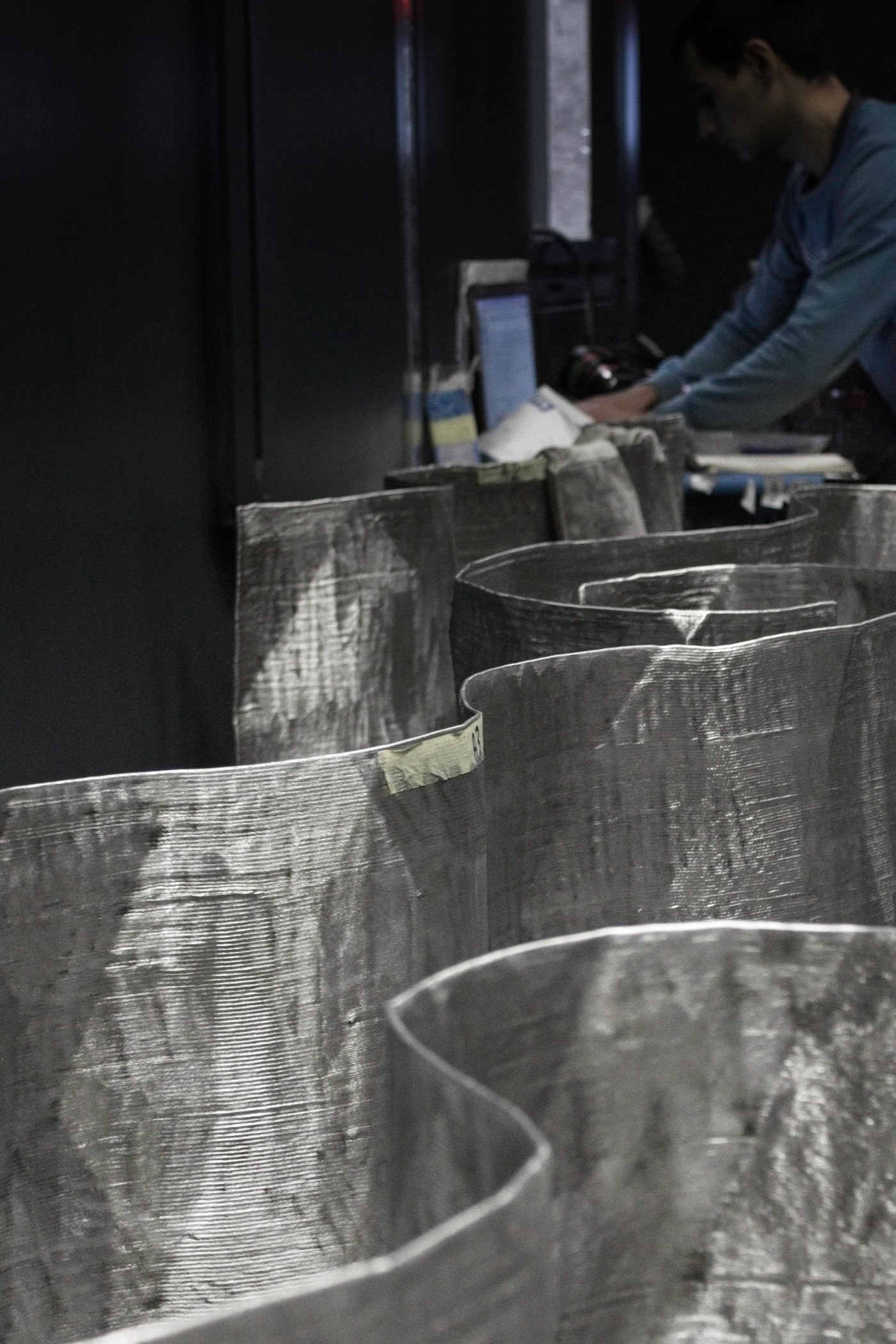
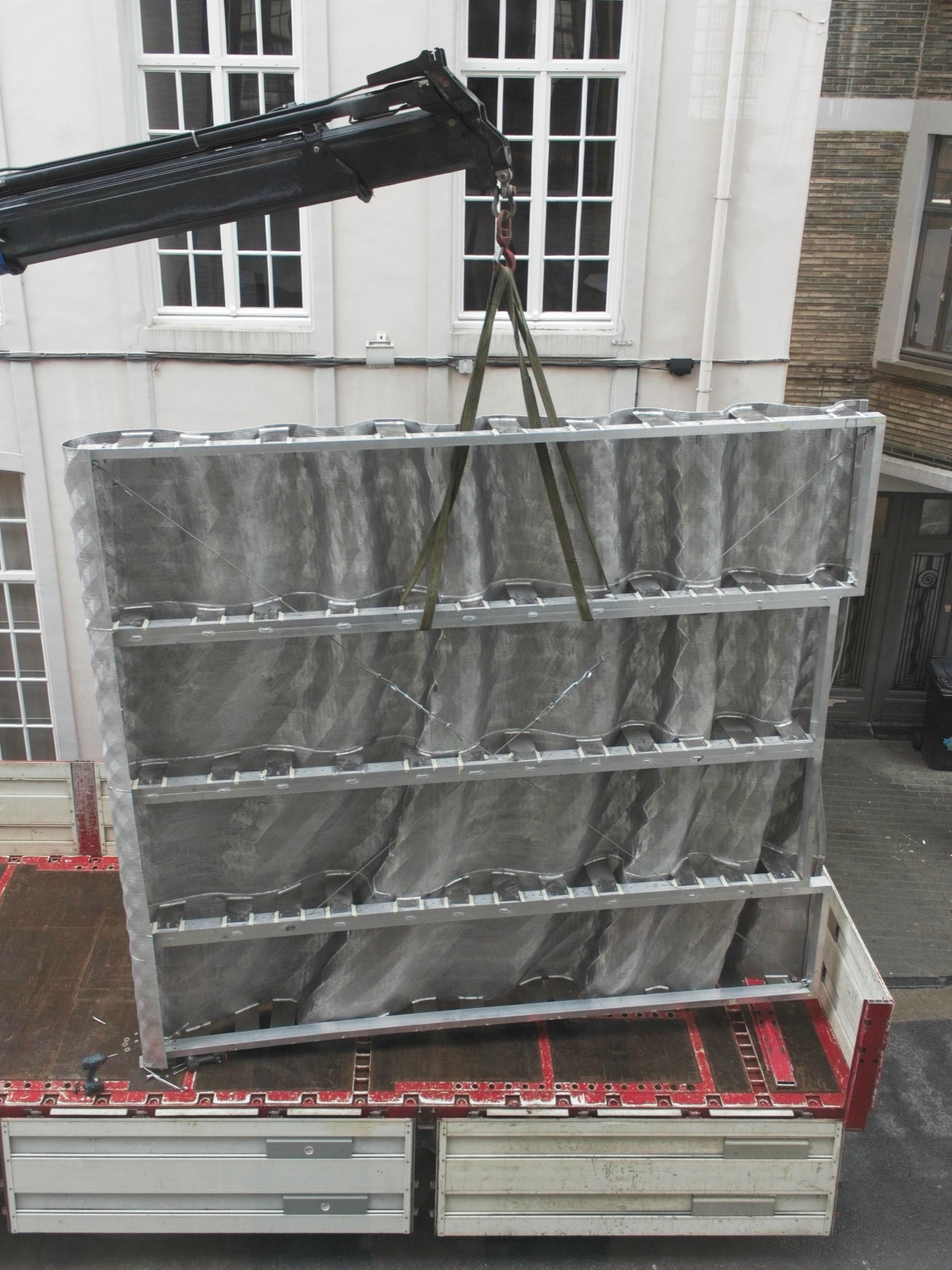
시뮬레이션 가상 물리 엔진으로 구현된 디지털 와이어프레임 천. 장력을 가진 스프링 구조로 애니메이션됩니다. 소재알루미늄3D 프린트, 내하중 알루미늄 구조물에 장착 3D 프린팅 기법 와이어 아크 적층 제조(Wire Arc Additive Manufacturing, WAAM)는 금속 와이어를 전기 용접 아크로 녹여 로봇 팔이 층층이 쌓아 올리는 금속 3D 프린팅 공정입니다. 대형 부품을 빠르게 제작할 수 있으며, 기존 제조 방식에 비해 재료 낭비를 크게 줄일 수 있습니다. 프리즈 프레임 82.2(Freeze Frame 82.2)는 WAAM 방식으로 열두 개의 개별 부품으로 제작된 후, 수작업으로 조립되었습니다.
클레어 워니어(Claire Warnier), 드리스 페르브뤼헌(Dries Verbruggen), 이베 판 스히(Jibbe van Schie)
플랑드르 정부 Platform Kunst in Opdracht의 지원으로 제작되었습니다
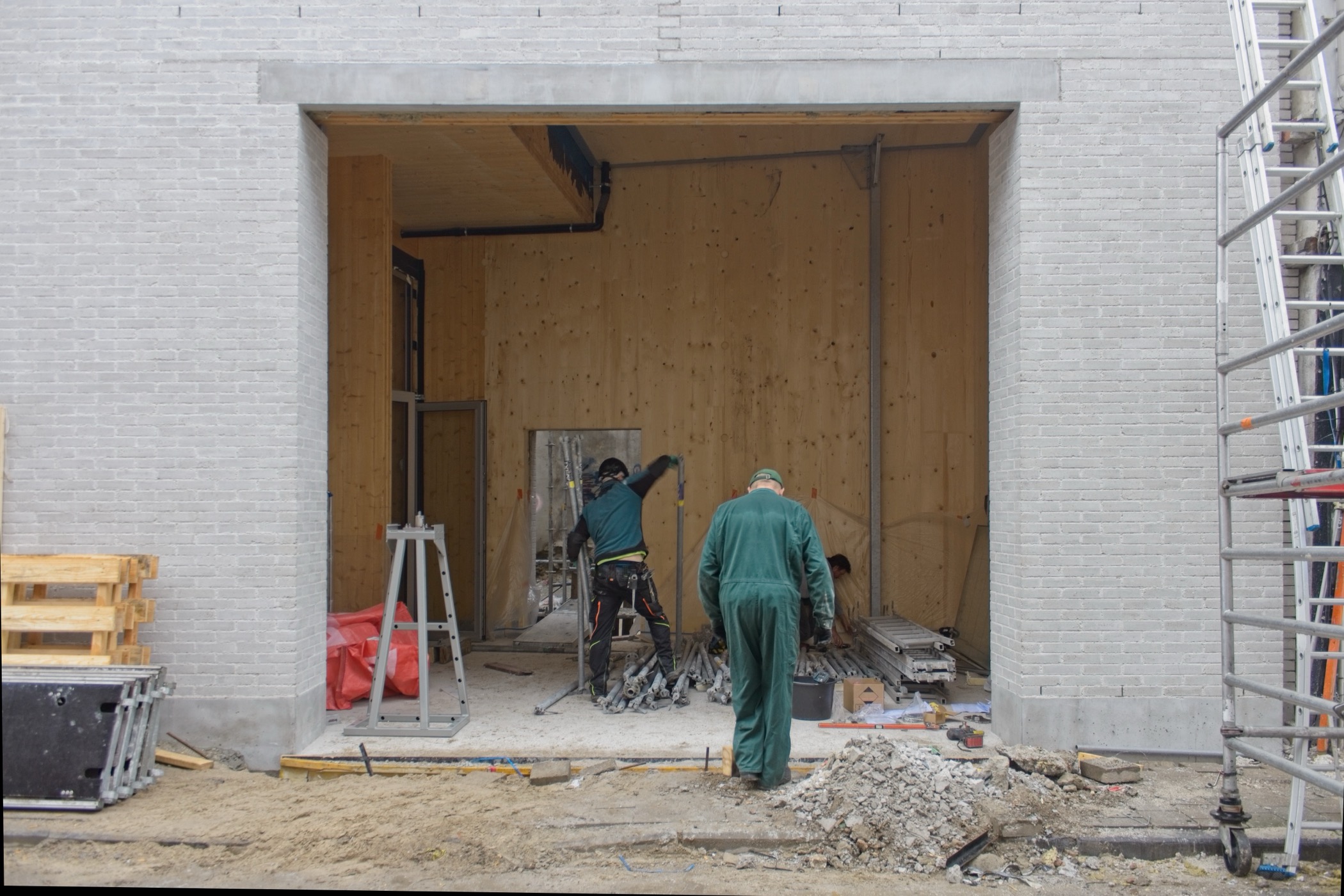
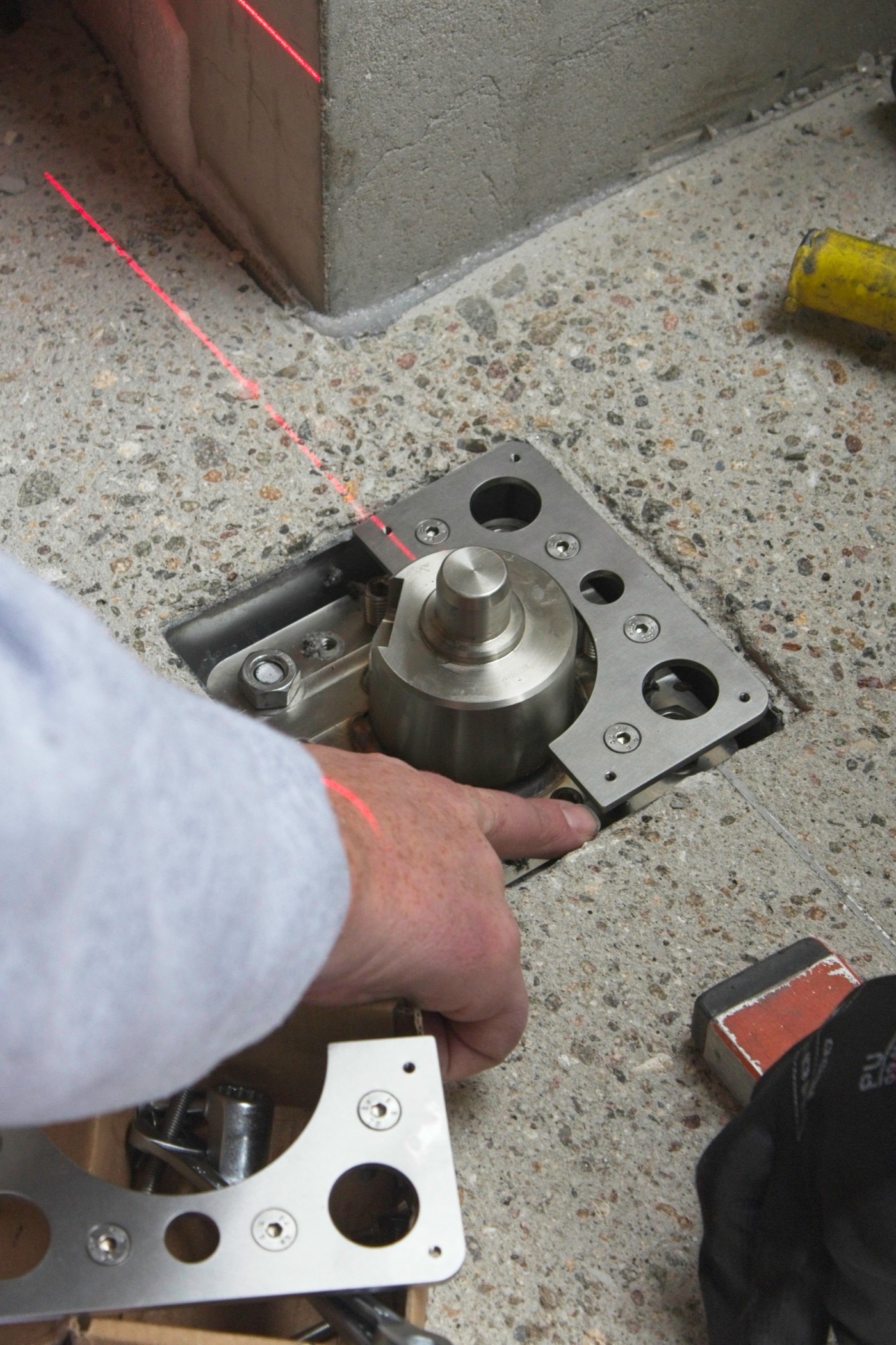
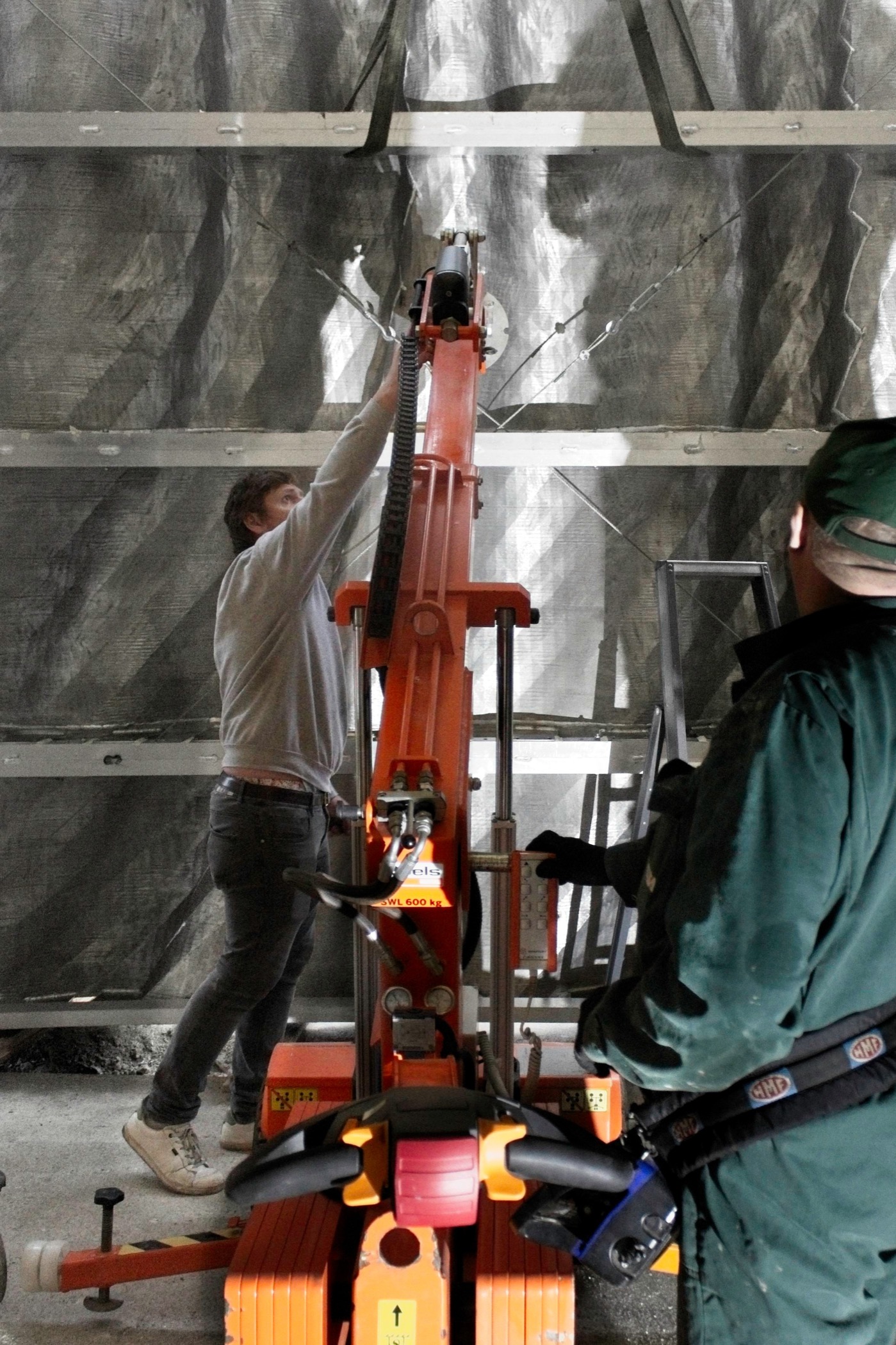
조립설치 전경
Freeze Frame 82.2 is a 3D-printed aluminium curtain, seemingly in motion, yet stilled at one precise moment – frame 82.2 – the charged instant just before opening. Positioned on the museum's threshold, it forms a soft, almost permeable boundary that doubles as a gateway: revealing by day, concealing by night. Freeze Frame 82.2 mirrors the moment we inhabit, a time of movement and transition, in which design is called upon not only to question but also to help shape what is yet to come We stand at the threshold of a new era, where the old ways of living, working, and manufacturing make way for more sustainable and equitable alternatives, informed by a more-than-human perspective. DING, the new extension of Design Museum Gent, was not conceived as a space for “more museum” but as “more-than-museum”: a place for debate, talks, workshops, and small exhibitions that explore a world in transition. Not an archive of past design solutions, but a place where design happens live, a platform for searching out the right questions and for formulating imaginative answers to our world’s most pressing needs. How does one approach a commission to create an artwork that sits at the threshold of this new extension and serves as the main gate to the entire museum? How can it symbolise this dynamic period of transition, in which design is challenged to keep questioning and to help shape what is yet to come? In his 1967 essay “Betwixt and Between: The Liminal Period in Rites of Passage,” ethnographer Victor Turner examined the structure of rites of passage, ritualised processes through which individuals or communities move from one defined state to another. Central to these rites is the liminal phase, a concept derived from folklorist Arnold van Gennep’s work and rooted in the Latin limen, meaning ‘threshold’. It is the interval in which old positions have been relinquished, but new ones have not yet been assumed: a space “in between,” where the usual order loosens and multiple futures briefly coexist. Turner describes liminality as a suspension of certainty that allows for transformation, and he identifies within it the possibility of communitas: a momentary sense of collective openness that emerges when people inhabit this threshold together. This understanding of liminality resonates with the very transition in which we now find ourselves. We stand at the threshold of new times — in limine — not here, not there, betwixt and between, no longer anchored to what was, not yet claimed by what will be. Theatre, perhaps more than any other art form, dwells in this ambiguous state. The theatre curtain embodies this condition: it hides or reveals, acting not as a barrier but as a permeable membrane that leaks light, whispers, and expectancy. The work Freeze Frame 82.2 was born as a computer simulation . Using virtual physics, a digital wireframe cloth made of tensioned springs was brought into motion, simulating the various behaviours of a curtain. One specific moment in this animation caught our attention, rewind, play, freeze frame. There it is: frame 82.2 frozen in motion, rendering the curtain as if someone were to pull it slightly aside to take a quick peek at the audience — a coup d’œil — moments before the curtain rises. In a carefully coordinated choreography, a robotic arm equipped with a welding gun translated this specific moment, frame 82.2, layer by layer into an aluminium sculpture. The ephemeral physics of the simulation are here transformed into a tangible, load-bearing gate of more than four by four metres, each welded bead of MX3D’s high-power WAAM 3D printing process preserving the energy and turbulence of the action that shaped it. In its suspended gesture, Freeze Frame 82.2 offers neither a beginning nor an end, but a moment held open, embracing its ambiguity. It invites us to linger in this shared in-between, to acknowledge uncertainty not as paralysis but as possibility. As Design Museum Gent opens its doors, the work stands as a reminder that design’s future will not be found in fixed answers, but in our willingness to pause, to look again, and to collaboratively step over the threshold into what has not yet been fully imagined… Simulation a digital wireframe cloth of tensioned springs, animated with virtual physics. Material Aluminium 3D print mounted on a load-bearing aluminium structure 3D printing technique Wire Arc Additive Manufacturing (WAAM) is a metal 3D printing process in which a metal wire is melted by an electric welding arc and deposited layer by layer by a robotic arm. This technique enables the production of large components at high speed and with significantly reduced material waste compared to traditional manufacturing methods. Freeze Frame 82.2 was produced using WAAM in twelve individual segments, which were subsequently assembled by hand. Weight of 3D print: 250 kg / Total weight of the gate: 360 kg Unfold | Instagram | Bluesky | Linkedin CREDITS Concept and execution Unfold Client Design Museum Gent & sogent Curator Special Design Projects Siegrid Demyttenaere Architecture Carmody Groarke, ATAMA and RE-ST Architectuur Robotic 3D metal printing & assembly MX3D Art Lab Functional integration and installation Wuyts Production consultancy and technical detailing Alton Stability Denkbar Transport Dick Frères Film Studio Alexandre Humbert Unfold project team Claire Warnier, Dries Verbruggen and Jibbe van Schie With the support of Platform Kunst in Opdracht of the Flemish Government Assembly Installation